My readings came down steadily rather than overnight. I felt normal during the day and found the once-daily routine easy to keep with my breakfast.
Montreal Six weeks Oct 17, 2026
Lisinopril
Adults and eligible younger patients with high blood pressure, heart failure, or selected cardiovascular conditions may be prescribed Lisinopril. This oral ACE inhibitor relaxes blood vessels, lowers…
Adults and eligible younger patients with high blood pressure, heart failure, or selected cardiovascular conditions may be prescribed Lisinopril. This oral ACE inhibitor relaxes blood vessels, lowers pressure, and reduces the workload placed on the heart.
Overview
Lisinopril belongs to the antihypertensive class and is an angiotensin-converting enzyme (ACE) inhibitor. The tablets are intended for oral use, and the prescribed amount is selected individually according to age, other medicines, kidney function, blood pressure, and health conditions.
How it affects the body
The renin–angiotensin–aldosterone system regulates blood pressure and fluid balance. When ACE is blocked, the body produces less angiotensin II, a hormone that narrows blood vessels and promotes sodium retention. Blood vessels relax, aldosterone production falls, and the heart pumps against less resistance.[1]
Mechanism of action in cardiovascular health
Lisinopril reduces the formation of angiotensin II. This produces arterial vasodilation, meaning the arteries become less constricted. The result is a reduction in systemic vascular resistance and afterload, which is the pressure the left ventricle must overcome to eject blood.
ACE also breaks down bradykinin. ACE inhibition can therefore increase bradykinin activity, which contributes to vasodilation but may also cause the persistent dry cough associated with this drug class. The same mechanism explains why switching from an ACE inhibitor to an angiotensin receptor blocker may be considered when cough becomes troublesome.
Formulation
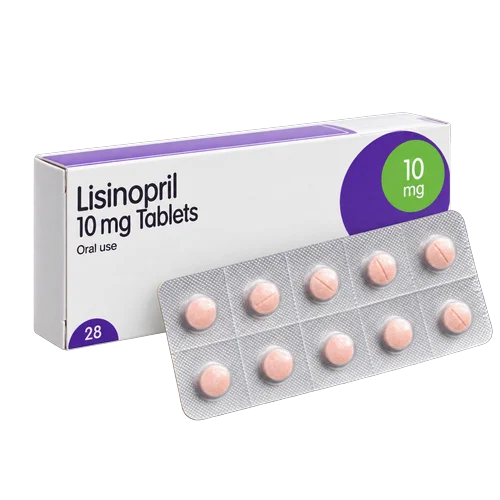
The composition is based on lisinopril, an oral ACE inhibitor used in tablets. The active ingredient relaxes blood vessels and supports lower blood pressure, while the exact prescribed amount is selected individually.
Dosage and administration
The product is supplied as oral tablets. Lisinopril is taken by mouth on a regular schedule, with the prescribed amount selected individually according to age, other medicines, kidney function, blood pressure, and health conditions.
- Take the prescribed dose at the same time each day.
- Swallow the tablet with water.
- Take it with food or on an empty stomach, but keep the routine consistent.
- Do not take an extra tablet to compensate for a missed dose.
- If a dose is missed and the next scheduled dose is approaching, skip the missed dose rather than doubling.
- Continue treatment for the prescribed duration, even when blood pressure readings improve.
The first dose can produce dizziness or light-headedness, especially in people who are dehydrated, taking diuretics, or following a low-salt diet. Standing up slowly reduces the chance of a fall. Severe fainting, marked weakness, or confusion requires urgent assessment.
Kidney function and potassium commonly influence dose selection. Health Canada product information describes dose adjustment and monitoring in patients with impaired renal function, volume depletion, or medicines that affect potassium balance.[2]
Reasons not to use it
Lisinopril is not suitable for everyone. This medication is not for you if you:
- Have previously experienced angioedema linked to an ACE inhibitor.
- Have hereditary or idiopathic angioedema unless a specialist has established a safe plan.
- Are pregnant or planning pregnancy.
- Use aliskiren and have diabetes or significant kidney impairment, unless specifically managed by a specialist.
- Have had a serious reaction to lisinopril or another ACE inhibitor.
- Have severe kidney disease requiring an individualized specialist regimen.
Important interactions include potassium supplements, potassium-containing salt substitutes, spironolactone, eplerenone, amiloride, triamterene, and other medicines that raise potassium. Non-steroidal anti-inflammatory drugs, such as ibuprofen or naproxen, may reduce blood-pressure control and increase kidney stress, especially in a person who is dehydrated or also taking a diuretic.
Lithium levels can rise when combined with medicines that alter kidney sodium handling, including ACE inhibitors. If lithium is prescribed, kidney function and blood concentrations require specific monitoring. Sacubitril/valsartan also requires a separation period after an ACE inhibitor because the combination increases angioedema risk.
ACE inhibitors can be used in heart failure, but low blood pressure, worsening kidney function, and potassium changes need active monitoring. A person with narrowing of both kidney arteries, dehydration, or advanced kidney disease may need a different starting plan.
The European Medicines Agency and the U.S. Food and Drug Administration identify ACE-inhibitor angioedema, pregnancy-related harm, renal effects, and potassium disturbances as key safety considerations for this class.[3]
When this is not for you
Pregnancy is a firm safety concern because ACE inhibitors can harm fetal kidney development and cause serious complications later in pregnancy. Treatment should be reviewed promptly if pregnancy occurs.
Tell a clinician before using Lisinopril if you have had swelling from an ACE inhibitor, have kidney disease, are dehydrated, or take medicines and supplements that affect potassium or kidney function.
Possible side effects
Lisinopril is often tolerated without major problems, but adverse effects can affect treatment continuity. Dizziness, headache, fatigue, nausea, and a dry cough are recognized reactions. The cough is usually non-productive and may persist while treatment continues.
Possible adverse effects include:
- Low blood pressure, especially after starting or increasing treatment.
- Dizziness or light-headedness.
- Headache or fatigue.
- Nausea, diarrhoea, or other digestive symptoms.
- Persistent dry cough.
- Increased blood potassium.
- Changes in kidney function.
- Rare angioedema involving swelling of the lips, tongue, face, or throat.
The cough is linked to increased bradykinin and may not respond well to ordinary cough suppressants. Patients sometimes spend weeks treating it as an allergy or winter cough before the medicine is identified as the cause. A medication review is more useful than repeatedly changing cough syrups.
High potassium may cause muscle weakness, unusual tiredness, tingling, or heart-rhythm disturbances, although symptoms can be absent. The risk rises with kidney impairment, potassium supplements, potassium-sparing diuretics, and some anti-inflammatory medicines.
Swelling of the tongue or throat, difficulty breathing, or rapidly developing facial swelling is an emergency. Stop seeking routine explanations and obtain immediate medical help. Angioedema can occur even after a person has used an ACE inhibitor for a long time.
Lisinopril may also contribute to an excessive fall in blood pressure during vomiting, diarrhoea, fever, heavy sweating, or poor fluid intake. Temporary illness can change how the kidneys handle the medicine.
Therapeutic indications
It is used to treat high blood pressure, support treatment of heart failure, and reduce cardiovascular risk after certain heart attacks.
Lisinopril is also used in some patients with kidney disease related to diabetes, because lowering pressure inside the kidney’s filtering units can help reduce protein loss in the urine. The treatment choice depends on blood pressure, kidney function, potassium levels, age, and other medicines.
Comparison
Lisinopril, ramipril, and captopril are ACE inhibitors. Losartan potassium, olmesartan medoxomil, and irbesartan are angiotensin receptor blockers (ARBs). Metoprolol tartrate is a beta-blocker, while diltiazem hydrochloride is a calcium-channel blocker with additional effects on heart rate and conduction.
| Medicine or class | Main pharmacological difference | Practical clinical distinction |
|---|---|---|
| Lisinopril and other ACE inhibitors | Reduce angiotensin II formation and increase bradykinin activity | Cough and, rarely, angioedema can occur |
| Losartan, olmesartan, irbesartan | Block the angiotensin II receptor without directly inhibiting ACE | Often considered when ACE-inhibitor cough is persistent |
| Metoprolol or diltiazem | Reduce cardiac workload through beta-blockade or calcium-channel effects | May be selected when heart rate, rhythm, angina, or another indication is also present |
Lisinopril is eliminated mainly through the kidneys and has a duration that supports once-daily use for many patients. Captopril generally requires more frequent administration, while ramipril is converted to an active metabolite. These pharmacokinetic differences affect prescribing decisions, though the patient’s response and organ function remain more important than a simple comparison of half-lives.
ACE inhibitors and ARBs both affect the renin–angiotensin system. Combining them usually increases the risk of low blood pressure, kidney injury, and high potassium without providing a routine benefit for uncomplicated hypertension. A clinician may switch between the classes rather than use both together.
Captopril may be selected in a situation where a shorter-acting ACE inhibitor is useful. Ramipril may be chosen for cardiovascular risk reduction in an appropriate patient. Losartan may be preferred when an ACE-inhibitor cough causes poor tolerability. The choice is clinical, not a matter of one class being universally superior.
Common mistakes
Several everyday habits can make Lisinopril appear ineffective or poorly tolerated:
- Taking it only when a blood-pressure reading is high.
- Doubling the next dose after forgetting one.
- Stopping suddenly because the pressure improved.
- Treating a persistent dry cough without considering the ACE inhibitor.
- Using potassium salt substitutes without checking for an interaction.
- Taking frequent ibuprofen or naproxen without mentioning it.
- Ignoring vomiting, diarrhoea, or poor fluid intake.
- Assuming dizziness always means the dose is too high.
- Taking measurements immediately after exercise, caffeine, smoking, or rushing upstairs.
- Failing to report lithium, diuretics, supplements, or other blood-pressure medicines.
Another frequent error is comparing readings taken with different devices, body positions, or rest periods. A reliable trend requires a consistent method. Home readings cannot replace blood tests when kidney function and potassium are being assessed.
Patients sometimes expect a dose change to fix every high reading within hours. Blood pressure varies with stress, pain, sleep, salt intake, illness, and measurement conditions. A clinician usually looks for a pattern before making a long-term adjustment.
What doctors say
Clinicians usually judge Lisinopril by repeated blood-pressure readings, kidney blood tests, potassium results, symptoms, and cardiovascular outcomes. The absence of immediate symptoms does not show that the medicine is unnecessary. Readings should be compared under similar conditions. Symptoms and laboratory results can change the risk assessment. Follow-up timing depends on the indication and the patient's health. High blood pressure often causes no warning signs while still damaging blood vessels, the heart, brain, and kidneys.
A prescriber may check creatinine and potassium before treatment and again after initiation or dose changes. Monitoring becomes more important when a person has chronic kidney disease, heart failure, diabetes, older age, dehydration, or several interacting medicines.
One practical issue is medication timing after hospitalization or an acute illness. A patient discharged after vomiting, dehydration, or a kidney-function decline may need a temporary treatment plan rather than an automatic return to the previous routine. Restarting or changing Lisinopril should follow the clinician’s documented instructions.
The World Health Organization and NICE support combination-based blood-pressure care when a single agent does not achieve control, with treatment selected according to comorbidities and risk.[1] The benefit comes from sustained control over time, not from taking extra medicine on a day when one reading is higher.
Common questions
Can Lisinopril tablets be split, crushed, or chewed?
Lisinopril tablets should be swallowed as directed rather than crushed or chewed, unless a prescriber or dispensing pharmacist has approved another method. Health Canada product information from 2022 describes oral tablet administration and individualized dosing for Lisinopril. Splitting a tablet can also make the dose less accurate when the tablet is not designed to divide evenly.
Can alcohol be used while taking Lisinopril?
Alcohol can add to the blood-pressure-lowering effect of Lisinopril and increase dizziness, faintness, or falls, especially when treatment has just started. The WHO hypertension guidance published in 2021 identifies alcohol reduction as part of cardiovascular risk management. The response varies with the amount consumed, hydration, other medicines, and baseline blood pressure, so heavy drinking is more likely to create problems than an occasional small amount.
What should be discussed with a doctor before starting Lisinopril?
Tell the prescriber about kidney disease, previous angioedema, pregnancy or pregnancy plans, diabetes, heart failure, dehydration, and all medicines or supplements. The U.S. Food and Drug Administration lisinopril labeling from 2023 highlights potassium-raising medicines, lithium, anti-inflammatory drugs, aliskiren, and sacubitril/valsartan as clinically relevant considerations. Blood pressure, kidney function, and potassium may be assessed before treatment and after a dose change.
Which condition rules out Lisinopril?
A previous episode of ACE-inhibitor-related angioedema rules out routine Lisinopril treatment because recurrence can threaten the airway. Health Canada product information from 2022 also identifies pregnancy as a contraindication because renin–angiotensin system blockers can cause fetal harm. Swelling of the lips, tongue, face, or throat during treatment requires emergency care.
Can Lisinopril be taken with food?
Lisinopril can be taken with food or on an empty stomach, and food does not provide a reason to change the prescribed schedule. Health Canada product information from 2022 supports oral administration without a required meal restriction. Taking it at the same time each day makes missed doses less likely and produces a more consistent routine.
Do you offer anonymous delivery?
Your order will be securely packed and shipped within 24 hours. This is exactly what your package will look like (images of an actual item sent). It has the size and look of a regular private letter (24x11x0.7 cm) and its contents cannot be seen.
Comparison
Sources
- World Health Organization (2021). Guideline for the pharmacological treatment of hypertension in adults.
- Health Canada (2022). Product monograph — lisinopril.
- European Medicines Agency (2021). Summary of Product Characteristics (SmPC) — lisinopril.
How Buyers Rate Lisinopril
Based on 5 reviews
The medicine did not improve my readings enough, and I developed a dry cough that became distracting at work. I stopped only after discussing it with my doctor, who changed the treatment.
Sherbrooke Three weeks Oct 25, 2026My home readings became much more consistent. I used to check them randomly, but taking them after sitting quietly made the improvement easier to see.
Kelowna Two months Nov 2, 2026Lisinopril fitted into my morning routine without making me feel different. My follow-up readings were better, and I was pleased that the tablet was simple to take.
Windsor Four months Nov 6, 2026The treatment helped bring my pressure into the range my clinician wanted. I kept the tablets beside my water glass and missed fewer doses than before.
Kitchener Seven weeks Nov 12, 2026