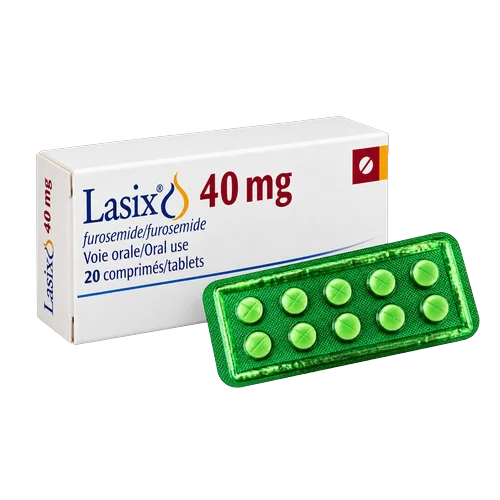
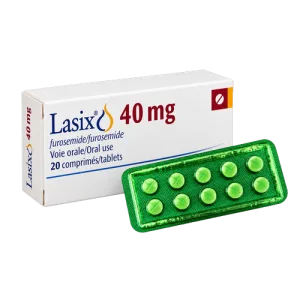
I used Lasix 40 mg tablets for ankle swelling. Within the first week, my shoes felt less tight in the evening and walking around work became easier. The increased urination was predictable once I took it early in the day.
Victoria Within the first week Oct 17, 2026
Lasix
Lasix is intended for people with excess fluid linked to heart, liver, or kidney conditions. By increasing the removal of sodium and water in urine, it can ease swelling and congestion-related…
Lasix is intended for people with excess fluid linked to heart, liver, or kidney conditions. By increasing the removal of sodium and water in urine, it can ease swelling and congestion-related breathing discomfort.
Overview
Furosemide, the active ingredient in Lasix, is a loop diuretic prescribed to remove excess sodium and water from the body. Lasix is used for fluid retention linked to heart failure and selected liver or kidney conditions. Its diuretic action can reduce swelling and breathing discomfort caused by fluid overload.
How it affects the body
Furosemide blocks the sodium-chloride transporter in the thick ascending limb of the loop of Henle. This prevents part of the filtered sodium from returning to the bloodstream. Water remains with the sodium and leaves through urine.
Renal Sodium and Water Excretion
The nephron is the kidney’s microscopic filtering unit. A simple way to understand furosemide is that it reduces the kidney’s ability to reclaim salt at a key stage of urine formation. More salt reaches the urine, and more water follows it.
Lasix can produce a strong diuretic effect. The trade-off is a risk of dehydration, low blood pressure, low potassium, low sodium, or worsening kidney function if fluid loss exceeds the body’s needs.
Formulation
Lasix contains furosemide, a loop diuretic used in diuretic therapy. The product is supplied as oral tablets containing furosemide. A diuretic increases the amount of sodium and water removed through urine, helping reduce excess fluid in tissues and the bloodstream.
Furosemide as the Active Ingredient
Furosemide acts mainly in the kidneys. It blocks the reabsorption of sodium and chloride in a part of the nephron called the thick ascending limb of the loop of Henle. Water follows the unreabsorbed sodium into the urine.
“Oedema” means swelling caused by excess fluid in body tissues. “Fluid overload” means that the body is retaining more fluid than the heart, liver, kidneys, or blood vessels can manage comfortably.
Primary Purpose of Diuretic Therapy
Diuretic therapy relieves fluid accumulation. It does not repair the underlying heart, liver, or kidney disease that caused the retention. Treatment plans therefore often include other medicines, blood tests, blood-pressure checks, and monitoring of symptoms.
Lasix may reduce ankle swelling, abdominal fluid, or breathlessness related to congestion. The response depends on kidney function, circulation, dietary sodium, other medicines, and the severity of the condition.
Dosage and administration
- Dose: Take the prescribed amount of Lasix (furosemide) in milligrams; the tablets are 40 mg each, and the exact dose depends on the purpose and severity of fluid retention.
- Frequency: Take Lasix at the prescribed frequency, with the number of doses per day agreed with a doctor or pharmacist.
- Timing: Take each dose at the prescribed time of day and follow the prescribed instructions about taking it before or after meals.
- Duration: Continue treatment for the duration prescribed for the underlying heart, liver, or kidney condition.
- Route: Take Lasix tablets by mouth with water; do not use them as a topical treatment.
Reasons not to use it
Lasix is NOT for you if you have complete absence of urine production, severe dehydration, or a serious allergy to furosemide or related sulfonamide medicines, unless a specialist establishes a suitable plan. Severe electrolyte depletion also requires correction and medical assessment before further diuresis. The Canadian product monograph available through Health Canada in 2024 lists anuria, significant electrolyte disturbances, and hypersensitivity as key contraindication or warning areas.
When this is not for you
Lasix is NOT for you if you have complete absence of urine production, severe dehydration, or a serious allergy to furosemide or related sulfonamide medicines, unless a specialist establishes a suitable plan. Severe electrolyte depletion also requires correction and medical assessment before further diuresis.
Possible side effects
Lasix commonly changes urination because increased urine production is its intended pharmacological effect. Thirst, dizziness, weakness, headache, and dry mouth can occur when fluid loss is greater than expected.
Common Diuretic Effects
Possible effects include:
- Increased urination
- Thirst or dry mouth
- Light-headedness when standing
- Headache
- Muscle cramps
- Fatigue or weakness
- Constipation or nausea
- Low blood pressure
The severity of these effects depends on the amount used, hydration, kidney function, blood pressure, and other medicines. Dizziness can be more pronounced when Lasix is combined with alcohol or other medicines that lower blood pressure.
Electrolyte and Kidney Monitoring
Furosemide can lower potassium, sodium, magnesium, or calcium. Electrolyte changes may cause cramps, marked weakness, palpitations, confusion, or abnormal heart rhythms. Blood tests help clinicians decide whether the treatment remains appropriate.
Potassium supplements and potassium-containing salt substitutes should be used only when recommended for the individual treatment plan. Both excess and deficiency can cause harm.
Health Canada’s Canadian product information describes monitoring for fluid balance, renal function, blood pressure, and electrolyte disturbances [1].
Urgent Warning Signs
Contact urgent medical services for:
- Collapse, severe fainting, or inability to stay awake
- Serious breathing difficulty
- Swelling of the lips, tongue, face, or throat
- Severe rash with blistering or peeling skin
- Very little or no urine
- Severe confusion or profound weakness
- New chest pain or a rapidly irregular heartbeat
Hearing-related toxicity is uncommon but can occur with high exposure, rapid parenteral administration, severe kidney impairment, or interacting medicines. New ringing in the ears or hearing reduction requires prompt medical attention.
Therapeutic indications
Lasix may be prescribed for oedema associated with heart failure, liver disease, or kidney disease. The indication, amount used, and monitoring plan depend on the cause and severity of fluid accumulation.
Oedema and Fluid Retention
Fluid can collect in the ankles, legs, abdomen, lungs, or other tissues. A rapid increase in body weight may reflect retained fluid rather than body-fat gain. When a clinician has recommended daily weighing, recording the result at a consistent time can help identify a changing fluid state.
Seek prompt medical assessment for sudden swelling, new or worsening breathlessness, chest pain, fainting, confusion, or rapid unexplained weight gain.
Heart Failure-Related Fluid Accumulation
In heart failure, reduced pumping capacity can increase pressure in the veins and encourage fluid to move into tissues. Furosemide reduces circulating fluid volume and can ease congestion, but it does not reverse heart-muscle damage.
Doctors may monitor blood pressure, kidney function, sodium, potassium, and the patient’s symptoms. Swelling alone is not a reliable reason to change the amount used.
Liver and Kidney Disease-Related Oedema
Advanced liver disease can cause abdominal fluid accumulation, while kidney disease can reduce the body’s ability to remove salt and water. Reduced kidney function may alter both the response to Lasix and the risk of dehydration or electrolyte imbalance.
Medical supervision is needed when oedema is linked to significant kidney impairment, cirrhosis, low blood pressure, or poor nutritional status.

Comparison
Lasix is a loop diuretic. Triamterene and spironolactone are potassium-sparing diuretics with different pharmacological actions. One is not a simple replacement for another.
| Medicine or class | Potassium tendency and clinical focus | Main monitoring concern |
|---|---|---|
| Furosemide, including Lasix | Strong diuresis; may lower potassium | Dehydration, low blood pressure, kidney function, electrolytes |
| Triamterene | Potassium-sparing effect | High potassium and kidney function |
| Spironolactone | Potassium-sparing; also affects aldosterone signalling | High potassium, kidney function, blood pressure |
Furosemide may be preferred when rapid removal of excess salt and water is required. Potassium-sparing options may have a role in selected conditions where aldosterone activity or potassium conservation matters. Combination therapy is used only when the clinical rationale and blood-test monitoring support it.
Common mistakes
Frequent problems include:
- Doubling the next dose after a missed dose
- Taking a dose at bedtime without a specific reason
- Restricting fluids aggressively to increase weight loss
- Using potassium supplements without blood-test guidance
- Stopping suddenly because swelling has improved
- Treating every increase in swelling as a reason for self-adjustment
- Using ibuprofen repeatedly without mentioning it to the prescriber
- Failing to report substantially reduced urine output
For a missed dose, the correct action depends on the time of day and the prescribed schedule. A pharmacist or prescriber can provide the appropriate instruction without relying on guesswork.
What doctors say
In clinical practice, physicians usually assess the cause of fluid retention before changing furosemide. Swelling may result from several conditions, and stronger diuresis is not always the right response.
A doctor will often balance three goals: reducing congestion, preserving kidney function, and maintaining stable electrolytes. Rapid symptom relief can be useful, but excessive fluid loss can create a new problem through dehydration or low blood pressure.
Patients sometimes focus on the number on the scale. Doctors also consider breathing, walking ability, blood pressure, urine output, blood-test results, and the pattern of weight change.
Common questions
How does Lasix differ from potassium-sparing diuretics?
Lasix contains furosemide, which acts in the loop of Henle and produces strong sodium and water excretion. Triamterene and spironolactone work through different kidney mechanisms and tend to conserve potassium. Health Canada’s product information and clinical pharmacology references describe these differences as reasons why the medicines require different monitoring plans, including in 2024.
Can alcohol be used while taking Lasix?
Alcohol may worsen dizziness, dehydration, and low blood pressure during furosemide treatment. The risk can increase when alcohol is combined with other blood-pressure-lowering medicines or when fluid intake is reduced. The World Health Organization’s medication-safety principles, referenced in 2023 materials, support avoiding activities that require alertness when a medicine causes dizziness.
Which symptoms mean Lasix should be stopped and urgent medical help obtained?
Collapse, severe breathing difficulty, facial or throat swelling, severe confusion, very little urine, or a serious rash require urgent medical attention. New chest pain, severe weakness, or a markedly irregular heartbeat also need immediate assessment. The European Medicines Agency’s safety information for furosemide, reviewed in 2023, identifies serious allergic reactions, severe fluid imbalance, and electrolyte disturbances as conditions requiring prompt clinical action.
How long does one dose of Lasix keep working?
An oral dose commonly increases urination for several hours, but the duration varies with kidney function, dose, food, fluid status, and other medicines. The effect may be shorter or longer than expected in people with advanced kidney or heart disease. A 2022 clinical pharmacology review indexed in PubMed describes this variability and supports following the prescribed schedule rather than moving doses independently.
Which condition rules Lasix out?
Lasix is NOT for you if you have complete absence of urine production, severe dehydration, or a serious allergy to furosemide or related sulfonamide medicines, unless a specialist establishes a suitable plan. Severe electrolyte depletion also requires correction and medical assessment before further diuresis. The Canadian product monograph available through Health Canada in 2024 lists anuria, significant electrolyte disturbances, and hypersensitivity as key contraindication or warning areas.
Can Lasix be taken with food or on an empty stomach?
Lasix tablets may be taken with food when this fits the prescribed schedule, although food can affect the speed of absorption. Taking each dose consistently in relation to meals makes the response easier to assess. Guidance from the FDA prescribing information updated in 2020 supports following the specific administration instructions provided for the prescribed formulation.
Can anyone under 18 use Lasix?
Children and adolescents may receive furosemide for selected medical conditions, but the amount is calculated from the clinical situation and often from body weight. Treatment in someone under 18 requires paediatric prescribing and monitoring of hydration, kidney function, blood pressure, and electrolytes. The EMA’s paediatric information for furosemide, cited in 2023, supports specialist-led use rather than giving a child an adult tablet schedule.
Do you offer anonymous delivery?
Your order will be securely packed and shipped within 24 hours. This is exactly what your package will look like (images of an actual item sent). It has the size and look of a regular private letter (24x11x0.7 cm) and its contents cannot be seen.
Comparison
Sources
- Health Canada (2024). Canadian Product Monograph — Lasix (furosemide)
How Buyers Rate Lasix
Based on 5 reviews
I took Lasix 40 mg for fluid retention and noticed a clear reduction in swelling after several days. The effect was slower than I expected, and planning bathroom breaks became part of my routine. The result was useful, though it did not remove every symptom.
Barrie Several days Oct 30, 2026Lasix 40 mg helped reduce the heaviness in my legs. After about a week, I could stand for longer without the same tight feeling around my ankles. I was satisfied with the improvement and found the tablet straightforward to take.
Kitchener About a week Nov 3, 2026I used the 40 mg tablets for a short prescribed course and noticed less puffiness within the first few days. The main benefit was feeling more comfortable in ordinary clothes and during daily activities. The result matched what I had hoped for.
St. Catharines A short prescribed course Nov 10, 2026Lasix 40 mg reduced some swelling over several days, but the improvement was only partial. I also felt light-headed on one occasion and stopped taking further doses until I had spoken with my doctor. The experience showed me that the diuretic effect needs to be balanced against hydration and blood pressure.
Calgary Several days Nov 13, 2026