Zoloft did not improve my mood or motivation. I also felt restless at night and stopped taking it after discussing the reaction with my doctor.
St. Catharines Six weeks Oct 11, 2026
Zoloft
Zoloft tablets support serotonin signalling in the brain, helping improve mood, intrusive thoughts, panic symptoms, and daily functioning. Individual dosing is adjusted to the person’s condition and…
Zoloft tablets support serotonin signalling in the brain, helping improve mood, intrusive thoughts, panic symptoms, and daily functioning. Individual dosing is adjusted to the person’s condition and response.
Overview
Sertraline, the active ingredient of Zoloft, is a selective serotonin reuptake inhibitor (SSRI) for adults with depression and several anxiety-related disorders.
How it affects the body
Sertraline reduces the reuptake of serotonin by nerve cells, leaving more of this neurotransmitter available in the synaptic space between neurons. Serotonin influences mood, anxiety, sleep, appetite, and emotional regulation.
The medicine does not create an immediate feeling of calm or euphoria. Its effects develop as brain signalling adapts to continued treatment.
Sertraline has a different pharmacological profile from medicines that act on both serotonin and noradrenaline. It also differs from sedating antidepressants because its principal action is selective serotonin reuptake inhibition.
The Canadian product information and the United States Food and Drug Administration describe sertraline as a treatment for several depressive, obsessive-compulsive, panic, trauma-related, and social-anxiety conditions [1].
Formulation
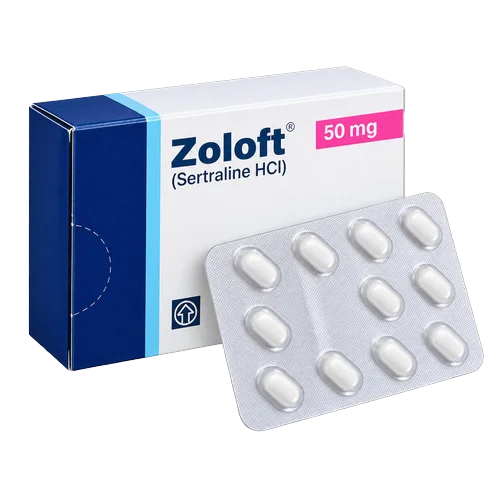
Zoloft contains sertraline hydrochloride, an SSRI antidepressant.
The product represented on this page is the 50 mg tablet presentation.
The active ingredient is sertraline in each strength. The brand name and generic name identify products containing the same antidepressant ingredient, although inactive ingredients and tablet appearance can differ.
Dosage and administration
- Take Zoloft tablets by mouth as prescribed.
- The amount per intake is set individually for each person; the 50 mg marking identifies the tablet strength, not a universal dose.
- Take it at the prescribed frequency and time of day, with or without meals only as directed.
- Continue treatment for the duration prescribed for the condition and response.
- Do not change the amount, frequency, timing, or duration without the prescriber’s instructions.
Reasons not to use it
Zoloft is not suitable for everyone. This medication is not for you if:
- You currently take or recently stopped a monoamine oxidase inhibitor, including phenelzine, tranylcypromine, or selegiline, unless a medically supervised washout period has been completed.
- You take pimozide.
- You have had a serious allergic reaction to sertraline or a tablet ingredient.
- You have untreated bipolar mania or a previous antidepressant-related manic episode without an appropriate treatment plan.
- You have significant liver disease requiring a modified prescribing approach.
- You have a history of seizures that has not been reviewed in the treatment plan.
Sertraline should not be combined with other serotonergic medicines without a deliberate prescribing decision. Relevant examples include some migraine medicines, opioid analgesics such as tramadol, lithium, linezolid, and herbal products containing St John’s wort.
When this is not for you
Alcohol can worsen drowsiness, impaired judgement, sleep disruption, and depression-related symptoms. Combining alcohol with Zoloft is best avoided, especially during treatment initiation or after a dose change.
Pregnancy and breastfeeding require an individual benefit–risk assessment. Untreated depression also carries health consequences, so abruptly stopping sertraline during pregnancy is not a sensible response. The prescribing clinician considers pregnancy stage, relapse history, neonatal adaptation symptoms, and feeding plans.
Possible side effects
Common sertraline side effects include nausea, diarrhoea, headache, dry mouth, dizziness, fatigue, insomnia, increased sweating, and sexual difficulties. Some people experience reduced appetite or changes in weight. Others feel temporarily more restless or anxious during the first stage of treatment.
The adverse-effect pattern is individual. A patient may tolerate sertraline well while another develops troublesome gastrointestinal symptoms or reduced libido. Clinical guidance from the National Institute for Health and Care Excellence recommends reviewing benefit and tolerability together rather than judging the treatment from one symptom alone.
Seek urgent medical help for:
- New suicidal thoughts, severe agitation, or dangerous impulsive behaviour.
- Symptoms of serotonin syndrome, such as high fever, marked confusion, muscle rigidity, tremor, or severe diarrhoea.
- A manic reaction, including unusually little need for sleep, racing thoughts, excessive spending, or risky behaviour.
- Severe allergic symptoms, fainting, seizures, or unexplained serious bleeding.
- Severe eye pain with blurred vision or coloured halos.
Sexual side effects deserve direct discussion because patients sometimes keep taking the medicine without mentioning them. Reduced desire, delayed orgasm, or difficulty reaching orgasm can occur with SSRIs and may continue while treatment continues.
Another practical detail concerns bruising. Sertraline can increase bleeding tendency when combined with medicines such as aspirin, ibuprofen, naproxen, anticoagulants, or antiplatelet drugs. Unusual bruising, black stools, or prolonged nosebleeds should be reported promptly.
Stopping suddenly can cause dizziness, electric-shock sensations, irritability, sleep disturbance, nausea, sweating, and flu-like feelings. These symptoms are discontinuation effects, not evidence of addiction, and a gradual reduction usually lowers the risk.

Therapeutic indications
Zoloft is used for several established psychiatric conditions:
- Major depressive disorder, including persistent low mood, loss of interest, reduced motivation, and associated anxiety.
- Obsessive-compulsive disorder, involving recurrent unwanted thoughts or repetitive behaviours.
- Panic disorder, with or without agoraphobia.
- Post-traumatic stress disorder.
- Social anxiety disorder.
- Premenstrual dysphoric disorder, where applicable to the prescribing decision.
Sertraline is an antidepressant, but its clinical role extends beyond depression. The same serotonin pathway can influence intrusive thoughts, panic responses, trauma-related symptoms, and severe social fear.
The European Medicines Agency describes sertraline’s therapeutic benefits in depression and several anxiety-spectrum disorders, while clinical guidelines stress regular use and gradual assessment rather than rapid changes [2]. The expected result is usually a reduction in symptom intensity and improved functioning, not a sudden personality change.
A doctor may prescribe Zoloft when depression occurs alongside anxiety, obsessive thoughts, panic symptoms, or trauma-related distress. Treatment plans differ because the target symptoms, previous medicines, other health conditions, and suicide-risk assessment differ from person to person.
Comparison
Zoloft belongs to the SSRI group. Other antidepressants use related or different neurotransmitter actions, so the choice depends on symptoms, previous response, tolerability, interactions, and medical history.
| Medicine and ingredient | Class | Clinical profile |
|---|---|---|
| Zoloft — sertraline | SSRI | Depression, obsessive-compulsive symptoms, panic, trauma-related symptoms, and social anxiety |
| Celexa — citalopram; Prozac — fluoxetine; Lexapro — escitalopram | SSRIs | Similar serotonin-based action, with differences in half-life, interactions, and individual tolerability |
| Cymbalta — duloxetine; Effexor XR — venlafaxine XR | SNRIs | Serotonin and noradrenaline activity; may be considered when pain symptoms or incomplete response influence treatment selection |
Sertraline, citalopram, fluoxetine, and escitalopram all increase serotonin signalling through reuptake inhibition. Their elimination times and interaction patterns differ. Fluoxetine remains in the body for a long period after stopping, while citalopram requires attention to cardiac-risk factors in susceptible patients.
Duloxetine and venlafaxine act on serotonin and noradrenaline. That additional action can be useful in selected cases, though it may also influence blood pressure, sweating, heart rate, or withdrawal symptoms.
There is no single antidepressant that suits every patient. A person with intrusive thoughts may respond well to an SSRI, while another person may require a different class after an adequate treatment trial. A previous response, side-effect history, sleep pattern, pain symptoms, and other medicines often guide the decision more than the brand name.
Common mistakes
Several avoidable patterns can make Zoloft seem ineffective or poorly tolerated:
- Stopping after a few days because mood has not improved yet.
- Taking tablets on changing schedules and then attributing symptoms to the medicine.
- Doubling the next intake after a missed dose.
- Mixing sertraline with St John’s wort, tramadol, or recreational serotonergic substances.
- Using ibuprofen, naproxen, aspirin, or anticoagulants regularly without mentioning them.
- Drinking alcohol during the first weeks and interpreting the resulting sleep or mood changes as treatment failure.
- Stopping suddenly once mood improves.
- Failing to report sexual side effects, emotional flattening, or new agitation.
- Judging success only by happiness instead of looking at sleep, concentration, routine, panic, and intrusive thoughts.
One mistake deserves special attention: increasing the amount without allowing enough time to assess the previous adjustment. More sertraline does not automatically mean faster improvement, and higher exposure can increase adverse effects.
What doctors say
In clinical practice, doctors often judge Zoloft by function rather than by mood alone. Sleeping more regularly, returning to routine tasks, answering messages, attending work, or experiencing fewer intrusive thoughts can signal early progress before a patient feels fully recovered.
A physician usually expects the initial period to involve observation and adjustment. Nausea or jitteriness may appear before mood improves, while the therapeutic response often develops over several weeks. The dose should not be changed repeatedly after only a few days unless a serious reaction requires action.
Doctors also screen for bipolar disorder before treating depression with an antidepressant alone. A history of periods with unusually high energy, little need for sleep, impulsive decisions, or racing thoughts can change the treatment plan.
The benefit of sertraline is often gradual. Its limitations matter too. It may cause sexual dysfunction, sleep changes, digestive symptoms, or emotional blunting, and it may not relieve symptoms sufficiently for every person.
A useful clinical conversation includes three points: which symptoms are improving, which adverse effects are interfering with daily life, and whether suicidal thinking or unusual activation has appeared.
Common questions
Can Zoloft affect driving, concentration, or work with machinery?
Zoloft may cause dizziness, drowsiness, blurred vision, fatigue, or impaired concentration in some people. Health Canada’s 2023 product information advises caution with driving and machinery until the individual response is known. The risk can increase with alcohol, sedatives, sleep deprivation, or a recent dose adjustment. Avoid driving until these effects have settled. A prescriber or pharmacist can review persistent concentration problems.
Is Zoloft suitable for older adults?
Older adults may use sertraline, but prescribing requires attention to other medicines, sodium levels, falls, bleeding risk, kidney and liver function, and previous psychiatric history. The World Health Organization’s 2023 guidance supports careful monitoring of antidepressant treatment in older people with depression and coexisting illness. A lower starting amount or slower adjustment may be chosen when sensitivity or multiple medicines are present.
How soon does the effect of Zoloft become noticeable?
Some people notice improved sleep, appetite, anxiety, or energy before their mood improves fully. The National Institute for Health and Care Excellence guideline published in 2022 describes antidepressant response as a process assessed over the first several weeks, with continued review of benefit and adverse effects. Lack of improvement after an adequate treatment period does not mean the person should increase the amount independently.
Can alcohol be used while taking Zoloft?
Alcohol can intensify dizziness, sedation, poor judgement, sleep disturbance, and depressive symptoms. The United States Food and Drug Administration’s 2023 sertraline labelling advises caution because the combined effects can impair functioning even when the medicine alone feels well tolerated. Avoiding alcohol is the safest approach during initiation, dose changes, and periods of active depression or anxiety.
What should happen after a missed Zoloft dose?
Take the missed tablet when remembered unless the next scheduled time is near. Skipping the missed intake is preferable to taking two together. Health Canada’s 2023 product information supports avoiding double dosing, while repeated missed doses may increase discontinuation symptoms and make response harder to assess.
What should happen if the expected result does not come?
A lack of improvement can reflect an insufficient treatment period, an unsuitable dose, an incorrect diagnosis, another medical condition, medication interactions, or severe ongoing stress. NICE guidance from 2022 recommends reviewing adherence, side effects, diagnosis, and treatment response before changing strategy. New suicidal thoughts, severe agitation, or manic symptoms require urgent clinical attention rather than waiting for a routine review.
Do you offer anonymous delivery?
Your order will be securely packed and shipped within 24 hours. This is exactly what your package will look like (images of an actual item sent). It has the size and look of a regular private letter (24x11x0.7 cm) and its contents cannot be seen.
Comparison
Sources
- Health Canada (2023). Zoloft (sertraline hydrochloride) Product Monograph.
- European Medicines Agency (2022). Sertraline: European public assessment and product information.
How Buyers Rate Zoloft
Based on 3 reviews
By the fourth week, getting through work and keeping a normal sleep routine felt much easier. The improvement was gradual, but I was satisfied with the change.
Halifax Three months Oct 26, 2026The intrusive thoughts became less dominant and I found it easier to focus on ordinary tasks. It took time, but the difference became clear during the second month.
Oshawa Two months Nov 7, 2026