Skip to content
contact@fairviewphysiotheraapy.com
Fast & Discrete Delivery Save up to 80%
In stock Synalar
Skin Care

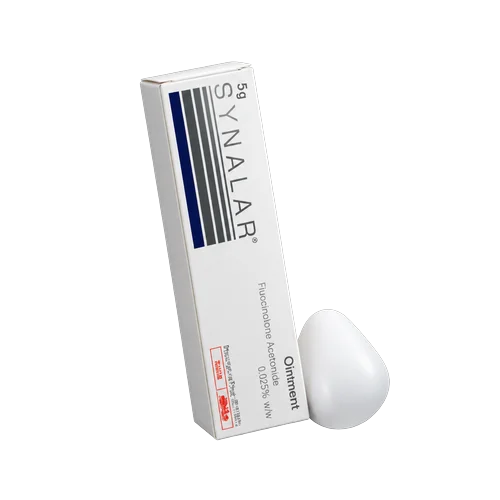
Synalar

Synalar helps calm an overactive inflammatory response within treated skin rather than simply masking itch. It is intended for inflammatory skin conditions that are likely to respond to a topical…

Guaranteed quality Original product
Delivery: from 4 days Discreet shipping
24/7 Support Always available
Active ingredient: Fluocinolone acetonide
Select pack Package Per unit Price
$ 129.36 $ 129.36
$ 73.50 $ 258.72 $ 147.00 Save 43%
$ 55.37 $ 388.08 $ 166.11 Save 57%
$ 45.94 $ 517.44 $ 183.75 Save 64%
Best value $ 40.28 $ 646.80 $ 201.39 Save 69%

Free delivery on orders from $ 294.00, free express delivery from $ 441.00

Secure payment methods:
VISA AMEX JCB DISCOVER

Synalar helps calm an overactive inflammatory response within treated skin rather than simply masking itch. It is intended for inflammatory skin conditions that are likely to respond to a topical corticosteroid, helping the skin barrier recover.

Overview

By binding to skin-cell receptors, Synalar reduces the inflammatory signals that drive redness, swelling, and itching. This fluocinolone acetonide ointment is used for corticosteroid-responsive dermatoses, including eczema, psoriasis, and allergic or contact dermatitis.

How it affects the body

Fluocinolone acetonide enters skin cells and binds to glucocorticoid receptors. This changes the production of inflammatory mediators, including substances that widen blood vessels, attract immune cells, and stimulate itch-sensitive nerve endings. Redness and irritation usually begin to settle as this local response decreases. [1]

Formulation

Synalar contains fluocinolone acetonide 0.025% w/w, a topical corticosteroid. Corticosteroids calm an overactive inflammatory response within the treated skin rather than simply masking itch.

Dosage and administration

The dose is decided individually, taking age, other medicines, and health conditions into account. Synalar is applied as a thin film to the affected skin, using the frequency and treatment duration set by the prescriber.

A practical application routine is:

  • Wash and dry your hands before and after applying the ointment, unless the hands are the treatment area.
  • Place a small amount on the fingertip and spread it gently over the inflamed skin.
  • Do not rub aggressively into cracked or sore areas.
  • Leave time between Synalar and a moisturizer so one product does not immediately dilute the other.
  • Do not cover treated skin with a bandage, plastic wrap, tight dressing, or diaper unless specifically instructed.

A thin layer matters. Occlusion greatly increases corticosteroid absorption, even with medicines intended for local use. The U.S. prescribing information for fluocinolone acetonide warns that extensive treatment areas, prolonged courses, damaged skin, and occlusive coverings raise the chance of systemic effects. [2]

If you miss an application, use Synalar when remembered unless the next planned application is close. Do not apply a doubled amount to catch up.

Reasons not to use it

Synalar is not for you if you have an allergy to fluocinolone acetonide, another corticosteroid, or a component of the ointment.

Do not use Synalar on untreated viral skin disease, including herpes simplex lesions or chickenpox lesions. It should also not be used alone on untreated bacterial, fungal, or parasitic skin infections.

Avoid contact with the eyes, eyelids, mouth, and other mucous membranes. Synalar should not be used beneath a diaper or an airtight dressing unless a clinician has specifically planned that approach.

When this is not for you

This treatment may not be suitable if you are allergic to its active ingredient, another corticosteroid, or any ingredient in the ointment. Do not use it on a rash caused by herpes, chickenpox, bacteria, fungi, or parasites unless a clinician has given you a specific plan. Keep it away from the eyes, mouth, and other delicate areas, and ask for medical advice before using it on children, broken skin, large areas, or under a diaper or airtight dressing.

Possible side effects

Most unwanted effects occur at the application site. Burning, itching, dryness, irritation, folliculitis, acne-like eruptions, skin colour changes, and excessive hair growth have been reported with topical corticosteroids. These reactions are more likely when treatment is prolonged or used under occlusion. [3]

Long-term use on thin skin can lead to skin atrophy, meaning thinning that may appear shiny, fragile, or easily bruised. Fine visible blood vessels and stretch-mark-like changes can also develop. These effects deserve attention because they may persist after treatment stops.

Systemic absorption is uncommon when Synalar is used sparingly on limited areas, yet it can occur. Excess absorption may suppress the hypothalamic-pituitary-adrenal, or HPA, axis. The HPA axis is the body’s hormone-control system for cortisol. Signs of excessive corticosteroid exposure can include unusual fatigue, increased blood glucose, facial rounding, or other Cushing’s syndrome features.

A burning sensation that lasts only briefly after the first few applications can occur on inflamed skin. Stop and seek clinical advice if burning intensifies, swelling develops, or the rash spreads.

Therapeutic indications

Synalar is used when an inflammatory skin condition is likely to respond to a topical corticosteroid. The aim is to break the itch–scratch–inflammation cycle, allowing the skin barrier to recover.

Condition Typical treatment goal
Eczema and allergic dermatitis Reduce itch, redness, and scratching
Contact dermatitis Settle inflammation after the trigger is avoided
Localized psoriasis Soften thickened plaques and reduce scale
Seborrheic dermatitis Control inflammation in suitable dry areas

Eczema often causes dry, cracked, itchy patches that worsen after friction, heat, irritants, or allergy exposure. Synalar can reduce the inflammatory flare, although regular use of a fragrance-free moisturizer remains central to barrier care. Psoriasis produces sharply defined plaques with scale; a corticosteroid may reduce inflammation, though the condition can recur because it is chronic.

Contact dermatitis improves best when the trigger is removed. Common triggers include fragranced personal-care products, detergents, metals, rubber chemicals, and workplace irritants. Applying a steroid without avoiding the trigger can create a cycle of temporary improvement followed by rapid relapse.

Synalar is not intended to treat acne, rosacea, open ulcers, or a rash of unknown cause. A painful, crusting, rapidly spreading, or pus-filled rash needs assessment for infection rather than repeated corticosteroid application.

Comparison

Topical corticosteroids are chosen mainly for active inflammation. Emollients help maintain moisture but do not suppress an eczema flare on their own. Non-steroid anti-inflammatory treatments may be useful on sensitive sites for selected patients, though they work differently and can cause transient burning.

Approach Main role Key trade-off
Synalar ointment Calms active steroid-responsive inflammation Overuse may thin skin
Emollient therapy Supports the skin barrier Does not replace anti-inflammatory treatment during a flare
Non-steroid topical anti-inflammatory therapy Alternative for selected sensitive areas May sting initially and is not suitable for every diagnosis

For dry plaques, Synalar’s ointment vehicle can be an advantage because it reduces water loss while delivering fluocinolone acetonide. For an infected rash, steroid treatment alone may hide worsening redness while the infection continues. The diagnosis guides the choice.

Common mistakes

Several patterns can reduce benefit or increase side effects:

  • Applying Synalar to every itchy area without confirming the cause of the rash.
  • Using it as a moisturizer over large areas of normal skin.
  • Applying a thick layer because the first application did not give immediate relief.
  • Covering the area tightly to force faster absorption.
  • Continuing treatment on the face or in skin folds without specific clinical direction.
  • Using it over a fungal rash, where redness may fade briefly while the infection expands.
  • Stopping all moisturizers during a flare, leaving the damaged skin barrier unsupported.

One detail patients often miss is the timing of moisturizer. Applying both products at the same moment can spread the steroid farther than intended. Separate them by enough time for the first product to settle into the skin.

What doctors say

In dermatology practice, topical corticosteroids are most useful when the diagnosis is clear and the treatment area is defined. Clinicians often see poor results when a person treats every itchy rash as eczema, despite the possibility of infection, allergy, scabies, or another cause.

Synalar is usually used to settle a flare rather than as a permanent daily moisturizer. A clinician may adjust frequency, duration, or treatment site according to age, skin thickness, severity, and concurrent medicines. Health Canada, the WHO, and the EMA all place strong emphasis on appropriate medicine use and avoiding unnecessary exposure.

A realistic expectation is gradual improvement in redness and itch over several applications. Thick chronic plaques may take longer to soften. If the treated patch worsens, becomes tender, develops yellow crusting, or fails to improve as expected, continued self-escalation is not the answer.

Common questions

Can I drink alcohol while using Synalar?

Alcohol does not have a known direct interaction with fluocinolone acetonide applied to a limited skin area. Synalar acts mainly at the application site, and systemic absorption is usually low when it is used as directed. The same risk-based approach applies when other medicines are used. Heavy alcohol use can still worsen sleep, dehydration, and some inflammatory skin conditions, which may make eczema or psoriasis harder to control. The 2021 FDA prescribing information describes systemic risk mainly in relation to excessive topical absorption rather than alcohol exposure. [1]

Can Synalar be used with oral corticosteroids or immune-suppressing medicines?

Combining Synalar with oral corticosteroids, biologic medicines, methotrexate, ciclosporin, or other immune-suppressing treatments requires prescriber oversight. The concern is not a simple skin-level interaction; it is the combined effect on immune response and total corticosteroid exposure. A clinician may still use both approaches when the condition warrants it, with a clear treatment plan. This approach reflects established corticosteroid safety principles described by Health Canada in 2021 and by other medicines regulators.

Can Synalar be used with cosmetics, sunscreen, or other topical products?

Synalar can be used in a routine that includes fragrance-free moisturizers and sunscreen, provided the products are applied separately. Put Synalar on the affected patch first and allow it to settle before applying moisturizer or sunscreen around it. Avoid fragranced cosmetics, exfoliating acids, retinoids, and harsh scrubs directly over inflamed skin because they may worsen irritation. WHO guidance published in 2024 recognizes skin-barrier support as a useful part of care for chronic inflammatory dermatoses.

How long does one Synalar application keep working?

Fluocinolone acetonide begins reducing inflammatory activity after it is absorbed into the skin, but visible improvement depends on the severity and cause of the rash. The effect is not measured like a painkiller’s fixed hourly duration, which is why the application schedule is individualized. Dry, thick plaques may retain ointment longer than moist or frequently washed areas. Clinical guidance from the American Academy of Dermatology in 2024 focuses on consistent thin-layer use rather than repeated applications whenever itch returns.

Can Synalar be used during pregnancy or breastfeeding?

Pregnancy and breastfeeding require an individualized benefit-risk discussion because topical corticosteroids can be absorbed through the skin. Limited-area use for the shortest appropriate period may be considered when clinically needed, while prolonged use, large treatment areas, and occlusion should be avoided. Synalar should not be applied to the breast or nipple immediately before feeding because an infant could ingest residue. EMA guidance from 2018 on medicines in pregnancy supports minimizing unnecessary fetal and infant exposure while treating significant maternal disease appropriately.

Does a viral skin infection rule out Synalar?

Yes. Active viral skin disease, such as herpes simplex lesions or chickenpox lesions, rules out Synalar unless a clinician has made a specific treatment plan. A topical corticosteroid can reduce visible inflammation while impairing the local immune response needed to control the infection. New blisters, clustered painful sores, fever, or a rapidly spreading rash require prompt assessment. This precaution is consistent with the 2024 DailyMed fluocinolone acetonide prescribing information.

Which habits support Synalar treatment?

Gentle skin care improves the chance of a stable result. Use lukewarm rather than hot water, choose fragrance-free cleansers, moisturize regularly, and keep fingernails short to reduce skin damage from scratching. Avoid known triggers such as scented products, wool against active eczema, irritating detergents, and harsh exfoliants. Exercise is usually fine, though sweat and friction can aggravate some rashes; 2024 NHS guidance supports gentle washing and moisturizing after activity when needed.

Do you offer anonymous delivery?

Your order will be securely packed and shipped within 24 hours. This is exactly what your package will look like (images of an actual item sent). It has the size and look of a regular private letter (24x11x0.7 cm) and its contents cannot be seen.

Comparison

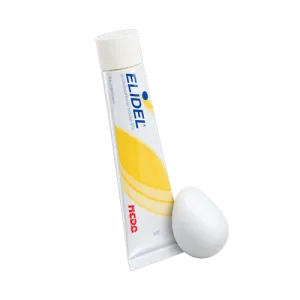
Elidel

Active ingredient: Pimecrolimus
10mg
From $ 73.50
tubes
4.3 (4)

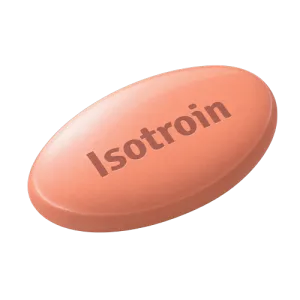
Isotroin

Active ingredient: Isotretinoin
30mg 10mg 20mg
From $ 167.58
pills
4.1 (4)

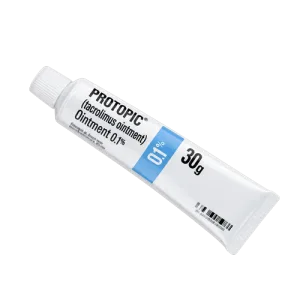
Protopic

Active ingredient: Tacrolimus
0.03%10gm
From $ 79.38
tubes
4.3 (4)

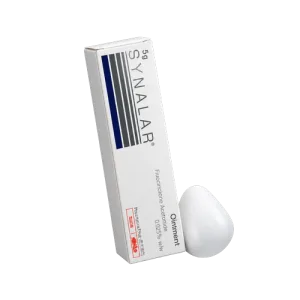
Synalar Current

Active ingredient: Fluocinolone acetonide
0.025%
From $ 129.36
tubes
4.2 (5)

Comparison table: Skin Care

Sources

  1. DailyMed (2024). SYNALAR — fluocinolone acetonide ointment, 0.025% prescribing information.
  2. U.S. Food and Drug Administration (2021). Synalar Ointment prescribing information.
  3. National Library of Medicine (2024). Fluocinolone topical: drug information.

How Buyers Rate Synalar

Based on 5 reviews

Nicola, 66 Verified
Rating: 4.5 out of 5

I used Synalar ointment on the dry eczema patches on my lower legs. After several days, the constant urge to scratch settled and the rough skin became much easier to moisturize. I was pleased with how manageable the flare became.

Oshawa Several days Oct 11, 2026
Ellie, 63 Verified
Rating: 5 out of 5

The ointment helped calm a red contact dermatitis patch on my wrist that had kept flaring after housework. I used a very small amount and the area looked far less angry within the first week. The greasy texture was fine for evening use.

Regina Within the first week Oct 20, 2026
Jane, 48 Verified
Rating: 3.5 out of 5

Synalar reduced the itch on a stubborn patch near my ankle, but the ointment felt heavy under socks during the day. I used it in the evening instead, which was more comfortable. The improvement was real, just slower than I expected.

Kamloops Oct 25, 2026
Karen Z., 54 Verified
Rating: 4.5 out of 5

I had dry, scaly patches on my elbows during a psoriasis flare. Synalar softened the plaques and reduced the redness enough that wearing short sleeves felt comfortable again. The ointment was easy to apply before bed.

Guelph Nov 4, 2026
Kate H., 35 Verified
Rating: 3.5 out of 5

It helped the itchy area on my hand at first, but I noticed more stinging after I used it following frequent handwashing. I stopped applying it and discussed the reaction with my doctor. The dryness needed a different routine as well.

Kitchener Nov 8, 2026
Get our free app Shop faster and track your orders 4.0 · 402 reviews Install