Overview
Shuddha Guggulu is purified guggul resin obtained from Commiphora wightii, a small thorny tree traditionally used in Ayurvedic practice. The resin contains plant sterols known as guggulsterones, which are the best-studied constituents linked to lipid metabolism.
The World Health Organization describes Commiphora mukul—a botanical name often used in scientific literature for guggul—as a source of oleo-gum resin containing steroid-like compounds and volatile oils [1].
How it affects the body
Guggulsterones are plant-derived steroid compounds, chiefly E-guggulsterone and Z-guggulsterone. Laboratory research suggests they interact with the farnesoid X receptor, a nuclear receptor involved in bile-acid production and cholesterol regulation in the liver.
The biological theory is plausible. Clinical outcomes are less predictable.
Guggul’s proposed role centres on liver signalling and bile-acid metabolism rather than directly removing cholesterol from blood vessels.
A controlled trial published in JAMA found that guggulipid did not lower LDL cholesterol in the studied North American population and caused rash in some participants [2].
Formulation
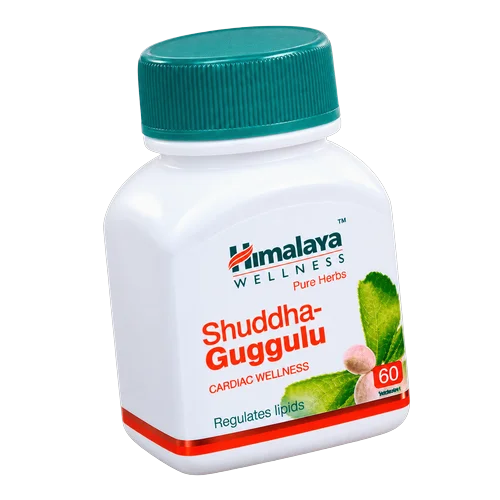
Shuddha Guggulu comes in a bottle of tablets for oral use. The key botanical ingredient is purified Commiphora wightii resin, commonly referred to as guggul. Its pharmacologically relevant constituents include guggulsterones.
Tablet formulations offer a more consistent routine than loose resin. Even so, botanical products can vary in their active-compound profile, and guggulsterone concentration is not the sole predictor of response. Diet, thyroid status, medications, and baseline lipid levels can all influence results.
Take the tablet at a consistent time each day if it is part of your routine. A recurring cue, such as a regular meal, is more useful than taking doses sporadically after a rich meal.
Dosage and administration
Use Shuddha Guggulu orally as tablets with water. The regimen for the chosen strength should be confirmed with a healthcare professional before starting, especially when lipid-lowering medicines, thyroid treatment, or blood-thinning medicines are already part of the person’s routine.
Practical administration points:
- Take only the planned daily amount.
- Use a consistent time of day.
- Avoid doubling tablets after a missed dose.
- Keep other new supplements to a minimum when first starting.
- Record digestive symptoms, rash, sleep changes, or palpitations if they occur.
A symptom diary can be very useful during the first two weeks. Write down the time of use, other medicines taken that day, meals, and any reaction; this often identifies whether a symptom is repeatable or coincidental.
Reasons not to use it
Avoid Shuddha Guggulu or obtain individualized medical advice first if you have:
- A known allergy to guggul resin or related ingredients.
- Active liver disease or unexplained abnormal liver tests.
- A bleeding disorder.
- An overactive thyroid or treatment with thyroid hormone.
- A planned surgical procedure.
- Breastfeeding, unless a qualified clinician has assessed the situation.
Guggul may affect thyroid activity in experimental settings and may interact with medicines that influence bleeding. People using warfarin, direct oral anticoagulants, antiplatelet medicines, thyroid hormone, or medicines metabolized through liver enzymes should review the combination before use.
The European Medicines Agency identifies herb–medicine interactions as a relevant safety consideration for herbal products, especially where anticoagulants, hormonal therapies, or narrow-therapeutic-index medicines are involved [4].
When this is not for you
Shuddha Guggulu is not for you if you are pregnant. Guggul may affect uterine activity and hormonal pathways, so pregnancy is a clear reason to avoid it.
Stop using Shuddha Guggulu and seek prompt medical care for facial swelling, widespread hives, breathing difficulty, yellowing of the eyes, dark urine, or unusual bleeding.
Possible side effects
Shuddha Guggulu is usually tolerated by many adults, though botanical resins can cause gastrointestinal discomfort. Possible reactions include nausea, loose stools, abdominal discomfort, headache, itching, or a skin rash. Skin reactions deserve attention because rashes have occurred in clinical studies of guggul extracts.
Therapeutic indications
Shuddha Guggulu is used for cardiac wellness and support of normal lipid metabolism. Traditional Ayurvedic use also includes support for joint comfort and mobility, sometimes described under the term Sandhi Shotha, which refers to joint swelling or inflammation in Ayurvedic terminology.
The strongest practical reason to consider it is as a botanical addition to lifestyle measures that already address diet, activity, body weight, and smoking. It may be more relevant for people who want to support metabolic health before laboratory values become severely abnormal.
Potential benefits include:
- Support for healthy blood lipid metabolism.
- A traditional role in maintaining cardiovascular wellness.
- Plant compounds with anti-inflammatory activity in laboratory studies.
- Traditional use for joint comfort and mobility.
- Tablet form that is simple to include in a regular routine.
Lipid Support and Joint Comfort
Blood lipid levels include LDL cholesterol, HDL cholesterol, triglycerides, and total cholesterol. LDL is often called bad cholesterol because higher levels contribute to plaque formation in arteries.
Comparison
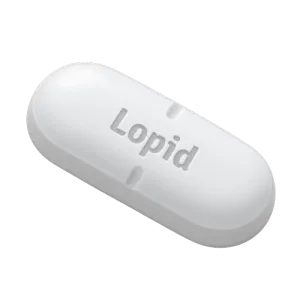
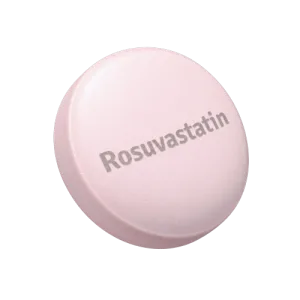
Shuddha Guggulu is a single-botanical tablet approach. It differs from prescription lipid-lowering therapy in both evidence strength and clinical purpose.
| Approach |
Primary mechanism |
Typical role |
| Shuddha Guggulu |
Botanical guggulsterones may influence hepatic lipid signalling |
Wellness support for adults monitoring lipid health |
| Dietary fibre and plant-forward eating |
Reduces intestinal cholesterol absorption and supports weight management |
Foundational lifestyle strategy |
| Prescription statin therapy |
Reduces cholesterol synthesis in the liver |
Treatment for elevated cardiovascular risk |
Statins have much stronger evidence for preventing heart attack and stroke in people who meet treatment criteria, consistent with guidance from the National Institute for Health and Care Excellence (NICE). Shuddha Guggulu may be considered as part of a broader routine, while a statin is selected when a clinician identifies a need for proven LDL reduction.
Health Canada distinguishes natural health products from prescription medicines and expects them to be used according to their intended health purpose [3]. That distinction is useful when setting expectations for a botanical tablet.
Common mistakes
Taking extra tablets to speed up a cholesterol result is a common mistake. Lipid metabolism changes gradually, and increasing intake may raise the chance of digestive upset or skin reactions without creating a faster benefit.
Another mistake is treating a normal-feeling day as proof that cardiovascular risk is low. High LDL cholesterol rarely causes symptoms. Blood testing is more informative than how energetic someone feels.
Some people also begin several wellness products at once. That makes side effects difficult to trace. A rash, loose stools, or new insomnia can be impossible to interpret when multiple botanicals are introduced together.
Stopping prescribed lipid-lowering treatment without a prescriber’s direction is unsafe. The evidence base for prescription therapies in people at elevated cardiovascular risk is far stronger than for guggul preparations.
What doctors say
In clinical practice, a sensible expectation is modest support rather than a dramatic cholesterol change. Physicians tend to focus first on the person’s cardiovascular risk profile: LDL level, blood pressure, diabetes, smoking, kidney function, and family history of early heart disease. A clinician may view Shuddha Guggulu as an adjunct for an adult interested in Ayurvedic botanical support, provided the medication list has been reviewed. They will be more cautious when the person takes thyroid medication or anticoagulants, has had a prior herbal allergy, or needs substantial LDL reduction. Consistency matters, but measurement matters more. A lipid panel after a stable routine provides clearer information than relying on subjective changes.