I used Minomycin at the prescribed dose for several weeks for inflammatory acne and saw fewer painful spots. The improvement was real, but dizziness after some doses made me cautious about driving, so I discussed the timing with my doctor.
Calgary Several weeks Nov 5, 2026
Minomycin
Minomycin is intended for patients with clinician-diagnosed bacterial infections or inflammatory acne requiring oral minocycline. It contains minocycline, a tetracycline antibiotic that limits…
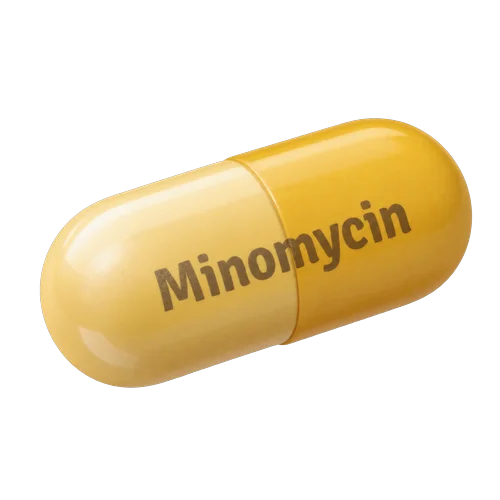
Minomycin is intended for patients with clinician-diagnosed bacterial infections or inflammatory acne requiring oral minocycline. It contains minocycline, a tetracycline antibiotic that limits bacterial protein production and can reduce inflammatory activity. The capsules are taken by mouth, with the dose selected according to the condition being treated.
Overview
Minomycin contains minocycline, a semisynthetic tetracycline antibiotic. Minocycline acts against susceptible bacteria and also has anti-inflammatory properties that can be useful in acne treatment. It is supplied as oral capsules.
How it affects the body
Minocycline inhibits bacterial protein synthesis, limiting the production of proteins required for susceptible organisms to grow and replicate. It also modulates inflammatory signalling and has anti-inflammatory activity, which contributes to its effects in inflammatory acne. Its lipid solubility supports distribution into tissues, including areas associated with sebaceous gland activity.
Formulation
Minomycin contains minocycline, a semisynthetic tetracycline antibiotic. Minocycline acts against susceptible bacteria and also has anti-inflammatory properties that can be useful in acne treatment. It is supplied as oral capsules.
Minocycline is more lipid-soluble than some older tetracyclines. This property supports penetration into tissues, including areas associated with sebaceous gland activity. The medicine reaches systemic circulation after oral administration and is processed mainly through hepatic metabolism and biliary excretion, with additional renal elimination.
The product belongs to the tetracycline antibiotic class. This class includes medicines that interfere with bacterial protein synthesis, preventing susceptible organisms from producing proteins required for growth and replication. Minocycline also affects inflammatory signalling, which helps explain its role in inflammatory acne.
A practical distinction matters: antibiotic activity and anti-inflammatory activity are related but not identical. A reduction in acne inflammation may continue even when the visible bacterial component is only one part of the problem.
Dosage and administration
How much Minomycin to use and how often depends on the purpose of use and is agreed with a doctor or pharmacist. The appropriate regimen differs between acne, infection, and specialist-directed inflammatory treatment. Do not change the interval, extend the course, or use leftover capsules for a later illness.
For oral administration:
- Take the capsule with plenty of water.
- Remain upright after swallowing.
- Take doses at consistent times when a regular schedule has been prescribed.
- Separate minocycline from antacids containing aluminium, calcium, or magnesium, and from iron or zinc supplements, because these minerals can reduce absorption.
- If a dose is missed, take it when remembered unless the next scheduled dose is close; do not double the next dose.
- Complete the prescribed course for a bacterial infection unless the prescriber changes the plan.
Minocycline Capsule Administration
Food may reduce stomach discomfort for some people, although mineral-containing products can interfere with absorption. Milk, calcium-fortified drinks, iron tablets, magnesium-containing antacids, and multivitamins should not be taken at the same time as minocycline unless a suitable separation schedule has been provided.
Do not crush, chew, or open the capsule. The capsule is intended to be swallowed whole. Taking it immediately before lying down is a common practical mistake because tetracycline medicines can irritate the oesophagus.
Reasons not to use it
- Pregnancy, unless a specialist determines that treatment is justified
- Breastfeeding, because tetracyclines may affect the infant
- Children younger than the age permitted by the product’s regulatory guidance, because tetracyclines can affect developing teeth and bone
- Significant liver disease
- Previous drug-induced lupus, autoimmune hepatitis, or severe hypersensitivity linked to minocycline
- A history of raised intracranial pressure
- Known tetracycline allergy
Important interactions include isotretinoin, which may increase concern about intracranial hypertension, and anticoagulants, whose effect may require monitoring. Antacids and mineral supplements containing calcium, magnesium, aluminium, iron, or zinc can reduce absorption when taken too close to minocycline.
When this is not for you
Minomycin is not for you if you have had a serious allergic reaction to minocycline or another tetracycline, or if a clinician has identified a contraindication specific to your medical history. You should also speak with a specialist before using it if you are pregnant or breastfeeding, have significant liver disease, have previously developed an autoimmune reaction to minocycline, or have had raised pressure inside the skull. Tell your doctor about isotretinoin, anticoagulants, antacids, and mineral supplements before treatment.
Possible side effects
Minocycline can cause adverse effects involving the nervous system, digestive tract, skin, liver, and immune system. The frequency and severity depend on treatment duration, dose, individual susceptibility, and concurrent medicines.
Common or recognised reactions include:
- Headache
- Dizziness or light-headedness
- Drowsiness
- Nausea or stomach discomfort
- Constipation or diarrhoea
- Fatigue
- Changes in skin, nail, teeth, or mucosal pigmentation
- Sensitivity to sunlight
- Ringing in the ears or balance disturbance
Drowsiness and dizziness can affect driving, cycling, climbing, or work at height. The first few doses are a sensible time to observe how the medicine affects alertness before undertaking tasks that require precise balance.
Neurological and Gastrointestinal Reactions
Headache, dizziness, and light-headedness are characteristic practical concerns with minocycline. Some patients describe a spinning sensation or imbalance rather than simple sleepiness. These symptoms may interfere with driving and can be more noticeable soon after treatment begins.
Nausea, constipation, diarrhoea, and fatigue can also occur. Taking the capsule with adequate water may help swallowing discomfort, but persistent vomiting or severe abdominal symptoms require medical assessment. A severe headache accompanied by visual disturbance is an urgent warning because tetracycline antibiotics have been associated with intracranial hypertension.
Dermatological Effects and Long-Term Pigmentation
Minocycline can cause blue-grey, brown, or slate-coloured pigmentation of the skin, scars, gums, nails, teeth, or other tissues. This reaction is more associated with prolonged exposure but can occur earlier in susceptible patients. The colour change may persist after treatment stops.
Skin discoloration is not the same as ordinary tanning. New or worsening pigmentation should be reported during clinical follow-up, especially when it appears on the face, lower legs, gums, or old acne scars. Sun protection helps reduce photosensitivity but does not prevent every type of minocycline-related pigmentation.
Rare but serious reactions include severe rash, facial swelling, breathing difficulty, liver injury, drug-induced lupus-like illness, serum sickness-like reactions, and severe vestibular symptoms. Dark urine, yellowing of the eyes, unusual bruising, marked joint pain, fever, or widespread rash needs prompt medical attention.

Therapeutic indications
Minocycline is used mainly for susceptible bacterial infections and inflammatory acne. The exact indication depends on the diagnosis, bacterial sensitivity, treatment history, and the prescriber’s assessment. Regulatory information from Health Canada and the FDA describes minocycline as an antibacterial medicine for selected infections, while dermatology guidance places oral tetracyclines among options for moderate-to-severe inflammatory acne [1].
| Clinical use | Main therapeutic goal | Role of minocycline |
|---|---|---|
| Inflammatory acne | Reduce inflamed papules, pustules, and deeper lesions | Antibacterial and anti-inflammatory |
| Susceptible bacterial infection | Suppress or eliminate susceptible organisms | Systemic antibiotic |
| Rheumatoid arthritis | Reduce inflammatory disease activity in selected cases | Specialist-directed immunomodulatory use |
Management of Inflammatory Acne
Inflammatory acne includes red papules, pustules, nodules, and tender lesions. Minocycline can reduce the bacterial burden associated with acne while dampening inflammatory pathways around the hair follicle. Its lipid solubility may support distribution into skin tissues, though treatment response still varies between patients.
Visible improvement generally takes several weeks. Early treatment can reduce the number of new inflamed lesions before older marks have faded. Acne scarring, persistent nodules, or widespread disease may require a broader plan that includes topical therapy, skin-care measures, or a different systemic approach.
The Canadian dermatology approach favours limiting oral antibiotic exposure and pairing treatment with appropriate topical management when clinically suitable. Antibiotics are not selected for ordinary cosmetic blemishes alone.
Role in Rheumatoid Arthritis Management
Minocycline has immunomodulatory effects that have been studied in rheumatoid arthritis. It may reduce inflammatory activity in selected patients, but this use is distinct from its primary antibacterial role and is generally specialist-directed. It is not a universal substitute for disease-modifying antirheumatic therapy.
Clinical evidence has shown variable benefit. A Cochrane review found that minocycline may provide modest improvement in some rheumatoid arthritis outcomes, while the evidence base remains smaller than for established disease-modifying treatments [2]. The choice depends on disease severity, joint findings, previous treatment, and monitoring requirements.
Comparison
Minomycin is best understood by mechanism rather than by brand comparison. Oral minocycline offers systemic antibacterial and anti-inflammatory activity, while topical acne treatments act mainly at the skin surface. Other oral antibiotics may be selected when bacterial coverage, previous response, tolerability, or local prescribing guidance differs.
| Approach | Main action | Common clinical role |
|---|---|---|
| Oral minocycline | Systemic antibacterial and anti-inflammatory action | Moderate-to-severe inflammatory acne or selected infections |
| Topical retinoid | Normalises follicular cell turnover | Comedonal acne and prevention of new lesions |
| Non-tetracycline oral antibiotic | Systemic antibacterial action through another mechanism | Selected infections or acne when minocycline is unsuitable |
Minocycline may be useful when inflammation is prominent and topical treatment alone has not controlled the condition. Its limitation is systemic exposure: dizziness, pigmentation, autoimmune reactions, and antibiotic-related problems can occur even when the skin is the treatment target.
For acne, Canadian and international dermatology guidance supports antibiotic stewardship. The treatment plan should avoid unnecessary prolonged antibiotic use and should be reviewed when the inflammatory component has improved. The American Academy of Dermatology guideline published in 2024 also places oral antibiotics within a broader acne strategy rather than as indefinite single-agent treatment [3].
Common mistakes
Several avoidable habits can reduce benefit or increase side-effect risk:
- Taking the capsule immediately before bed.
- Swallowing it with only a small sip of water.
- Taking it together with an iron tablet, calcium supplement, or magnesium antacid.
- Doubling a dose after forgetting one.
- Continuing treatment despite severe dizziness or visual symptoms.
- Using old capsules for a new acne flare or suspected infection.
- Stopping as soon as redness improves without following the agreed plan.
- Treating persistent pigmentation as ordinary sun exposure.
- Forgetting to mention isotretinoin, anticoagulants, or supplements.
- Assuming a topical product can replace an oral antibiotic in severe inflammatory acne without clinical review.
A missed dose usually does not justify taking two capsules together. The safer approach is to return to the prescribed schedule unless the prescriber has given different instructions.
What doctors say
In clinical practice, the first question is whether the condition needs an oral antibiotic at all. For acne, clinicians usually assess lesion type, severity, scarring risk, previous treatments, pregnancy status, and the expected duration of therapy before selecting minocycline.
A doctor will also ask about headaches, visual symptoms, dizziness, autoimmune disease, liver problems, and all mineral supplements. These questions are not routine paperwork; they identify specific risks linked with tetracycline therapy.
Treatment response should be judged by fewer inflamed lesions, less tenderness, and fewer new eruptions rather than by skin colour alone. Acne marks can remain after inflammation has settled, so stopping or changing treatment based only on residual discoloration can give a misleading impression of failure.
For rheumatoid arthritis, a rheumatologist weighs minocycline against established disease-modifying options. The aim is control of inflammatory disease, not simply temporary pain relief. Monitoring is more important when treatment continues for an extended period.
The WHO approach to antibiotic stewardship supports using antibacterial medicines for appropriate indications and avoiding unnecessary exposure. EMA safety principles also emphasise recognising serious hypersensitivity, liver, neurological, and autoimmune reactions early.
Common questions
Which diet, exercise, or habits can help or hinder Minomycin treatment?
Health Canada guidance dated 2024 for oral minocycline supports separating the medicine from iron, calcium, magnesium, aluminium, and zinc products because these minerals can interfere with absorption. Regular exercise does not directly improve the antibiotic’s activity, but dizziness makes cycling, swimming alone, climbing, and machinery work less safe. Adequate water and remaining upright after swallowing are useful habits. The FDA prescribing information also warns about vestibular effects that can affect everyday activities. A pharmacist can help plan mineral-product timing.
Is Minomycin suitable for older adults?
Health Canada and FDA guidance dated 2024 do not treat older age alone as an automatic reason to avoid minocycline. Older adults may need closer attention to liver function, kidney function, dizziness, falls, autoimmune symptoms, and interactions with anticoagulants or mineral supplements. A new headache with blurred or double vision needs prompt assessment at any age. The patient’s diagnosis and concurrent medicines determine whether minocycline is appropriate.
How does Minomycin differ from other antibiotics used for acne?
The American Academy of Dermatology guidance dated 2024 describes oral tetracyclines as systemic options for inflammatory acne, with selection based on clinical factors rather than a single universally preferred antibiotic. Minocycline combines antibacterial activity with anti-inflammatory effects and can cause vestibular symptoms and pigmentation that differ from some alternatives. Its lipid solubility supports tissue distribution, while its safety profile requires attention to neurological and autoimmune reactions. The choice should reflect previous response, contraindications, pregnancy status, and treatment duration.
Can the Minomycin capsule be split, crushed, or chewed?
FDA product information dated 2020 supports swallowing oral minocycline capsules whole rather than splitting, crushing, or chewing them. Altering a capsule can make swallowing more difficult and may expose the mouth or throat to an irritating medicine. Take it with a full glass of water and remain upright afterward. If swallowing capsules is difficult, a clinician or pharmacist can identify an appropriate formulation or alternative.
Which condition rules out Minomycin?
Health Canada and FDA guidance dated 2024 identify serious tetracycline hypersensitivity as a clear reason to avoid minocycline. Pregnancy and breastfeeding also require avoidance or specialist direction because tetracyclines can affect developing teeth and bone. A previous minocycline-related autoimmune reaction, serious liver injury, or raised intracranial pressure is another major concern. Severe headache with visual changes during treatment requires urgent medical assessment rather than another dose taken without advice.
Do you offer anonymous delivery?
Your order will be securely packed and shipped within 24 hours. This is exactly what your package will look like (images of an actual item sent). It has the size and look of a regular private letter (24x11x0.7 cm) and its contents cannot be seen.
Comparison
Sources
- U.S. Food and Drug Administration (2020). Minocycline hydrochloride oral capsules and extended-release capsules prescribing information.
- Cochrane (2012). Minocycline for rheumatoid arthritis.
- American Academy of Dermatology (2024). Guidelines of care for the management of acne vulgaris.
How Buyers Rate Minomycin
Based on 3 reviews
I took the capsules at the prescribed dose for several weeks, and they gradually settled the acne on my back and shoulders. It took patience, but new inflamed areas became much less frequent, and I was satisfied with the result.
Nanaimo Several weeks Nov 12, 2026I took Minomycin at the prescribed dose for the duration of treatment, and it helped control a bacterial skin problem after the first treatment did not give enough improvement. I took each capsule with a full glass of water and found the routine straightforward.
Quebec City The duration of treatment Oct 14, 2026