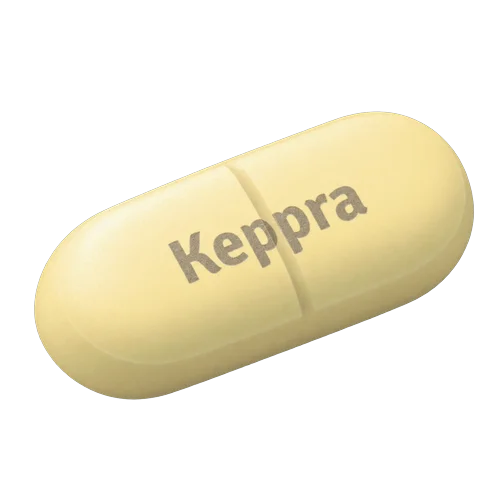
Keppra reduced the seizures I had been having at night, and I felt more confident sleeping alone after several weeks. The first period was a little uneven because I was still getting used to the routine, but the improvement was meaningful.
Nanaimo Several weeks Nov 15, 2026
Keppra
It is prescribed for focal-onset seizures and selected generalized seizure disorders, including juvenile myoclonic epilepsy. By regulating abnormal neuronal signalling, it helps reduce excessive…
It is prescribed for focal-onset seizures and selected generalized seizure disorders, including juvenile myoclonic epilepsy. By regulating abnormal neuronal signalling, it helps reduce excessive electrical activity in the brain.
Overview
Levetiracetam, the active ingredient of Keppra, is an antiepileptic used to manage seizures associated with epilepsy.
How it affects the body
By regulating abnormal neuronal signalling, it helps reduce excessive electrical activity in the brain.
Formulation
Keppra contains levetiracetam as its active ingredient. Levetiracetam is an anticonvulsant used to reduce seizure frequency in people with epilepsy and may be prescribed alone or alongside another antiseizure medicine, depending on the clinical situation.
Dosage and administration
Keppra tablets are taken by mouth. The amount used and how often it is taken depend on the purpose of treatment and are agreed with a doctor or pharmacist. Treatment may begin at a lower amount and increase gradually, especially when seizure control and tolerability are being assessed.
Practical administration points include:
- Take each dose at the same times each day.
- Swallow immediate-release tablets with water.
- Keppra may be taken with or without food.
- If stomach upset occurs, taking it with food may be more comfortable.
- If a dose is missed, take it when remembered unless the next dose is near.
- Do not take two doses together to compensate for a missed dose.
- Continue treatment consistently, even when seizures have stopped.
- Do not stop treatment abruptly unless a clinician gives a specific stopping plan.
The oral solution is useful when swallowing tablets is difficult or when a carefully measured liquid dose is needed. Extended-release levetiracetam, such as Keppra XR, is designed to release the active ingredient over a longer period and follows different administration instructions from immediate-release tablets.
Extended-release versus immediate-release formulations
Immediate-release tablets release levetiracetam over a shorter period and are commonly taken more than once daily. Extended-release tablets are formulated to release the medicine gradually, which may allow a different dosing schedule.
Keppra XR should not be treated as an interchangeable tablet on a milligram-for-milligram schedule without a prescriber’s direction. The release profile, timing, and total daily regimen may differ.
A common practical mistake is changing from immediate-release Keppra to Keppra XR while keeping the old schedule. That can lead to excessive exposure, inadequate coverage, or avoidable adverse effects. The formulation should be confirmed before any switch.
Reasons not to use it
This medication is not suitable for a person with a previous serious allergic reaction to levetiracetam or a formulation ingredient. A clinician must also review treatment carefully when there is significant kidney impairment, severe depression, suicidal thinking, or a history of serious behavioural reactions to antiseizure medicines.
Pregnancy requires an individual risk–benefit assessment rather than automatic discontinuation. Uncontrolled seizures can also harm the pregnant patient and fetus. The medication regimen should be planned before conception whenever possible.
Levetiracetam can pass into breast milk. Breastfeeding decisions depend on the dose, the infant’s health, sedation, feeding, and clinical monitoring.
Health Canada’s product information describes renal dosing, psychiatric reactions, somnolence, and seizure-related precautions as clinically relevant considerations [1].
When this is not for you
NOT for you if you have had a serious allergic reaction to levetiracetam or a formulation ingredient.
Possible side effects
Levetiracetam is often selected because it has relatively few clinically significant pharmacokinetic interactions. It can still cause adverse reactions, and its effects on alertness and mood deserve attention.
Common or clinically recognised effects include:
- Sleepiness or drowsiness
- Dizziness
- Weakness or asthenia
- Headache
- Fatigue
- Irritability
- Agitation
- Reduced appetite
- Nausea or other digestive discomfort
- Coordination problems
Sleepiness and dizziness may be more noticeable during the first days or after a dose increase. Driving, cycling in traffic, climbing, swimming alone, and operating machinery require extra care until the individual response is clear.
Mood and behaviour changes are a distinctive counselling point. Some patients develop irritability, anger, anxiety, depressed mood, aggression, or unusual emotional reactions. These changes may appear after starting treatment or after increasing the dose.
Severe rash, facial swelling, breathing difficulty, severe confusion, hallucinations, suicidal thoughts, or marked behavioural deterioration require urgent medical attention. New or worsening seizures also require prompt assessment.
A practical nuance is that fatigue may come from the medicine, the epilepsy itself, poor sleep, or another sedating treatment. Recording when tiredness occurs can help identify the likely cause.

Therapeutic indications
Keppra contains levetiracetam, an anticonvulsant used to reduce seizure frequency in people with epilepsy. Depending on the clinical situation, it may be prescribed alone or alongside another antiseizure medicine. The choice depends on seizure type, age, kidney function, previous treatment response, and other medicines.
Levetiracetam is used in the management of:
- Focal-onset seizures, which begin in one area of the brain
- Generalized tonic-clonic seizures
- Myoclonic seizures associated with juvenile myoclonic epilepsy
- Seizure disorders requiring add-on anticonvulsant treatment
- Certain urgent seizure situations under specialist supervision, including status epilepticus
Management of partial-onset and generalized seizures
Focal-onset seizures may involve altered awareness, unusual movements, sensory changes, or repetitive behaviours. They can spread and become bilateral tonic-clonic seizures. Keppra helps limit the abnormal neuronal activity that allows a seizure to start or spread.
Juvenile myoclonic epilepsy often causes brief, shock-like muscle jerks, commonly after waking, and may also include generalized tonic-clonic seizures. Levetiracetam is one of the medicines used in this setting. Treatment plans are individualised because seizure patterns differ between patients.
The goal is seizure control with the fewest troublesome effects. A seizure diary can help show whether episodes are becoming less frequent, whether triggers are present, and whether missed doses are affecting control.
Levetiracetam does not cure the underlying tendency to epilepsy. It reduces seizure activity while treatment continues. Stopping it suddenly can increase seizure risk.
Comparison
Antiseizure medicines are selected by seizure type, age, pregnancy considerations, kidney or liver function, interactions, and previous response. No single anticonvulsant is the best choice for every person.
| Medicine or category | Main pharmacological distinction |
|---|---|
| Levetiracetam, including Keppra | Binds to synaptic vesicle protein SV2A and has limited enzyme-inducing activity |
| Lamotrigine or carbamazepine | Acts mainly through voltage-gated sodium-channel modulation; interaction and rash considerations differ |
| Valproate, topiramate, or phenobarbital | Broader or different mechanisms, with distinct cognitive, metabolic, reproductive, or sedative concerns |
Generic levetiracetam contains the same active ingredient as Keppra. The clinically relevant issue is the prescribed formulation and consistent use. Immediate-release levetiracetam and extended-release Keppra XR differ in release pattern and dosing schedule.
Briviact contains brivaracetam, a related medicine that also targets SV2A but has different pharmacological properties. Lamictal contains lamotrigine. Dilantin contains phenytoin. Topamax contains topiramate. Gabapentin, lacosamide, divalproex, carbamazepine, diazepam, and phenobarbital belong to other antiseizure treatment approaches.
Diazepam is often used for acute seizure control or emergency rescue plans rather than as the routine long-term medicine for epilepsy. Valproate and lamotrigine may be preferred in some seizure syndromes, while carbamazepine can be useful for selected focal seizures. These choices require clinical matching rather than simple ranking.
Brivaracetam, lacosamide, and levetiracetam may be considered when interaction burden is a major concern. Kidney function still matters with levetiracetam because the medicine is eliminated mainly through the kidneys.
Common mistakes
Several practical errors can reduce seizure control or make side effects harder to interpret:
- Taking doses at widely different times each day
- Stopping treatment because seizures have been absent
- Doubling the next dose after a missed tablet
- Crushing an extended-release tablet
- Switching formulations without a new schedule
- Ignoring new irritability or aggressive behaviour
- Drinking alcohol while already experiencing drowsiness or dizziness
- Driving before knowing how the medicine affects alertness
- Failing to mention kidney disease
- Treating a seizure diary as unnecessary
One easily missed detail is formulation confusion. A tablet marked for extended release is not managed in the same way as an immediate-release tablet, even though both contain levetiracetam.
Another is delayed reporting of mood changes. Family members may notice the problem first, and their observations can be clinically valuable.
The World Health Organization describes epilepsy as a neurological disorder requiring continuing treatment and attention to seizure safety, adherence, and social functioning [3].
What doctors say
In clinical practice, doctors often assess three outcomes together: seizure frequency, seizure severity, and day-to-day function. A medicine that reduces seizures but causes disabling sedation or severe irritability may need adjustment.
A neurologist may continue Keppra when it controls seizures without significant interaction problems. The decision can change if mood symptoms, aggression, dizziness, or excessive sleepiness interfere with work or relationships.
Treatment response is not judged from a single good day. Sleep loss, fever, missed doses, alcohol, and hormonal changes can affect seizure control. A consistent record gives the prescriber more useful information than general statements such as “it seems better.”
The American Academy of Neurology and NICE guidance support treatment plans that consider seizure type, comorbidities, adverse effects, and patient preferences. NICE guidance published in 2022 also stresses individualised antiseizure treatment and review when seizures remain uncontrolled [2].
A doctor may also review whether rescue treatment is needed. Diazepam or another emergency medicine can have a role in a seizure action plan, but it is not a replacement for the regular Keppra regimen.
Common questions
What should be checked or discussed with a doctor before starting Keppra?
Kidney function, previous allergic reactions, mood history, pregnancy plans, breastfeeding, and all current medicines should be discussed before treatment. Health Canada information from 2023 identifies renal dosing and psychiatric reactions as relevant considerations for levetiracetam . A clinician should also know about previous antiseizure treatment and the exact seizure pattern. This information helps determine whether Keppra is appropriate and how the regimen should begin. The clinician should also review the planned follow-up schedule.
What happens when Keppra is stopped, and does it need to be tapered?
Stopping levetiracetam suddenly can increase the risk of breakthrough seizures or prolonged seizures. NICE guidance from 2022 supports planned withdrawal when clinically appropriate, with the reduction schedule matched to the individual treatment history . The taper may be slower when several anticonvulsants are being used or when seizure control has been difficult. Never replace a planned taper with skipped doses.
Which diet, exercise, or habits help or hinder treatment?
Regular sleep, consistent dosing, hydration, and a predictable daily routine can support seizure control. The WHO epilepsy guidance from 2024 emphasises seizure safety and ongoing management rather than a single lifestyle cure. Sleep deprivation, heavy alcohol use, missed meals, overheating, and missed doses may increase risk in susceptible people. Exercise is usually helpful, but activities involving heights, open water, or traffic require appropriate precautions.
Can Keppra tablets be split, crushed, or chewed?
Immediate-release tablets may have different handling instructions from extended-release tablets. The FDA prescribing information from 2021 warns that modified-release tablets should be swallowed as directed rather than crushed or chewed [4]. Crushing an extended-release tablet can alter drug delivery and increase the amount released at once. If swallowing is difficult, a clinician can consider a suitable formulation instead of altering the tablet.
How does Keppra differ from the closest alternative?
Keppra contains levetiracetam, while Briviact contains brivaracetam; both act at the SV2A synaptic vesicle protein but are not identical medicines. A 2020 Cochrane review of antiseizure treatments describes treatment selection as dependent on seizure type, response, and tolerability rather than a universal first choice [5]. Levetiracetam is often valued for limited enzyme-inducing interactions, while behavioural adverse effects can influence whether it remains suitable. The closest alternative depends on the seizure syndrome and the patient’s medical history.
How long does one dose of Keppra keep working?
The duration of coverage depends on the formulation, kidney function, total regimen, and whether the tablet is immediate-release or extended-release. Health Canada’s 2023 product information distinguishes administration considerations between formulations and supports consistent timing. Missing a dose can reduce seizure protection before a patient notices any physical symptom. The prescribed schedule should remain unchanged unless the treatment plan is revised.
Can Keppra be used by people under 18?
Levetiracetam is used in children and adolescents for selected seizure disorders, with dosing determined by age, body weight, seizure type, kidney function, and formulation. NICE guidance from 2022 includes levetiracetam among antiseizure treatment options for children and young people in appropriate clinical situations. Behavioural changes, sleepiness, and school concentration should be monitored closely. Liquid treatment may be selected when a child cannot swallow tablets, while tablets are used when suitable.
Do you offer anonymous delivery?
Your order will be securely packed and shipped within 24 hours. This is exactly what your package will look like (images of an actual item sent). It has the size and look of a regular private letter (24x11x0.7 cm) and its contents cannot be seen.
Comparison
Sources
- Health Canada (2023). Product Monograph: Keppra (levetiracetam) Tablets and Oral Solution.
- NICE (2022). Epilepsies in children, young people and adults: NICE guideline NG217.
- World Health Organization (2024). Epilepsy: Fact sheet.
- U.S. Food and Drug Administration (2021). Keppra (levetiracetam) Prescribing Information.
- Cochrane (2020). Levetiracetam add-on for drug-resistant focal epilepsy.
How Buyers Rate Keppra
Based on 3 reviews
I had taken Keppra tablets for several months and noticed a clear reduction in my seizure episodes. Taking the doses at fixed times fitted easily around breakfast and dinner, and I was satisfied with the control.
Sherbrooke Several months Oct 18, 2026Keppra helped me go through ordinary days without the same fear of another seizure. I kept the tablets beside my morning water and did not miss doses once that became part of my routine.
Kitchener Nov 2, 2026