I used Evista once daily for several months as part of my osteoporosis plan. My follow-up bone scan was reassuring, and I liked that the tablet fit easily into my morning routine. I took it with water and did not need to change the timing around breakfast.
St. Catharines Several months Nov 19, 2026
Evista
Adults who have gone through menopause and need treatment or prevention of osteoporosis may be prescribed Evista. Evista is also used for breast cancer risk reduction in selected postmenopausal women.
Overview
It contains raloxifene hydrochloride, a selective estrogen receptor modulator that supports bone strength and lowers the risk of vertebral fractures.
How it affects the body
Raloxifene is a selective estrogen receptor modulator that produces estrogen-like effects in bone while limiting estrogen signalling in breast tissue. It reduces bone breakdown and does not stimulate the uterine lining in the same way as estrogen therapy.
Formulation
Evista contains raloxifene hydrochloride, also called raloxifene HCl. The tablets contain raloxifene and are taken by mouth. Raloxifene belongs to the class of selective estrogen receptor modulators, commonly shortened to SERMs.
SERMs interact with estrogen receptors in a tissue-specific way:
- In bone, raloxifene acts in an estrogen-like manner and helps reduce bone breakdown.
- In breast tissue, it blocks some estrogen effects.
- In the uterus, it does not stimulate the endometrium in the same way as estrogen therapy.
- It does not replace estrogen throughout the body.
This mixed activity explains why raloxifene is described as both an estrogen agonist and antagonist. An agonist activates a receptor response, while an antagonist blocks or limits that response.
Evista is intended mainly for postmenopausal women with osteoporosis or an increased risk of osteoporotic fractures. It is also prescribed for selected postmenopausal women with an elevated risk of invasive estrogen-dependent breast cancer. The United States Food and Drug Administration has approved raloxifene for osteoporosis-related indications and breast cancer risk reduction; Health Canada and the European Medicines Agency provide corresponding regulatory information for raloxifene-containing medicines [1].
Dosage and administration
The dose and schedule for Evista are decided individually, taking age, other medicines, and health conditions into account. Evista may be taken with or without food.
Practical administration points include:
- Swallow the tablet with water.
- Take it at a consistent time each day.
- Continue calcium and vitamin D intake when dietary intake is inadequate, according to the treatment plan.
- Do not take extra tablets after a missed dose.
- If the next scheduled dose is near, skip the missed dose and resume the usual schedule.
- If a missed dose is remembered earlier, take it when practical unless the next dose is approaching.
Evista is not a medicine for rapid relief of bone pain. Its purpose is long-term fracture-risk management. A prescriber may monitor bone mineral density, fracture history, mobility, and the development of clotting risks during treatment.
Calcium supplements require sensible timing when they are used with other medicines. Calcium can reduce the absorption of some oral drugs, so a pharmacist or prescriber may recommend separating doses. Calcium and vitamin D should complement, not replace, the prescribed osteoporosis treatment.
Reasons not to use it
Evista is not intended for premenopausal women, and it must not be used during pregnancy. Raloxifene can harm a developing fetus, so pregnancy should be excluded before treatment and contraception should be discussed when pregnancy remains possible.
- Have current or previous deep vein thrombosis, pulmonary embolism, or retinal vein thrombosis.
- Are being treated for an active blood clot.
- Are pregnant or could become pregnant.
- Have unexplained vaginal bleeding that has not been assessed.
- Have a serious allergy to raloxifene or a tablet ingredient.
- Are immobilised for a prolonged period or are about to undergo major surgery without a clinician’s plan.
Raloxifene should not be combined casually with estrogen products or systemic hormone therapy. Bile-acid binding medicines such as cholestyramine can reduce raloxifene absorption. Warfarin and other anticoagulants require medication review because clotting management and bleeding risk need individual assessment. Raloxifene is not a substitute for anticoagulation.
The product is not intended to prevent coronary heart disease. It should not be chosen as a cardiovascular-prevention treatment.
When this is not for you
Evista is not for you if you:
- Have current or previous deep vein thrombosis, pulmonary embolism, or retinal vein thrombosis.
- Are being treated for an active blood clot.
- Are pregnant or could become pregnant.
- Have unexplained vaginal bleeding that has not been assessed.
- Have a serious allergy to raloxifene or a tablet ingredient.
- Are immobilised for a prolonged period or are about to undergo major surgery without a clinician’s plan.
Possible side effects
Common adverse effects associated with raloxifene include hot flashes, leg cramps, peripheral swelling, and flu-like symptoms. Hot flashes may be more noticeable early in treatment and can affect sleep or comfort. Leg cramps may occur intermittently rather than continuously.
Possible adverse effects include:
- Hot flashes or sudden warmth
- Leg cramps
- Swelling of the hands, feet, or lower legs
- Joint pain
- Headache
- Nausea
- Increased sweating
- Flu-like symptoms
The most clinically significant risk is venous thromboembolism. This includes deep vein thrombosis, in which a clot forms in a deep vein, and pulmonary embolism, in which a clot travels to the lungs. Symptoms such as one-sided leg swelling, unexplained leg pain, sudden chest pain, coughing blood, or unexpected breathlessness require urgent medical attention.
Raloxifene can also increase the risk of fatal stroke in some women with high cardiovascular risk. Sudden facial weakness, arm weakness, speech difficulty, loss of balance, or a severe unexplained headache requires emergency care.
Patients sometimes attribute new leg discomfort to age or exercise. With raloxifene, the pattern matters: persistent one-sided symptoms are more concerning than brief cramps affecting both legs. Treatment decisions should also account for smoking, previous clots, atrial fibrillation, uncontrolled blood pressure, and reduced mobility.
Therapeutic indications
After menopause, lower estrogen activity accelerates bone remodelling. Bone-resorbing cells can remove mineralised bone faster than bone-forming cells replace it. Over time, this reduction in bone mineral density can increase the chance of vertebral, hip, wrist, and other fractures.
Evista reduces bone turnover and helps preserve bone mineral density in postmenopausal women. Its clearest fracture benefit concerns vertebral fractures, including clinically apparent spine fractures. It does not provide the same fracture profile at every skeletal site, so treatment selection depends on fracture history, bone-density results, age, mobility, and other risk factors.
| Treatment goal | What raloxifene contributes |
|---|---|
| Osteoporosis prevention | Helps slow postmenopausal bone loss |
| Osteoporosis treatment | Supports bone mineral density and reduces vertebral-fracture risk |
| Spine protection | Provides its strongest documented fracture benefit in the vertebrae |
Evista does not rebuild severely damaged bone immediately. Bone-density changes develop gradually, and fracture prevention depends on continued treatment, adequate calcium and vitamin D intake, physical activity suited to the person’s health, and reduction of fall risks. The National Osteoporosis Foundation and clinical trial evidence support raloxifene as a targeted option for postmenopausal bone health rather than a universal treatment for every form of osteoporosis [2]. Clinicians also review adherence and fall risk. These factors help determine whether the treatment remains appropriate.
A useful clinical distinction is the location of the fracture risk. Raloxifene is most useful when vertebral protection and breast cancer risk reduction are central goals. A woman with a recent hip fracture or very high short-term fracture risk may require a different treatment strategy.
Raloxifene can lower the risk of developing invasive breast cancer in selected postmenopausal women, especially cancers that depend on estrogen signalling. Its anti-estrogenic activity in breast tissue limits receptor stimulation that can contribute to the growth of some hormone-sensitive breast cancers.
Evista is used for risk reduction. It is not a treatment for active breast cancer, does not remove an existing tumour, and does not replace breast screening or specialist cancer care.
Doctors assess breast cancer risk using factors such as age, family history, previous breast findings, genetic risk, and the person’s risk of blood clots. The balance between benefit and harm differs from one patient to another. Raloxifene is not used to reduce the risk of every breast cancer subtype.

Comparison
Raloxifene, alendronic acid, and denosumab work through different pathways. The best choice depends on fracture location, kidney function, digestive health, injection preferences, adherence, cancer-risk considerations, and clotting risk.
| Treatment | Mechanism and administration | Clinical role |
|---|---|---|
| Evista — raloxifene | SERM; oral tablet taken daily | Vertebral-fracture prevention and selected breast cancer risk reduction |
| Alendronic acid | Bisphosphonate; oral dosing schedule varies | Broad osteoporosis treatment with established fracture-prevention use |
| Denosumab | Monoclonal antibody; subcutaneous injection at scheduled intervals | Osteoporosis treatment when a potent antiresorptive option is appropriate |
Alendronic acid, the active ingredient in Fosamax, binds to bone and suppresses osteoclast activity. It may be preferred when broad fracture protection is required and the patient can follow administration rules involving posture and timing.
Denosumab, the active ingredient in Prolia, blocks RANK ligand, a signal required for osteoclast development. It may suit some patients who cannot use oral bisphosphonates. Its dosing schedule differs from Evista, and stopping denosumab requires a planned transition because bone turnover can rise after discontinuation.
Evista offers a distinct combination of vertebral protection and breast cancer risk reduction. Its limitation is the increased risk of venous clots and the absence of reliable protection against every fracture type. A treatment that suits one postmenopausal woman may be unsuitable for another.
Common mistakes
Several practical mistakes can reduce the benefit of Evista or increase avoidable risk.
- Taking two tablets after forgetting one dose.
- Continuing treatment through prolonged bed rest without contacting the prescriber.
- Treating new one-sided leg swelling as an ordinary cramp.
- Starting estrogen therapy without a medication review.
- Assuming raloxifene protects against hip fractures in the same way as vertebral fractures.
- Stopping calcium and vitamin D intake despite a low dietary supply.
- Taking calcium at the same time as medicines whose absorption it can reduce.
- Using Evista as treatment for active breast cancer.
- Continuing the medicine during pregnancy.
- Treating hot flashes as a reason to change the dose independently.
One subtle mistake is overlooking travel or recovery after surgery. A long period of sitting can add to clot risk, especially when combined with reduced mobility, dehydration, or a previous clotting history.
What doctors say
In clinical practice, doctors usually consider raloxifene when vertebral-fracture prevention is a major goal and the patient has no important thromboembolic risk. The additional breast cancer risk-reduction effect can influence treatment selection for some postmenopausal women.
The American College of Physicians has generally placed SERMs behind first-line options such as bisphosphonates or denosumab for many patients requiring primary osteoporosis treatment. This reflects differences in fracture coverage and the risk of venous thromboembolism, not a lack of pharmacological activity.
The FDA approval of raloxifene supports its use for defined osteoporosis and breast cancer risk-reduction indications. Health Canada and the EMA also emphasise patient selection, clot-risk assessment, and attention to immobilisation during treatment [3].
A prescriber will usually ask about:
- Previous clots or clotting disorders
- Stroke or transient ischaemic attack
- Smoking and cardiovascular risk
- Recent surgery or planned surgery
- Mobility and fall risk
- Menopause status
- Other hormone treatments
- Calcium and vitamin D intake
- Breast cancer risk and screening history
Common questions
How long does one Evista dose keep working?
A once-daily dose is designed to maintain raloxifene exposure across the dosing interval. The 2021 EMA product information describes daily administration for osteoporosis and breast cancer risk-reduction indications [4]. Evista does not produce a short, noticeable effect like a pain reliever; its clinical purpose depends on sustained treatment. Bone protection develops over continued use rather than after one tablet.
What should I do if the expected result does not come?
Contact the prescribing clinician if follow-up results show ongoing bone loss, a new fracture, or persistent treatment concerns. The Endocrine Society guidance available in 2025 supports reassessment of fracture risk, adherence, secondary causes of osteoporosis, and the need for another treatment strategy. Do not increase the dose independently. A lack of improvement may reflect severe baseline osteoporosis, missed doses, inadequate calcium or vitamin D intake, or a treatment that does not match the fracture pattern.
Can Evista be combined with calcium or vitamin D supplements?
Calcium and vitamin D are commonly considered alongside osteoporosis treatment when dietary intake is insufficient. Health Canada guidance from 2020 and raloxifene prescribing information support reviewing supplements as part of the individual bone-health plan [5]. Calcium can interfere with absorption of some medicines, so the timing may need to be separated from other tablets. Avoid adding high-dose supplements without reviewing kidney function, dietary intake, and existing medicines.
How soon does Evista’s effect become noticeable?
Most people do not feel bone-density improvement directly. The 2022 National Osteoporosis Foundation guidance explains that osteoporosis treatment is assessed through fracture history, clinical review, and bone-density monitoring rather than a rapid sensation after each dose. Hot flashes or leg cramps may appear sooner than any measurable bone benefit. Continue the prescribed regimen unless a clinician advises a change because fracture protection is a long-term outcome.
Which condition rules Evista out completely?
A current or previous deep vein thrombosis, pulmonary embolism, or retinal vein thrombosis is a major reason Evista is unsuitable. The 2021 EMA product information identifies venous thromboembolic disease as a contraindication to raloxifene treatment . Pregnancy is another clear exclusion because raloxifene can harm fetal development. Unexplained vaginal bleeding also requires assessment before treatment begins.
Can I drive, concentrate, or operate machinery while taking Evista?
Evista does not usually cause the sedation associated with sleeping tablets or opioid pain medicines. The 2020 Health Canada product information describes dizziness and visual symptoms as possible concerns for some patients, so driving should wait if these occur. Health Canada advises judging individual response before operating machinery, especially during the first days of treatment. Hot flashes, headache, or leg discomfort can also reduce concentration even without sedation.
What should I do after a missed dose?
Take the missed tablet when remembered unless the next scheduled dose is near. If the next dose is approaching, skip the missed tablet and return to the regular once-daily schedule. The 2020 FDA prescribing information advises against taking two doses together after a missed dose . A single missed tablet does not justify doubling the next dose or changing the treatment plan.
Do you offer anonymous delivery?
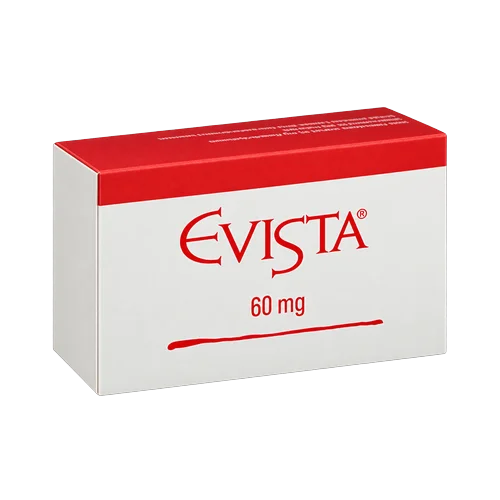
Your order will be securely packed and shipped within 24 hours. This is exactly what your package will look like (images of an actual item sent). It has the size and look of a regular private letter (24x11x0.7 cm) and its contents cannot be seen.
Comparison
Sources
- U.S. Food and Drug Administration (2020). EVISTA (raloxifene hydrochloride) Prescribing Information.
- National Osteoporosis Foundation (2022). Clinician’s Guide to Prevention and Treatment of Osteoporosis.
- American College of Physicians (2017). Pharmacologic Treatment of Primary Osteoporosis or Low Bone Mass to Prevent Fractures in Adults: Clinical Practice Guideline Update.
- European Medicines Agency (2021). Evista: Summary of Product Characteristics.
- Health Canada (2020). Raloxifene Hydrochloride Product Monograph.
How Buyers Rate Evista
Based on 3 reviews
I took one 60 mg tablet daily for several months. Evista gave me a practical daily option after menopause. I felt more confident staying consistent with my bone-health plan, and I appreciated that it was a tablet rather than an injection. The benefit was gradual, so I judged it by follow-up care rather than expecting an immediate change.
Charlottetown Several months Oct 22, 2026I took one 60 mg tablet daily for several weeks. I noticed fewer problems with my bone treatment after switching to a daily tablet, but the hot flashes became irritating during the first weeks. They settled somewhat, although the experience was only partly positive. I discussed the symptoms with my doctor before deciding whether to continue.
Kitchener Several weeks Nov 11, 2026