Skip to content
contact@fairviewphysiotheraapy.com
Fast & Discrete Delivery Save up to 80%
In stock Rhinocort
Allergies

Rhinocort

The nasal spray is used by adults and children of eligible age for allergic rhinitis, including seasonal and year-round symptoms. It reduces swelling, congestion, sneezing, itching, and watery…

Guaranteed quality Original product
Delivery: from 4 days Discreet shipping
24/7 Support Always available
Active ingredient: Budesonide
Select dosage:
Select pack Package Per unit Price
$ 149.94 $ 149.94
$ 129.36 $ 299.88 $ 258.72 Save 14%
Free Regular Delivery $ 122.99 $ 449.82 $ 368.97 Save 18%
Free Express Delivery $ 119.81 $ 599.76 $ 479.22 Save 20%
Free Express Delivery $ 118.48 $ 749.70 $ 592.41 Save 21%
Free Express Delivery $ 117.11 $ 899.64 $ 702.66 Save 22%
Free Express Delivery $ 115.92 $ 1,049.58 $ 811.44 Save 23%
Free Express Delivery $ 115.21 $ 1,199.52 $ 921.69 Save 23%
Free Express Delivery $ 114.99 $ 1,349.46 $ 1,034.88 Save 23%
Best value Free Express Delivery $ 114.51 $ 1,499.40 $ 1,145.13 Save 24%
$ 123.48 $ 123.48
Free Regular Delivery $ 107.31 $ 370.44 $ 321.93 Save 13%
Best value Free Express Delivery $ 93.35 $ 740.88 $ 560.07 Save 24%

Free delivery on orders from $ 294.00, free express delivery from $ 441.00

Secure payment methods:
VISA AMEX JCB DISCOVER

The nasal spray is used by adults and children of eligible age for allergic rhinitis, including seasonal and year-round symptoms. It reduces swelling, congestion, sneezing, itching, and watery discharge by acting directly on nasal tissues.

Overview

Budesonide, the active corticosteroid in Rhinocort, calms inflammation inside the nose.

How it affects the body

Budesonide binds to glucocorticoid receptors in cells of the nasal mucosa. This changes the production of inflammatory proteins and reduces the activity of immune cells involved in allergic reactions. Less inflammation means less tissue swelling and less mucus secretion.

The medicine does not work by instantly shrinking blood vessels. That distinguishes it from topical decongestant sprays, which may open the nose quickly but can cause rebound congestion when used for too many consecutive days. Rhinocort addresses the inflammatory process that drives persistent allergy symptoms.

The first improvement may be gradual. Regular use gives the medicine time to reduce inflammation across the nasal lining. A single spray may not provide the same immediate sensation as a decongestant, yet consistent anti-inflammatory treatment can provide better control of recurring allergy symptoms.

If the nose is heavily blocked, gently clear it before use. A clear nasal passage allows more of the spray to reach the mucosa instead of remaining near the nostril opening.

Formulation

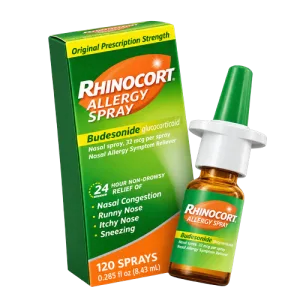
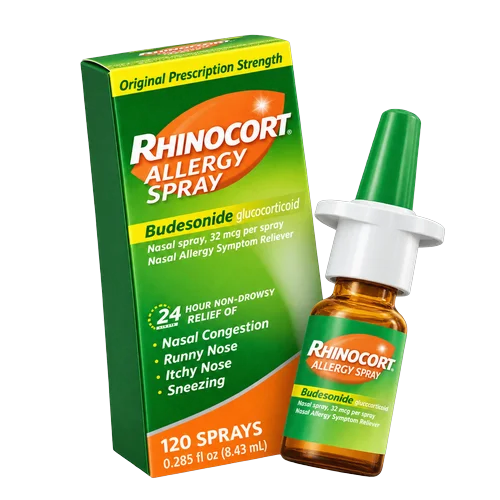
Rhinocort contains budesonide, an intranasal corticosteroid related to the cortisone family. The product is supplied as a nasal spray with 120 sprays. Budesonide acts locally on the nasal lining, where allergic inflammation develops.

Corticosteroids reduce the release and activity of inflammatory substances, including mediators involved in swelling, mucus production, itching, and sneezing. Intranasal delivery concentrates treatment at the affected tissue and produces less whole-body exposure than an oral corticosteroid course when used correctly. Health Canada classifies budesonide nasal spray as a corticosteroid treatment for nasal allergy symptoms [1].

The spray is intended for the inside of the nose. It is not an inhaler for the lungs, an eye preparation, or a throat spray.

Aim the nozzle slightly outward, toward the outer wall of the nostril, rather than toward the nasal septum. This reduces the chance of irritation and nosebleeds.

Dosage and administration

A practical technique is:

  1. Gently blow the nose to clear excess mucus.
  2. Shake the spray if the product instructions require shaking.
  3. Keep the head slightly forward, not tilted backward.
  4. Close one nostril with a finger.
  5. Place the nozzle just inside the other nostril.
  6. Aim the nozzle toward the outer side of the nose.
  7. Breathe in gently through the nose while releasing the spray.
  8. Breathe out through the mouth.
  9. Repeat on the other side if the prescribed regimen requires treatment in both nostrils.
  10. Wipe the nozzle and replace its protective cover.

Do not inhale sharply. Strong inhalation can pull the medicine toward the throat, where it may cause an unpleasant taste or throat irritation instead of depositing on the nasal lining. Do not spray toward the nasal septum, the narrow partition between the nostrils.

Priming may be required when a new device is first used or after a period without use. The precise priming method depends on the device design. A spray that produces an uneven stream should not be forced into the nose; clean handling and correct preparation help maintain a consistent mist.

Reasons not to use it

Rhinocort is not suitable for everyone. This treatment is not for you if you have:

  • A known allergy to budesonide or an ingredient in the spray
  • An untreated infection inside the nose
  • A recent nasal operation or significant nasal injury that has not healed
  • Recurrent severe nosebleeds without medical assessment
  • A condition requiring avoidance of corticosteroids

Tell the prescriber about tuberculosis, fungal infections, untreated bacterial infections, glaucoma, cataracts, liver disease, or previous nasal surgery. Corticosteroids can reduce local immune activity and may slow healing in damaged tissue.

Interactions can occur when Rhinocort is combined with other corticosteroids, including some inhaled, oral, injected, or skin preparations. Strong CYP3A4 inhibitors, such as ritonavir, cobicistat, ketoconazole, or itraconazole, can increase budesonide exposure. Health Canada safety information advises attention to cumulative corticosteroid exposure and clinically relevant interactions [4].

Pregnancy and breastfeeding require an individual assessment. Budesonide has been used during pregnancy when treatment is clinically needed, but the lowest suitable exposure is generally preferred. Do not add another corticosteroid product without confirming that the combined treatment is appropriate.

When this is not for you

This may not be suitable if you are allergic to budesonide or another spray ingredient, have an infection or an unhealed injury inside the nose, or experience unexplained severe nosebleeds. Speak with a prescriber before using it if you have tuberculosis, a fungal or bacterial infection, glaucoma, cataracts, liver disease, or previous nasal surgery. Pregnancy or breastfeeding also calls for an individual medical assessment.

Possible side effects

Most unwanted effects from nasal budesonide are local. Common reactions include:

  • Nasal dryness or irritation
  • Sneezing after application
  • Mild sore throat
  • Coughing
  • Unpleasant taste or smell
  • Headache
  • Minor nosebleeds

Nosebleeds are more likely when the spray repeatedly hits the septum or when the nasal lining is already dry. A small amount of blood from the front of the nose is often related to local irritation, but repeated or heavy bleeding requires prompt medical attention. Product information reviewed by the European Medicines Agency identifies nasal irritation and epistaxis among recognised reactions to intranasal corticosteroids [3].

Rare but serious reactions can include visual disturbances, increased eye pressure, cataract formation, delayed wound healing, or suppression of the body’s corticosteroid system, especially with prolonged use, high exposure, or combined corticosteroid treatment. Children using corticosteroids for extended periods may require monitoring of growth.

A dry, sore septum often improves when the spray is redirected toward the outer nasal wall. Do not insert the nozzle deeply, and avoid picking or rubbing the inside of the nose after application.

A persistent white coating, painful sores, crusting, or repeated throat symptoms should not be ignored. These findings can reflect irritation or, less commonly, a local infection. Hoarseness, facial swelling, wheezing, or difficulty breathing requires urgent medical attention because these symptoms may indicate a serious allergic reaction.

Therapeutic indications

Rhinocort is used for allergic rhinitis, including symptoms triggered by pollen, dust mites, mould, animal dander, and other airborne allergens. It can help control:

  • Nasal congestion and blocked breathing
  • Repeated sneezing
  • Nasal itching
  • Clear, watery nasal discharge
  • Inflammation of the nasal lining
  • Symptoms that recur during seasonal allergy periods

Allergic rhinitis develops when the immune system reacts to an otherwise harmless airborne substance. The nasal lining becomes swollen and more sensitive, while glands produce excess fluid. Budesonide reduces this inflammatory response rather than merely masking one symptom.

Nasal corticosteroids may also be used in clinical care for inflammatory nasal conditions such as nasal polyps, although the appropriate product, strength, age range, and treatment plan depend on the specific indication. The World Health Organization recognises intranasal corticosteroids as an established treatment category for inflammatory nasal disease [2].

A blocked nose can make an allergy feel like an infection. Allergy symptoms are more likely when discharge remains clear, sneezing and itching are prominent, and symptoms follow exposure to a trigger. Fever, facial pain, or thick discoloured discharge may point to another condition requiring a different assessment.

Comparison

Treatment approach Main action Practical limitation
Budesonide nasal corticosteroid Reduces allergic inflammation, swelling, and mucus production Benefit builds with regular use
Oral antihistamine Reduces histamine-related sneezing, itching, and watery discharge May cause drowsiness or leave congestion incompletely controlled
Topical nasal decongestant Quickly narrows swollen blood vessels Prolonged use can cause rebound congestion

Budesonide is often selected when congestion and persistent nasal inflammation are central problems. An oral antihistamine may be useful when itching, sneezing, or watery eyes dominate. A topical decongestant can feel faster, but it is not a suitable long-term substitute for anti-inflammatory allergy treatment.

Non-drug measures can support symptom control. Reducing exposure to known allergens, keeping bedroom fabrics clean, and using appropriate ventilation may reduce the amount of allergen reaching the nose. These measures do not replace the spray when inflammation is already established.

Common mistakes

Several habits reduce the amount of budesonide reaching the nasal mucosa:

  • Spraying toward the septum instead of the outer nasal wall
  • Tilting the head backward during application
  • Inhaling sharply and swallowing the medicine
  • Stopping after one or two applications because congestion remains
  • Using the spray only on the worst symptom days
  • Sharing the device with another person
  • Failing to clean the nozzle when it becomes blocked
  • Adding a second corticosteroid without considering total exposure
  • Continuing despite repeated bleeding or painful sores
  • Using a decongestant spray for prolonged periods alongside allergy treatment

One easy mistake is wiping the nozzle with a sharp object when the opening appears blocked. That can damage the spray mechanism and alter the mist. Gentle cleaning according to the device instructions is safer.

Keep the device upright during application and avoid washing the nozzle under very hot water. Heat and excess moisture can interfere with the spray mechanism.

What doctors say

In clinical practice, physicians usually set expectations early: Rhinocort controls inflammation, so the benefit may develop progressively rather than appearing immediately after one application. Patients often obtain better results when they use the spray consistently during the period when symptoms are present.

The technique matters as much as the product choice. A patient may report that the spray “does not work” when most of the mist is directed at the septum, inhaled into the throat, or used only after congestion becomes severe. Correct positioning places the medicine on the side wall of the nasal passage, where allergic inflammation is active.

Doctors also look for the cause of persistent blockage. A deviated septum, nasal polyp, chronic sinus disease, infection, or overuse of decongestant spray may require a different plan. Rhinocort can control inflammatory allergy symptoms, but it cannot correct every structural cause of nasal obstruction.

A useful clinical target is improved breathing, fewer sneezing episodes, less discharge, and better sleep. Complete symptom relief is not guaranteed for every patient, and ongoing exposure to a strong allergen can reduce the perceived benefit.

Common questions

What is the correct technique for using Rhinocort?

Use Rhinocort with the head slightly forward, direct the nozzle toward the outer nasal wall, and breathe in gently during application. Avoid aiming at the septum or inhaling forcefully into the throat. Health Canada’s 2019 budesonide nasal spray product monograph describes correct nasal positioning and regular use as important parts of treatment. A mirror can help when learning the angle, but the nozzle should remain only slightly inside the nostril. Seek advice if symptoms remain uncontrolled after regular use.

Which habits help or hinder the result?

Reducing exposure to known allergens can support symptom control, while smoke, very dry air, and repeated rubbing of the nose can worsen irritation. Gentle nose blowing before application helps the spray contact the nasal lining. The World Health Organization’s 2019 Model Formulary supports combining trigger reduction with appropriate symptom treatment. Exercise is generally compatible with nasal corticosteroid use, although outdoor activity during a high-pollen period may increase symptoms.

How long can a Rhinocort course last?

The length of treatment depends on whether symptoms are seasonal, persistent, or linked to another inflammatory nasal condition. Long-term use may be appropriate for some patients when the benefit remains clear and the treatment is reviewed periodically. The European Medicines Agency’s 2020 Summary of Product Characteristics for budesonide supports using the lowest suitable exposure for the required period. Prolonged treatment deserves review when symptoms change, nosebleeds recur, or other corticosteroid products are added.

How should the Rhinocort device be cleaned and handled?

Keep the nozzle clean, replace its protective cover, and prevent the opening from becoming blocked by dried residue. Do not share the spray, insert pins into the nozzle, or leave it exposed to excessive heat. Health Canada’s 2019 budesonide nasal spray product monograph recommends clean administration equipment and careful device handling to reduce contamination and mechanical problems. If the spray pattern changes, stop forcing the mechanism and follow the device-specific cleaning method.

What should happen after a missed dose?

Use the next scheduled application when you remember, unless it is nearly time for the next one. Do not double the amount to compensate for a missed application. The U.S. Food and Drug Administration’s 2023 budesonide nasal spray prescribing information advises returning to the regular regimen rather than taking an extra dose. A single missed application may allow symptoms to return temporarily, while repeated missed applications can make inflammation harder to control.

Do you offer anonymous delivery?

Your order will be securely packed and shipped within 24 hours. This is exactly what your package will look like (images of an actual item sent). It has the size and look of a regular private letter (24x11x0.7 cm) and its contents cannot be seen.

Comparison

Rhinocort Current

Active ingredient: Budesonide
100mcg 200mcg
From $ 123.48
inhalers
4.3 (4)

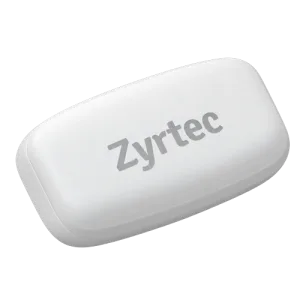
Zyrtec

Active ingredient: Cetirizine
10mg
From $ 120.54
pills
4.3 (3)

Comparison table: Allergies

Sources

  1. Health Canada (2019). Budesonide nasal spray product monograph and consumer information.
  2. World Health Organization (2025). WHO Model Formulary and information on medicines for allergic rhinitis.
  3. European Medicines Agency (2023). Summary of Product Characteristics for budesonide nasal preparations.
  4. Health Canada (2024). Canadian product information for intranasal corticosteroids.

How Buyers Rate Rhinocort

Based on 4 reviews

Jack, 60 Verified
Rating: 5 out of 5

I used Rhinocort during the spring pollen season and noticed that my nose stayed open more often after the first couple of weeks. Sleeping was easier, and I was satisfied with the improvement.

St. John's The first couple of weeks Oct 29, 2026
Tracey, 29 Verified
Rating: 4 out of 5

I had repeated sneezing and a constantly runny nose at work. Rhinocort reduced both problems, and I found the spray simple to fit into my morning routine.

Charlottetown Oct 11, 2026
Ryan L., 69 Verified
Rating: 4.5 out of 5

My main problem was waking with a blocked nose. After using Rhinocort regularly, I breathed more comfortably at night and spent less time clearing my nose during the day.

Oshawa Nov 7, 2026
Louise, 45 Verified
Rating: 3.5 out of 5

Rhinocort helped my seasonal symptoms, though the improvement was slower than I expected. I noticed some dryness and occasional minor bleeding, so I changed the spray direction and discussed continuing it with my doctor.

Montreal Oct 24, 2026
Get our free app Shop faster and track your orders 4.0 · 402 reviews Install