I used the tablets at the labelled dose for several weeks as part of a skin routine. My complexion looked less oily, although the change was gradual and not dramatic. I still needed to keep the rest of my routine simple.
Lethbridge Several weeks Oct 31, 2026
Neem
Acne-prone skin can benefit from botanical care that supports a cleaner, calmer complexion. Neem’s bitter botanical compounds have demonstrated antimicrobial and anti-inflammatory activity in…
Acne-prone skin can benefit from botanical care that supports a cleaner, calmer complexion. Neem’s bitter botanical compounds have demonstrated antimicrobial and anti-inflammatory activity in laboratory research, although this does not establish that oral tablets treat acne.
Overview
Neem contains plant material from Azadirachta indica and is traditionally valued in Ayurveda for skin wellness and its bitter botanical compounds. Neem tablets are intended for oral use as part of a skin-focused wellness routine.
How it affects the body
Neem leaves and seeds contain limonoids, including azadirachtin, nimbin, and related bitter compounds. These substances have demonstrated antimicrobial and anti-inflammatory activity in laboratory research.
Formulation
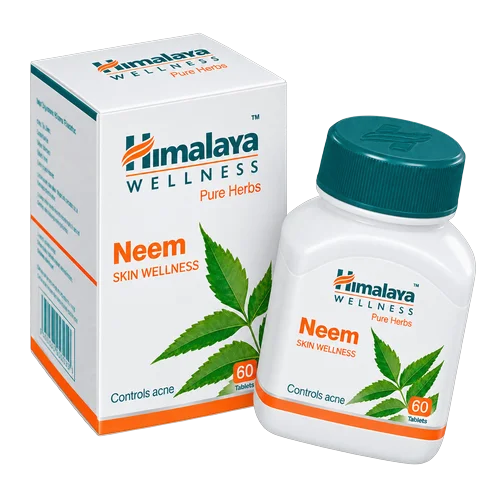
Neem is derived from Azadirachta indica, a tree used in Ayurvedic practice. The product is supplied as tablets and is marketed for skin wellness, including support for acne-prone skin. The pack contains 60 tablets.
Neem leaves and seeds contain limonoids, including azadirachtin, nimbin, and related bitter compounds. These substances have demonstrated antimicrobial and anti-inflammatory activity in laboratory research, although laboratory findings do not establish that oral Neem tablets treat acne, eczema, psoriasis, or infection in people.
Botanical identity, preparation, route of use, and intended claim all affect how a Neem product should be assessed [1].
Dosage and administration
- Swallow the tablet with water.
- Use the dose selected for your circumstances.
- Do not take extra tablets to compensate for a missed dose.
- If a dose is missed, take the next planned dose rather than doubling.
- Tell a clinician or dentist that you use Neem before starting a new treatment or procedure.
Reasons not to use it
- Avoid oral Neem during pregnancy unless a qualified clinician has specifically advised its use.
- Avoid it during breastfeeding because safety for the nursing infant has not been established.
- Do not give Neem to children without specialist medical direction.
- Avoid use if you have had an allergy to Neem or related botanical preparations.
- Use caution with diabetes medicines because blood glucose may fall too low.
- Use caution with medicines that affect the liver or with known liver disease.
- Avoid self-treatment of unexplained jaundice, persistent abdominal pain, or abnormal liver tests.
- Do not rely on Neem for urinary infection, periodontal disease, severe acne, or a spreading skin condition.
- Avoid combining several herbal products without reviewing their ingredients and intended effects.
When this is not for you
Neem is NOT for you if you are pregnant, breastfeeding, a child, or have liver disease and lack clinician guidance.
Pregnancy is a clear exclusion for self-directed use. Traditional use does not establish safety during fetal development.
Possible side effects
Possible reactions to oral Neem include nausea, abdominal discomfort, diarrhoea, headache, dizziness, or an unpleasant bitter taste. Sensitivity reactions can include itching, hives, facial swelling, or breathing difficulty.
Rare but serious toxicity has been reported with some Neem preparations, including liver injury. Warning signs include persistent nausea, loss of appetite, unusual tiredness, pain under the right ribs, dark urine, pale stools, or yellow skin. These symptoms require prompt medical assessment.
Neem may also affect blood glucose. People using insulin or other glucose-lowering medicines may need closer monitoring when adding a botanical product. The evidence is not strong enough to use Neem as a treatment for diabetes.
One practical issue is delayed attribution. A rash appearing several days after starting a plant product may still be related to it, especially when no other new product was introduced.

Therapeutic indications
The product is supplied as tablets and is marketed for skin wellness, including support for acne-prone skin.
The intended purpose of this product is skin wellness and acne support, not treatment of a diagnosed medical condition.
Comparison
Neem is a botanical preparation associated with traditional skin wellness, while conventional acne medicines target defined processes such as follicular plugging, inflammation, or bacterial activity. Neem should not be assumed to provide the same predictable response as a medicine with a studied acne indication.
Common mistakes
Several habits can lead to disappointing results or avoidable problems:
- Treating “blood purification” as a cure for acne, eczema, or infection.
- Taking more tablets because the skin has not changed quickly.
- Combining Neem with several glucose-lowering herbs or medicines without monitoring.
- Using oral tablets as if they were a face mask.
- Applying homemade leaf pastes to broken, sunburned, or freshly exfoliated skin.
- Ignoring abdominal symptoms, dark urine, jaundice, or severe itching.
- Continuing a product despite facial swelling or breathing difficulty.
- Expecting Neem to repair acne scars or replace treatment for cystic acne.
- Using Neem for urinary symptoms while delaying diagnosis of a possible infection.
Skin changes can take time, and acne naturally fluctuates. A short period of improvement does not prove that Neem caused it, just as a flare does not always mean the product failed.
What doctors say
In clinical practice, a doctor would usually treat Neem as a complementary skin-wellness product rather than as a first-line acne medicine. Acne treatment is chosen according to lesion type, severity, scarring risk, skin sensitivity, and previous response.
A clinician would also ask about diabetes, liver disease, pregnancy, breastfeeding, allergies, and concurrent medicines. Those questions are practical, not administrative: herbal products can have biological effects even when they are sold for general wellness.
For mild acne, skin-care basics often influence results more than adding several supplements. Gentle cleansing, non-comedogenic moisturiser, sun protection, and avoiding repeated squeezing can reduce irritation and new lesions.
Common questions
When should someone with liver disease avoid Neem?
People with liver disease should avoid self-directed Neem use because some preparations have been linked with liver injury. Health Canada guidance from 2023 treats product-specific safety information and health conditions as relevant factors for natural health product use. Seek medical assessment for dark urine, jaundice, severe nausea, or pain beneath the right ribs rather than continuing the tablets.
How does Neem differ from conventional acne treatment?
Neem is a botanical preparation associated with traditional skin wellness, while conventional acne medicines target defined processes such as follicular plugging, inflammation, or bacterial activity. NICE guidance from 2021 distinguishes supportive skin care from treatments selected for acne severity and scarring risk. Neem should not be assumed to provide the same predictable response as a medicine with a studied acne indication.
What should be done after a missed Neem dose?
Take the next planned dose and do not double the amount to compensate. WHO guidance from 2003 emphasises consistent preparation and handling of medicinal plants, but it does not support taking extra product after a missed dose. If several doses are missed, resume the individually selected schedule rather than creating a catch-up regimen.
Can Neem be used during pregnancy or breastfeeding?
Self-directed Neem use should be avoided during pregnancy and breastfeeding because safety has not been established for fetal development or nursing infants. EMA herbal-medicine guidance from 2017 treats reproductive and lactation safety as specific assessment areas for plant-based products. Pregnancy, planned pregnancy, and breastfeeding should therefore be disclosed before use.
How soon might a skin benefit become noticeable?
There is no reliable timetable for oral Neem tablets to improve acne, and clinical response may be absent or modest. Health Canada information from 2023 supports matching a natural health product’s expectations to its authorised purpose rather than assuming a rapid therapeutic effect. New, painful, or scarring acne should be assessed instead of waiting indefinitely for a supplement to work.
Do you offer anonymous delivery?
Your order will be securely packed and shipped within 24 hours. This is exactly what your package will look like (images of an actual item sent). It has the size and look of a regular private letter (24x11x0.7 cm) and its contents cannot be seen.
Comparison
Sources
- Health Canada (2023). Natural health products.
How Buyers Rate Neem
Based on 3 reviews
After taking the tablets at the labelled dose for about a month, I noticed fewer small breakouts around my forehead. The tablets were easy to take with water, and I was pleased that my skin looked more settled.
St. John's About a month Nov 10, 2026I used Neem at the labelled dose consistently and felt that my skin looked clearer after several weeks. It was a modest improvement rather than an overnight change, but I was satisfied with the result.
Halifax Several weeks Oct 12, 2026