Skip to content
contact@fairviewphysiotheraapy.com
Fast & Discrete Delivery Save up to 80%
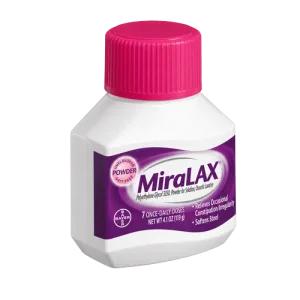
In stock Miralax
Constipation

Miralax

Polyethylene glycol 3350, the active ingredient in Miralax, is an osmotic laxative for occasional constipation in adults. It retains water in the stool, making bowel movements softer and easier to…

Guaranteed quality Original product
Delivery: from 4 days Discreet shipping
24/7 Support Always available
Active ingredient: Polyethylene Glycol 3350
Select pack Package Per unit Price
$ 149.94 $ 149.94
$ 94.82 $ 299.88 $ 189.63 Save 37%
$ 76.44 $ 449.82 $ 229.32 Save 49%
$ 66.52 $ 599.76 $ 266.07 Save 56%
Best value Free Regular Delivery $ 61.15 $ 749.70 $ 305.76 Save 59%

Free delivery on orders from $ 294.00, free express delivery from $ 441.00

Secure payment methods:
VISA AMEX JCB DISCOVER

Polyethylene glycol 3350, the active ingredient in Miralax, is an osmotic laxative for occasional constipation in adults. It retains water in the stool, making bowel movements softer and easier to pass without directly stimulating intestinal contractions.

Overview

Miralax contains polyethylene glycol 3350, also called PEG 3350. It belongs to the osmotic laxative class and is supplied as a powder for oral use. The product is intended to relieve occasional constipation by increasing water in the stool rather than by forcing the bowel to contract.

Constipation can involve hard stools, infrequent bowel movements, straining, or a sensation of incomplete emptying. Bowel patterns vary between individuals, so a change from a person’s usual pattern matters more than a universal number of bowel movements. Occasional constipation may follow changes in diet, fluid intake, activity, travel, illness, or medication use.

How it affects the body

Polyethylene glycol 3350 remains largely within the intestinal lumen, where it holds water through an osmotic gradient. The added water softens stool and increases its volume. This can make passage easier and support the bowel’s normal peristalsis.

Peristalsis means the coordinated muscular movement that pushes intestinal contents forward. PEG 3350 does not work by abruptly contracting the bowel in the way stimulant laxatives do. The resulting bowel movement is usually linked to gradual stool hydration.

The process can be understood in three stages:

  • PEG 3350 retains water in the bowel.
  • Water softens and enlarges the stool.
  • The softened stool moves through the colon with normal intestinal contractions.

The European Medicines Agency describes osmotic laxatives as agents that increase water in intestinal contents, supporting softer stools and easier evacuation [2].

Formulation

Miralax contains polyethylene glycol 3350 (PEG 3350), an osmotic laxative supplied as a powder for oral use. It works by retaining water in the stool, helping make bowel movements softer and easier to pass.

Dosage and administration

The amount and frequency of Miralax depend on the purpose of use and are agreed with a doctor or pharmacist. Use the prescribed or recommended amount rather than adding extra powder because the first bowel movement has not occurred yet.

  • Measure the intended amount of powder accurately.
  • Mix it into water or another suitable beverage.
  • Stir until the powder has dispersed.
  • Drink the prepared mixture.
  • Maintain ordinary fluid intake unless a clinician has prescribed fluid restriction.
  • Allow time for the effect to develop rather than repeating a serving early.

Miralax is taken by mouth. The powder should not be swallowed dry because it is intended to be dispersed in liquid. The product is marked for once-daily dosing, while the appropriate amount depends on the individual purpose and clinical advice.

If a dose is missed, take it when remembered if the next planned dose is not due soon. If the next dose is near, skip the missed serving and return to the usual schedule. Do not double the amount to compensate.

Children, older adults, and people with kidney, heart, or bowel conditions may need individualized advice. Pediatric constipation should be assessed using age-appropriate guidance rather than an adult dosing assumption.

A practical routine is to prepare Miralax at the same part of the day, such as with breakfast or an evening drink. Consistency makes it easier to notice whether stool frequency and hardness are improving.

Reasons not to use it

Miralax is not suitable for self-treatment when symptoms suggest bowel blockage or another acute abdominal condition. A care team should know about relevant medical conditions and medicines before a longer treatment plan begins.

People with kidney disease, heart failure, restricted fluid intake, inflammatory bowel disease, or significant electrolyte problems may need closer supervision. The same applies to anyone taking medicines that can worsen dehydration or alter electrolyte balance.

Miralax can also affect the practical timing of other oral medicines if diarrhea develops or intestinal transit changes. Separate medicines only when a clinician or pharmacist recommends a specific interval; do not assume that every medicine needs the same separation period.

When this is not for you

This medication is not for you if

  • You may have a bowel obstruction.
  • You have severe or unexplained abdominal pain.
  • You have repeated nausea or vomiting with constipation.
  • Your abdomen is markedly swollen or tender.
  • You cannot pass stool or gas and symptoms are worsening.
  • You have rectal bleeding that has not been assessed.
  • You have a known allergy to polyethylene glycol or a product component.
  • You have phenylketonuria and the formulation being considered contains phenylalanine or aspartame.

Phenylketonuria deserves specific attention because some oral products contain sweeteners that may provide phenylalanine. The formulation and intended use should be discussed with a pharmacist or doctor when this condition is present.

Possible side effects

Miralax is commonly tolerated when used in the recommended manner. The most expected effects are gastrointestinal because PEG 3350 changes the water content and volume of stool.

Possible side effects include:

  • Bloating.
  • Gas.
  • Abdominal fullness.
  • Mild cramping.
  • Nausea.
  • Loose or watery stools.
  • Diarrhea when the amount is too high for the individual.

These effects often improve when the amount is adjusted appropriately. Persistent watery diarrhea can lead to dehydration, especially in older adults or people who are already losing fluids through vomiting, fever, or another illness.

Severe or persistent abdominal pain requires attention. Stop using the product and obtain urgent medical assessment if constipation is accompanied by repeated vomiting, marked abdominal swelling, inability to pass gas, blood in the stool, faintness, or worsening pain. Those symptoms may indicate a condition that requires a different treatment approach.

Laxative dependence is sometimes discussed by patients. PEG 3350 does not directly stimulate bowel contractions, but repeated unsupervised laxative use can delay assessment of an underlying problem. Long-term use should follow a defined treatment plan when symptoms continue.

If stools become repeatedly watery, do not keep taking the same amount simply because constipation was the original problem. Watery output can signal that the serving is more than your bowel currently needs.

Electrolyte disturbances are uncommon with appropriate use but become more relevant with excessive use, prolonged diarrhea, substantial fluid loss, or serious kidney disease. Health Canada advises attention to hydration and medical assessment when laxative symptoms persist or become severe [3].

Therapeutic indications

Miralax is suited to constipation where stool needs more water. It does not treat every cause of abdominal discomfort, and it is not designed to relieve unexplained severe abdominal pain.

The product may be considered when:

  • Stools are hard or difficult to pass.
  • Bowel movements are less frequent than usual.
  • Straining has become a regular problem.
  • A clinician has included PEG 3350 in a longer-term constipation plan.
  • A person needs an osmotic option instead of a stimulant laxative.

Miralax does not provide instant relief. Its action develops as water is retained in the bowel and stool consistency changes.

Chronic constipation lasts longer or returns repeatedly. Miralax may be used in some longer-term constipation plans, but persistent symptoms need assessment because constipation can arise from medicines, pelvic-floor problems, metabolic disease, or an intestinal disorder. The Canadian Association of Gastroenterology recognizes osmotic laxatives as an established treatment category for chronic idiopathic constipation [1].

Comparison

Different laxative classes act through different pathways. The appropriate category depends on stool consistency, symptom duration, speed required, medical history, and the cause of constipation.

Laxative category Main action and usual role
Osmotic laxatives Retain water in stool; useful when harder stool needs gradual softening.
Stimulant laxatives Increase intestinal muscular activity; often chosen when a quicker bowel movement is needed.
Bulk-forming agents Add fibre and water to increase stool bulk; require adequate fluid and may worsen bloating in some people.
Stool-softening agents Help water mix with stool; often used when straining should be reduced.

Bulk-forming products may be unsuitable when bowel obstruction is suspected or when a person cannot drink enough fluid. Stimulant laxatives can cause cramping and urgency, while osmotic laxatives may cause bloating or watery stools if the amount is excessive.

Miralax’s main distinction is its osmotic mechanism. It changes stool hydration without relying on direct stimulation of intestinal contractions. A clinician may select another category when the required onset, symptom pattern, or medical condition makes that approach more appropriate.

Common mistakes

Several everyday mistakes can reduce benefit or create avoidable side effects:

  • Taking an extra serving after only a few hours.
  • Swallowing the powder dry.
  • Measuring by eye instead of using an accurate measure.
  • Mixing it into too little liquid.
  • Continuing through severe pain, vomiting, or abdominal swelling.
  • Using it repeatedly without reviewing medicines that cause constipation.
  • Assuming that more frequent bowel movements always mean the treatment is working better.
  • Ignoring watery diarrhea because the original symptom was constipation.
  • Giving an adult serving to a child without age-specific advice.
  • Forgetting that opioid-related constipation may need a structured treatment plan.

A common practical error is to stop after the first loose stool and restart at the previous amount several days later. A better clinical plan adjusts the amount and schedule to the person’s response.

Another mistake is treating bloating as proof that the product is dangerous. Mild gas or fullness can occur during stool hydration, while intense or progressive abdominal distension requires assessment.

What doctors say

In clinical practice, doctors usually assess the pattern behind constipation before recommending repeated laxative use. The useful details include stool hardness, straining, frequency, duration, fluid intake, activity, diet, and medicines such as opioids, iron, some antacids, and certain antidepressants.

A physician would usually explain that PEG 3350 supports stool hydration rather than producing an immediate bowel evacuation. A gradual response is expected. Increasing the amount repeatedly because the first day was unsuccessful can turn constipation into diarrhea without addressing the cause.

Doctors also distinguish occasional constipation from alarm symptoms. New constipation in an older adult, unexplained weight loss, anemia, rectal bleeding, persistent vomiting, or a major change in bowel habits deserves medical evaluation rather than repeated self-treatment.

The World Health Organization emphasizes medication review and assessment of persistent gastrointestinal symptoms as part of safe medicine use [4]. This is relevant when constipation begins after a new prescription or continues despite reasonable treatment.

Common questions

What should I do after missing a Miralax dose?

Take the missed serving when remembered unless the next scheduled serving is close. If the next serving is due soon, skip the missed amount and continue with the usual plan rather than doubling it. The FDA polyethylene glycol 3350 labelling information from 2018 describes gradual use and warns against exceeding the recommended amount [5]. Contact a pharmacist or doctor if repeated missed doses make the treatment plan difficult to follow.

What should I do if the expected result does not come?

Give PEG 3350 time to work because the response is gradual rather than immediate. Do not keep adding extra servings within the same day when there has been no bowel movement. If constipation persists, worsens, or keeps returning, a doctor should review the diagnosis, medicines, fluid intake, and possibility of fecal impaction or obstruction. Health Canada guidance from 2021 supports medical review when laxative treatment does not resolve ongoing symptoms.

Can Miralax cause diarrhea?

Yes. Diarrhea and watery stools can occur when the amount exceeds the bowel’s current need or when the intestine is unusually sensitive. Reduce further use and seek advice if watery stools continue, especially with dizziness, weakness, reduced urination, or intense thirst. The EMA’s 2019 osmotic-laxative information describes excess water in intestinal contents as the reason loose stools may occur.

Can Miralax be used during pregnancy or breastfeeding?

Pregnancy and breastfeeding require individualized advice because constipation is common, but the best treatment depends on symptoms, hydration, other medicines, and medical history. Do not use persistent abdominal pain, vomiting, or bleeding as a routine constipation problem during pregnancy. The WHO medication-safety framework from 2019 supports reviewing maternal treatment choices according to the clinical situation and exposure needs. A doctor or pharmacist can assess whether PEG 3350 is appropriate for the specific pregnancy or breastfeeding context.

What should I discuss with a doctor before starting Miralax?

Discuss severe or unexplained abdominal pain, vomiting, abdominal swelling, inability to pass gas, rectal bleeding, kidney disease, heart failure, phenylketonuria, pregnancy, and breastfeeding. Mention medicines that may cause constipation, including opioids and iron products. The Canadian Association of Gastroenterology guideline from 2019 recommends assessing persistent constipation and alarm symptoms rather than relying on repeated self-treatment. A medication review is also useful when constipation began after a new treatment. Bring a current list of medicines to the consultation.

Can I drink alcohol while using Miralax?

Alcohol does not create the same direct interaction as it does with some prescription medicines, but it can worsen dehydration and may aggravate dizziness or diarrhea. Avoid alcohol if Miralax is already causing watery stools, vomiting, weakness, or poor fluid intake. The WHO advises in its 2019 medication-safety framework that hydration and illness-related fluid loss should be considered when medicines affect gastrointestinal function. Persistent dehydration symptoms require prompt medical assessment.

Do you offer anonymous delivery?

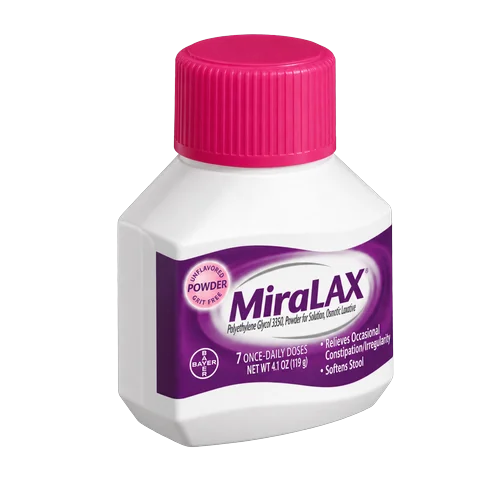
Your order will be securely packed and shipped within 24 hours. This is exactly what your package will look like (images of an actual item sent). It has the size and look of a regular private letter (24x11x0.7 cm) and its contents cannot be seen.

Comparison

Miralax Current

Active ingredient: Polyethylene Glycol 3350
119g
From $ 149.94
bottles
4.1 (4)

Triphala

Active ingredient: Triphala
60tabs
From $ 129.36
bottles
3.9 (5)

Comparison table: Constipation

Sources

  1. Canadian Association of Gastroenterology (2019). Clinical Practice Guideline for the Management of Chronic Idiopathic Constipation.
  2. European Medicines Agency (2019). Summary of Product Characteristics (SmPC) — macrogol-containing laxatives.
  3. Health Canada (2021). Polyethylene Glycol 3350: Product Monograph and Consumer Information.
  4. World Health Organization (2019). Medication Safety in Polypharmacy: Technical Report.
  5. U.S. Food and Drug Administration (2018). MiraLAX (polyethylene glycol 3350) Drug Facts Label.

How Buyers Rate Miralax

Based on 4 reviews

Lee, 31 Verified
Rating: 5 out of 5

The hard stools became much easier to pass, and I stopped straining in the morning. The powder mixed well into my usual drink, so it fitted into my routine without much effort.

St. Catharines About four days Nov 5, 2026
Emma, 41 Verified
Rating: 3.5 out of 5

It helped, but the first few days brought some bloating and the result was slower than I expected. I found that taking extra powder did not help and only made the stool too loose.

Kelowna One week Nov 11, 2026
Darren, 69 Verified
Rating: 4 out of 5

By the third day, bowel movements were softer and more regular. I appreciated that it worked gradually instead of causing sudden urgency.

Sherbrooke Three days Oct 13, 2026
Lisa D., 52 Verified
Rating: 4 out of 5

The main improvement was less straining and a more predictable morning bowel movement. It was easy to dissolve, and I was satisfied once I gave it enough time to work.

Barrie Not specified Oct 19, 2026
Get our free app Shop faster and track your orders 4.0 · 402 reviews Install