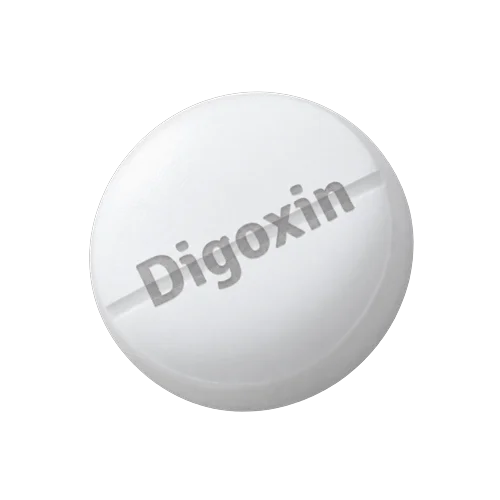
I took Digoxin for several weeks as part of a rhythm-control plan. My resting rate became steadier, but I still noticed occasional palpitations during exercise. The benefit was real but incomplete, so the treatment needed ongoing review.
Kamloops Several weeks Nov 13, 2026
Digoxin
Digoxin is used for selected adults with heart failure and certain rapid atrial rhythms, including atrial fibrillation. Its active substance, digoxin, strengthens cardiac contraction and slows…
Digoxin is used for selected adults with heart failure and certain rapid atrial rhythms, including atrial fibrillation. Its active substance, digoxin, strengthens cardiac contraction and slows conduction through the atrioventricular node.
Overview
Digoxin is a cardiac glycoside containing the active substance digoxin. It is used for selected adults with heart failure and certain rapid atrial rhythms, including atrial fibrillation.
How it affects the body
Digoxin inhibits the sodium-potassium ATPase pump in cardiac cells. This changes sodium movement across the cell membrane and reduces the sodium gradient that normally drives calcium removal. More calcium remains available inside the cardiac muscle cell, allowing a stronger contraction.
The drug also increases vagal influence and reduces conduction through the atrioventricular node. This explains its dual clinical role: supporting contraction and moderating the passage of electrical impulses from the atria to the ventricles.
The pharmacological classification for digoxin is cardiac glycoside, with ATC code C01AA05. The same mechanism that produces benefit also contributes to toxicity when blood concentrations rise or when potassium levels fall. The European Medicines Agency and Health Canada both emphasize individualized dosing and attention to renal clearance in digoxin treatment information [2].
Digoxin leaves the body mainly through the kidneys. Reduced kidney function can extend its half-life and increase accumulation. A dose that was tolerated during stable kidney function may become excessive after dehydration, acute illness, or a decline in renal clearance.
Formulation
The active substance in Digoxin is digoxin. It belongs to the cardiac glycoside class and strengthens cardiac contraction while slowing conduction through the atrioventricular node.
Dosage and administration
The amount taken at each intake is selected individually rather than being one fixed number for every person. Prescribers consider age, body size, kidney function, heart rhythm, treatment history, and interacting medicines.
- Take the prescribed tablets at the same time each day.
- Swallow the tablets with water.
- Keep the dosing schedule consistent.
- Do not take extra tablets to compensate for a missed dose.
- Do not change the amount or frequency without a treatment decision from the prescriber.
- Blood testing may be used when symptoms, kidney function, treatment changes, or toxicity concerns make measurement appropriate.
- Digoxin blood sampling is usually timed in relation to the dose because a sample taken too soon can be misleading.
- Take tablets at a consistent relationship to meals if food changes have previously affected your routine.
The treatment duration is determined by the cardiac condition and response. Digoxin should not be stopped suddenly without a clinical plan, since the underlying rhythm or heart-failure symptoms may return.
Reasons not to use it
- previous serious reaction to digoxin or another cardiac glycoside;
- ventricular fibrillation or ventricular tachycardia;
- significant bradycardia or advanced atrioventricular block without appropriate pacing support;
- suspected digoxin toxicity;
- severe kidney impairment;
- low potassium or low magnesium;
- hypertrophic obstructive cardiomyopathy in selected circumstances;
- certain accessory-pathway arrhythmias, including some cases of pre-excitation;
- concurrent treatment with medicines that substantially increase digoxin exposure.
When this is not for you
Digoxin is not suitable for everyone. NOT for you if you have a contraindication, suspected toxicity, or an unexplained rapid or irregular rhythm that has not been medically assessed.
People with conduction disease, sick sinus syndrome, thyroid disorders, or a history of electrolyte disturbance need careful assessment. Pregnancy and breastfeeding require an individualized decision based on maternal cardiac need, fetal considerations, and specialist advice.
Digoxin is not for self-directed treatment of palpitations. Palpitations can result from several different rhythms, and slowing the heart without identifying the rhythm can be harmful.
Possible side effects
Digoxin has a narrow therapeutic index. This means the difference between a helpful concentration and a toxic concentration can be relatively small. Toxicity may occur after an excessive dose, reduced kidney clearance, dehydration, low potassium, low magnesium, or a new interacting medicine.
Possible adverse effects include:
- nausea, vomiting, abdominal discomfort, or loss of appetite;
- tiredness, weakness, confusion, or unusual drowsiness;
- slow heartbeat or a new irregular rhythm;
- dizziness, fainting, or reduced exercise tolerance;
- blurred vision, altered colour perception, or seeing halos;
- palpitations caused by an abnormal cardiac rhythm.
Low potassium, known as hypokalemia, increases the sensitivity of the heart to digoxin. Low magnesium can also raise arrhythmia risk. Vomiting, diarrhoea, poor intake, and some diuretics can contribute to these electrolyte changes.
Visual symptoms deserve attention. Yellow-green colour changes, blurred vision, or halos may appear before more serious toxicity, though they can also have other causes. They should be reported promptly rather than treated as a minor nuisance.
A new fainting episode, severe dizziness, marked confusion, or a very slow or irregular heartbeat requires urgent assessment. Severe toxicity can cause dangerous atrial or ventricular arrhythmias.
Therapeutic indications
Digoxin belongs to the cardiac glycoside class. It is prescribed for selected patients with chronic heart failure and for control of the ventricular rate during atrial fibrillation or atrial flutter. The drug does not remove the underlying cause of these conditions, yet it can improve cardiac performance and reduce an excessively rapid ventricular response when used in an appropriate treatment plan [1].
Management of chronic heart failure
Digoxin increases the force of contraction of the heart muscle, a property called positive inotropy. This can support cardiac output in some people with heart failure, especially when symptoms continue despite other heart-failure therapies. Its benefit is assessed through symptoms, heart rate, kidney function, electrolyte results, and the person’s wider treatment plan.
Digoxin is not a universal first choice for every person with heart failure. The clinical decision depends on ejection fraction, rhythm, kidney function, age, potassium levels, and concurrent medicines.
Control of atrial fibrillation
During atrial fibrillation, the atria generate disorganised electrical signals. Many of these signals reach the atrioventricular node, which can pass too many impulses to the ventricles. Digoxin slows conduction through this node and can reduce the ventricular rate.
Rate control may be less predictable during exercise or heightened sympathetic activity. A person whose heart rate remains too fast may need a different rate-control strategy or more than one treatment approach under specialist supervision.
Comparison
The options below represent treatment categories rather than interchangeable medicines. Selection depends on rhythm, blood pressure, exercise tolerance, kidney function, lung disease, and the presence of heart failure.
| Treatment approach | Main clinical role | Important limitation |
|---|---|---|
| Digoxin | Strengthens contraction and slows atrioventricular-node conduction | Narrow therapeutic range; kidney function and electrolytes affect toxicity risk |
| Beta-blocker | Slows heart rate and reduces sympathetic stimulation | May worsen fatigue, low blood pressure, or bronchospasm in susceptible patients |
| Non-dihydropyridine calcium-channel blocker | Slows atrioventricular-node conduction | May be unsuitable in some forms of reduced heart-failure function |
Digoxin may be selected when rate control is needed and blood pressure limits other options. It can also be useful when a person has heart failure with persistent symptoms despite foundational therapy. A beta-blocker may be preferred when sympathetic drive, exertional tachycardia, or a previous cardiac event is central to the treatment plan.
Non-dihydropyridine calcium-channel blockers can slow atrioventricular conduction, though their effect on contraction makes them unsuitable for some patients with reduced systolic function. These approaches should not be substituted for one another by comparing tablet numbers alone.
Common mistakes
Several avoidable errors can make digoxin treatment less predictable:
- doubling the next dose after a missed tablet;
- changing the dose because the pulse seems better;
- taking a new medicine without checking for interactions;
- ignoring persistent vomiting or diarrhoea;
- assuming that a normal pulse rules out toxicity;
- taking a supplement containing potassium or magnesium without considering kidney function and the wider treatment plan;
- forgetting to mention a change in thyroid therapy;
- having a blood sample taken soon after the tablet without recording the dose time;
- stopping digoxin abruptly because symptoms have improved.
One subtle mistake is treating a tablet schedule as independent from hydration. A short illness can reduce kidney clearance quickly, especially in an older person. Another is assuming that a missed dose should always be replaced; the correct action depends on how much time has passed and the prescribed schedule.
What doctors say
In clinical practice, physicians usually focus on the person’s response rather than pursuing a particular blood concentration in isolation. A laboratory value must be interpreted alongside kidney function, timing of the sample, symptoms, rhythm findings, and the reason for treatment.
Doctors also look for changes that patients may not connect with digoxin. New appetite loss, nausea, colour-vision changes, unexplained fatigue, or a slower pulse can be early warning signs. An older adult may describe toxicity as confusion or reduced mobility rather than as a clear cardiac complaint.
Consistent timing helps clinicians interpret symptoms and laboratory results. Missed doses, doubled doses, dehydration, or a recently added medicine can all change the clinical picture.
The World Health Organization’s ATC classification places digoxin among cardiac glycosides, while regulatory information emphasizes its individualized risk profile and renal elimination [3].
Common questions
What happens if Digoxin is stopped, and does it need tapering?
Stopping Digoxin can remove its rate-control or contractility benefit, allowing symptoms or a rapid rhythm to return. The drug is not routinely tapered in the same way as some medicines that cause withdrawal syndromes, yet the decision to stop should still be planned around the underlying cardiac condition. The U.S. Food and Drug Administration (FDA) prescribing information from 2022 stresses clinical reassessment when discontinuing cardiac glycosides [4]. The plan also depends on the rhythm being treated and the reason for use. Do not compensate for discontinuation by taking extra tablets later.
Can people under 18 use Digoxin?
Digoxin can be used in children in selected cardiac conditions, but paediatric dosing is calculated individually and requires specialist oversight. Age, body size, kidney function, rhythm, and the indication all affect the amount prescribed. The U.S. Food and Drug Administration (FDA) prescribing information from 2022 describes age-specific dosing and monitoring principles [5]. A child should never receive an adult’s tablets or schedule.
Can Digoxin be used during pregnancy or breastfeeding?
Pregnancy does not automatically exclude Digoxin when the mother has a significant cardiac indication. The decision weighs maternal benefit, fetal considerations, rhythm control, kidney function, and alternative treatments. Digoxin passes into breast milk, though clinical use during breastfeeding may be considered when the treatment is needed and the infant is observed appropriately. The U.S. Food and Drug Administration (FDA) prescribing information from 2022 supports individualized review when pregnancy or breastfeeding affects treatment decisions. Any pregnancy, planned pregnancy, or breastfeeding status should be included in the treatment discussion before the regimen changes.
Can Digoxin be taken with food or on an empty stomach?
Digoxin tablets may be taken with or without food, but consistency is useful because some meals and fibre-containing products can affect absorption. Take each dose with water and maintain a similar relationship to meals from day to day. Avoid changing suddenly between a fasting routine and a high-fibre meal routine without mentioning the change during treatment review. The Health Canada product monograph from 2024 emphasizes consistent administration and attention to interacting substances.
What should happen after a missed Digoxin dose?
If a missed dose is remembered within a short interval, the usual approach may be to take it unless the next dose is close. If the next scheduled dose is near, skip the missed tablet and return to the regular schedule. Never take two doses together unless a prescriber has given a specific instruction. The correct response can depend on the prescribed frequency, kidney function, and time elapsed, so repeated missed doses require treatment review rather than self-correction. NICE guidance from 2021 also supports reviewing the treatment plan when dose-taking problems recur.
How soon can the effect of Digoxin become noticeable?
The timing depends on whether Digoxin is being used for rate control, heart-failure symptoms, or another cardiac purpose. Heart-rate effects may appear sooner than changes in exercise tolerance or breathlessness. Clinical benefit is assessed through symptoms, pulse, rhythm findings, and sometimes laboratory testing rather than through a single immediate sensation. The U.S. Food and Drug Administration (FDA) prescribing information from 2022 describes distribution, elimination, and individualized monitoring as factors that affect response assessment.
What is the best time of day to take Digoxin?
The best time is the time that matches the prescribed schedule and can be followed consistently. Many people choose a morning routine because it is easier to remember and allows symptoms to be noticed during the day, though the treatment plan may specify another time. Keep the interval between doses even and record the time if blood testing is planned. The U.S. Food and Drug Administration (FDA) prescribing information from 2022 supports maintaining a consistent dosing schedule. A sudden change in dosing time can complicate interpretation of a digoxin concentration.
Do you offer anonymous delivery?
Your order will be securely packed and shipped within 24 hours. This is exactly what your package will look like (images of an actual item sent). It has the size and look of a regular private letter (24x11x0.7 cm) and its contents cannot be seen.
Comparison
Sources
- Health Canada (2024). Product Monograph — Lanoxin (digoxin).
- National Institute for Health and Care Excellence (2021). Atrial fibrillation: diagnosis and management (NG196).
- World Health Organization (2025). ATC/DDD Index: C01AA05 Digoxin.
- U.S. Food and Drug Administration (2022). Lanoxin (digoxin) Prescribing Information.
- U.S. Food and Drug Administration (2022). Lanoxin (digoxin) Prescribing Information — pediatric dosing and administration.
How Buyers Rate Digoxin
Based on 4 reviews
After starting Digoxin, my breathlessness during ordinary walks improved over the following weeks. I took the tablets at the same time each morning and found that routine easy to maintain. The treatment gave me better day-to-day stamina.
Fredericton Following weeks Nov 19, 2026Digoxin helped settle the rapid heartbeat that had been exhausting me. I noticed fewer episodes during the day and could return to regular activities with less interruption. Keeping the timing consistent made the routine straightforward.
Quebec City Oct 24, 2026My heart rate became easier to control after Digoxin was added to my treatment. I did not notice an instant change, but the improvement developed gradually and made normal household tasks less tiring.
St. John's Oct 30, 2026