I took one 120 mg capsule with fat-containing meals and used it with a lower-fat meal plan for several months. The main benefit was that it gave me a clear reason to stop eating heavy takeaway meals, and my weight began moving in the direction I wanted. I was satisfied with the progress.
Halifax Several months Nov 1, 2026
Xenical
Xenical contains orlistat, a lipase inhibitor for adults with obesity as part of a long-term weight-management plan. Used with a reduced-calorie diet, nutrition changes, and regular physical…
Xenical contains orlistat, a lipase inhibitor for adults with obesity as part of a long-term weight-management plan. Used with a reduced-calorie diet, nutrition changes, and regular physical activity, it limits the digestion of dietary fat in the stomach and small intestine. The dose is decided individually, taking age, other medicines, and health conditions into account.
Overview
Xenical contains orlistat, a prescription-strength medicine used as part of a long-term weight-management plan for adults with obesity. The capsule is taken orally and works in the stomach and small intestine, where it limits the digestion of dietary fat.
The aim is not rapid weight loss from the capsule alone. Xenical is used with a reduced-calorie diet, practical nutrition changes, and regular physical activity. Health Canada and the European Medicines Agency classify orlistat as a lipase inhibitor used in obesity management [1].
How it affects the body
Orlistat acts locally in the digestive system. It binds to the active serine site of gastric and pancreatic lipases, reducing their ability to hydrolyse dietary triglycerides.
Undigested triglycerides are too large for normal intestinal absorption. They continue through the bowel and leave the body in the stool. At the recommended prescription strength, about 30% of dietary fat may remain unabsorbed when the medicine is taken as directed [2].
This mechanism explains both the benefit and the characteristic side effects. The medicine does not directly burn stored body fat. It reduces the amount of new dietary fat entering the body, which supports a calorie deficit when food intake is also adjusted.
What the Lipase Block Means in Daily Life
Orlistat does not block protein or carbohydrate digestion in the same way. Its principal effect concerns dietary fat.
Formulation
Active Ingredient and Pharmaceutical Classification
Each Xenical capsule contains orlistat. Orlistat belongs to the lipase-inhibitor class.
Gastric and pancreatic lipases are digestive enzymes. They break large dietary fat molecules into smaller components that the intestine can absorb. Orlistat blocks a proportion of this process, so some dietary fat passes through the bowel without entering the bloodstream.
Xenical capsules are intended for prescription use. The dose is decided individually, taking age, other medicines, and health conditions into account.
Dosage and administration
Xenical is taken by mouth with liquid during a main meal containing fat or within one hour after that meal. The dose is decided individually, taking age, other medicines, and health conditions into account. Dosing is connected to meals that contain dietary fat.
- If a main meal contains no fat, omit that meal’s Xenical dose.
- If a meal is missed, do not take a replacement capsule later.
- Do not take two capsules to compensate for a missed dose.
- Take the capsule whole with liquid.
- Keep the dosing schedule connected to meals, not to bedtime.
- The usual schedule is one capsule with each of three main meals.
A meal without fat does not provide the target for orlistat’s action. Taking a capsule after such a meal adds exposure without providing a useful fat-blocking purpose.
The dose is decided individually, taking age, other medicines, and health conditions into account. A prescriber may also review weight change, bowel tolerability, kidney function, gallbladder history, and the patient’s nutrition plan.
Fat-soluble vitamins may be absorbed less efficiently during treatment. These include vitamins A, D, E, and K. A prescriber or dietitian may recommend a multivitamin, often taken at a different time from Xenical so that orlistat does not interfere with its absorption.
Reasons not to use it
Xenical is not suitable for everyone. It should not be used by a person with chronic malabsorption syndrome or cholestasis, a condition in which bile flow from the liver is impaired.
Xenical can reduce absorption of some medicines and nutrients. Important combinations include:
- Cyclosporine: orlistat may reduce cyclosporine exposure, so concurrent use requires close therapeutic monitoring.
- Warfarin and other anticoagulants: changes in vitamin K absorption can affect anticoagulation control.
- Levothyroxine: separate administration may be needed, with thyroid-function monitoring.
- Antiepileptic medicines: changes in absorption could affect seizure control.
- Amiodarone: reduced absorption may alter exposure and requires clinical supervision.
- Diabetes medicines: weight loss may change glucose control and the dose of diabetes treatment.
- Fat-soluble vitamin supplements: these are often scheduled at a different time from Xenical.
The Canadian product information advises attention to clinically significant interactions and nutritional effects [4]. A complete medicine list should include prescription drugs, non-prescription products, vitamins, and herbal supplements.
When this is not for you
Xenical Is Not for You If
- You have chronic malabsorption syndrome.
- You have cholestasis.
- You have had a serious allergic reaction to orlistat or an ingredient in the capsule.
- You are pregnant and using it solely for weight reduction.
- You have an eating disorder, severe nutritional deficiency, or a medical condition requiring a different weight-management strategy.
- You cannot maintain adequate nutrition and hydration.
- You have a history of kidney stones that requires careful review of treatment risks.
Possible side effects
The most common Xenical effects involve the bowel because unabsorbed fat remains in the intestinal contents. The pattern often appears early, especially when a person has not yet adjusted meal composition.
Common effects include:
- Oily spotting or leakage
- Gas with discharge
- Urgent bowel movements
- Loose stools
- Abdominal pain or discomfort
- Increased stool frequency
- Reduced bowel control
Many patients can reduce these symptoms by spreading fat evenly across meals. A low-fat breakfast followed by a very rich dinner can still cause problems at dinner, even if the day’s total fat intake seems acceptable.
Serious symptoms require prompt medical attention. Stop taking Xenical and seek urgent medical care for severe or persistent abdominal pain, yellowing of the skin or eyes, dark urine, unusually pale stools, severe weakness, swelling of the face or throat, breathing difficulty, or a widespread blistering rash.
Rare kidney-related problems can occur, especially in people with kidney disease or a tendency to form kidney stones. Severe flank pain, blood in the urine, or a marked reduction in urination needs urgent assessment.
The FDA prescribing information describes the need to consider interactions, vitamin absorption, liver symptoms, kidney risks, and gastrointestinal tolerability during treatment [3].

Therapeutic indications
Xenical contains orlistat, a prescription-strength medicine used as part of a long-term weight-management plan for adults with obesity. Xenical is used with a reduced-calorie diet, practical nutrition changes, and regular physical activity.
Comparison
Xenical, lower-dose orlistat, and injectable GLP-1 medicines work through different dosing strengths or mechanisms. The appropriate choice depends on medical history, treatment goals, tolerability, and concurrent medicines.
| Option | Main pharmacological action | Route and typical role |
|---|---|---|
| Xenical | Orlistat inhibits gastric and pancreatic lipases | Oral 120 mg capsule taken with fat-containing meals |
| Lower-dose orlistat | Orlistat produces the same lipase-inhibition mechanism at a lower strength | Oral capsule used with dietary modification |
| Saxenda | Liraglutide activates GLP-1 receptors, affecting appetite and glucose regulation | Subcutaneous injection used within a clinician-directed weight-management plan |
Xenical and generic orlistat contain the same active substance when the generic product is therapeutically equivalent. The principal distinction is the product name and formulation, not a different biological mechanism.
Saxenda belongs to another class. Liraglutide acts through GLP-1 receptors and may reduce appetite while slowing gastric emptying. Xenical acts inside the intestinal lumen and does not produce the same appetite-related effects.
The trade-off is practical. Xenical avoids injections, but bowel effects can be troublesome when meals contain too much fat. GLP-1 treatment may support appetite control, but it requires injection training and has its own gastrointestinal tolerability concerns.
Common mistakes
Several preventable mistakes make Xenical seem less useful or less tolerable.
- Taking a capsule with a meal that contains no fat.
- Taking an extra capsule after forgetting a previous meal dose.
- Eating most of the day’s fat at dinner.
- Assuming oily stools mean the medicine should be increased.
- Taking a multivitamin at the same time as Xenical.
- Ignoring persistent abdominal pain or jaundice.
- Starting treatment without reviewing cyclosporine, warfarin, levothyroxine, or seizure medicines.
- Expecting the capsule to compensate for frequent high-calorie meals.
- Stopping all dietary fat instead of reducing and distributing it.
- Failing to mention kidney stones, gallbladder disease, or chronic digestive symptoms.
One detail patients often overlook is that restaurant meals may contain more fat than they appear to contain. Sauces, dressings, butter, and frying oils can produce symptoms even when the visible portion of meat or vegetables looks modest.
Another common error is judging the treatment after a few days of irregular eating. Weight management requires a consistent pattern, while bowel symptoms can change quickly after a single high-fat meal.
What doctors say
In clinical practice, physicians usually describe Xenical as a meal-linked treatment rather than a general appetite suppressant. Its results are easiest to judge when food intake, bowel symptoms, body weight, and physical activity are reviewed together.
A doctor will usually want to know whether weight is changing, whether the diet is too high in fat, and whether gastrointestinal effects are interfering with daily life. The treatment plan may also include blood-pressure review, glucose monitoring, lipid assessment, and screening for sleep apnoea or other obesity-related conditions.
The World Health Organization treats obesity as a chronic disease requiring sustained management rather than a short cosmetic intervention [5]. That perspective matters because stopping structured eating and activity habits can lead to weight regain, even when Xenical has produced a useful initial response.
The main advantage of Xenical is its local intestinal mechanism and oral administration. The main limitation is predictable bowel intolerance when fat intake is high. Neither point should be hidden when deciding whether the treatment fits a person’s routine.
Common questions
How does Xenical differ from lower-dose orlistat or GLP-1 treatment?
Xenical contains 120 mg of orlistat and blocks gastric and pancreatic lipases in the intestine. Lower-dose orlistat uses the same mechanism at a smaller strength, while liraglutide in Saxenda acts on GLP-1 receptors and influences appetite and glucose regulation. The EMA’s 2018 product information describes these as pharmacologically distinct approaches to weight management, with treatment selection depending on clinical circumstances. The relevant difference is mechanism, route, and tolerability rather than a simple ranking of one option above another.
Which symptoms mean stopping Xenical and seeking urgent medical care?
Stop the medicine and seek urgent care for severe or persistent abdominal pain, yellow skin or eyes, dark urine, pale stools, facial swelling, breathing difficulty, or a severe blistering rash. Flank pain, blood in the urine, or a major reduction in urination also needs prompt assessment because kidney complications require attention. The FDA’s 2012 prescribing information identifies serious liver, kidney, allergic, and gastrointestinal symptoms that should not be ignored. Mild oily stools alone are common, but worsening or disabling symptoms require medical review.
Can Xenical be combined with anticoagulants or other medicines?
Xenical can interact with warfarin, cyclosporine, levothyroxine, amiodarone, and some antiseizure medicines. It may also affect glucose control as body weight changes, which can alter the requirements for diabetes treatment. Health Canada’s 2023 product information recommends medication review and monitoring when clinically relevant interacting treatments are present. Include vitamins, herbal products, and non-prescription medicines in the medication list because they can also affect the treatment plan.
Which diet, exercise, and habits support the result?
A reduced-calorie diet with about 30% of calories from fat, divided across three main meals, supports both weight management and bowel tolerability. Regular walking, resistance exercise, adequate hydration, and meal planning can make the routine easier to maintain. WHO obesity guidance published in 2022 supports combining nutrition, physical activity, and long-term behavioural changes rather than relying on a single intervention. Large high-fat meals, frequent alcohol intake, and irregular eating patterns can make symptoms and weight control worse.
How long does a Xenical course last, and is long-term use acceptable?
Xenical is used as part of a long-term weight-management plan when the prescriber considers the benefits greater than the risks. The duration depends on weight response, health conditions, nutrition, vitamin status, bowel tolerability, and concurrent medicines. The EMA’s 2018 product information supports periodic review rather than an automatic fixed course for every patient. Continuing treatment requires ongoing assessment of whether it is helping and whether adverse effects remain manageable.
How soon can the effect of Xenical become noticeable?
Bowel effects can appear soon after a higher-fat meal because unabsorbed fat passes through the digestive tract. Changes in body weight usually develop more gradually as reduced fat absorption combines with a calorie-controlled diet and regular activity. Clinical studies reviewed by the FDA in 2012 show that weight-management outcomes are assessed over weeks and months rather than from a single dose. A stable routine provides a more useful indication of response than day-to-day scale changes. A prescriber can assess the response using sustained weight trends and treatment tolerability.
Do you offer anonymous delivery?
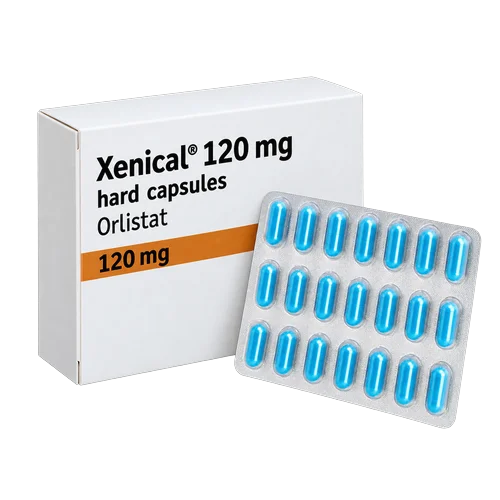
Your order will be securely packed and shipped within 24 hours. This is exactly what your package will look like (images of an actual item sent). It has the size and look of a regular private letter (24x11x0.7 cm) and its contents cannot be seen.
Nutritional Requirements and Low-Fat Diet Integration
Xenical works best with a nutritionally balanced, reduced-calorie diet in which about 30% of daily calories come from fat. Fat intake should be distributed across breakfast, lunch, and dinner instead of being concentrated in one large meal.
A lower-fat pattern can reduce oily stools and urgency while making the diet easier to maintain. Helpful food choices include vegetables, fruit, lean protein, whole grains, and measured portions of unsaturated fats.
Large amounts of fat in one sitting can trigger an abrupt bowel response. Fried meals, creamy sauces, pastries, processed meats, and oversized portions of nuts or oils can create problems even when the rest of the day’s diet is reasonable.
Exercise supports the same weight-management goal, although it does not cancel the gastrointestinal effects of a high-fat meal. Walking, resistance training, cycling, swimming, and other suitable activities can help preserve muscle and support long-term weight control.
One practical detail is easy to miss: fat is still nutritionally necessary. A very restrictive diet can make it harder to obtain essential fatty acids and fat-soluble vitamins. The goal is controlled intake, not eliminating dietary fat completely.
Sources
- European Medicines Agency (2018). Xenical: Summary of Product Characteristics (SmPC)
- National Library of Medicine (2024). Orlistat — LiverTox: Clinical and Research Information on Drug-Induced Liver Injury
- U.S. Food and Drug Administration (2012). Xenical (orlistat) Capsules Prescribing Information
- Health Canada (2023). Xenical Product Monograph
- World Health Organization (2022). WHO European Regional Obesity Report 2022
How Buyers Rate Xenical
Based on 4 reviews
I took one 120 mg capsule with meals that contained fat and kept simple notes about what I ate. After several weeks, portion control felt easier and my clothes fit better. The routine was straightforward once I stopped taking capsules with fat-free meals.
Kitchener Several weeks Nov 7, 2026I took one 120 mg capsule with fat-containing meals, and Xenical helped me make my meals more consistent. I lost weight gradually rather than seeing a dramatic change, but the result felt tangible after a few months. Planning meals ahead made the treatment much easier.
Windsor A few months Oct 11, 2026I took one 120 mg capsule with fat-containing meals for several months and noticed some benefit, but bowel urgency was inconvenient after richer meals. I reduced the fat in my evening meals and the problem improved, although the response was only partial for me. I stopped after discussing the symptoms and treatment options with my doctor.
Sudbury Several months Oct 22, 2026