The plaques on my elbows became much flatter and less noticeable. The itching settled, and applying one cream was simpler than keeping track of separate products.
Nanaimo Several weeks Nov 8, 2026
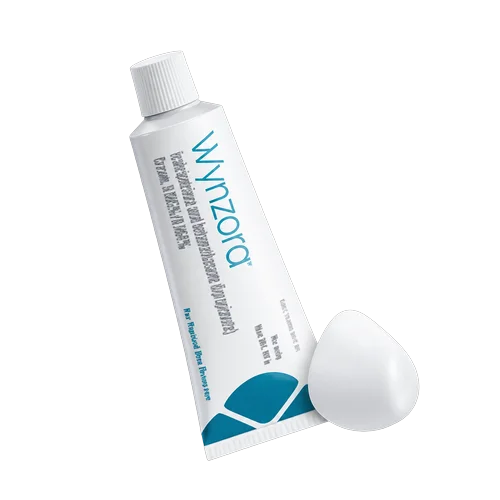
Wynzora
Plaque psoriasis causes raised, scaly, inflamed patches that can itch and crack. Wynzora is a prescription cream containing calcipotriene and betamethasone dipropionate for plaque psoriasis in…
Plaque psoriasis causes raised, scaly, inflamed patches that can itch and crack. Wynzora is a prescription cream containing calcipotriene and betamethasone dipropionate for plaque psoriasis in adults. Its dual action helps regulate excessive skin-cell growth while reducing inflammation.
Overview
Wynzora is a topical treatment for plaque psoriasis, the most common form of psoriasis. Wynzora combines a vitamin D analogue with a corticosteroid in one cream. This approach addresses two major features of plaque psoriasis: abnormal keratinocyte growth and inflammatory activity. Health Canada lists WYNZORA as an authorized marketed product for plaque psoriasis treatment in Canada [1].
How it affects the body
Wynzora uses a topical vehicle associated with PAD Technology. The formulation is intended to distribute calcipotriene and betamethasone dipropionate across the plaque surface and support movement through thickened psoriatic skin.
Psoriatic plaques are not simply dry patches. Their outer layer can be thick, scaly, and difficult for topical substances to cross. A vehicle that spreads evenly and maintains contact with the plaque can support more consistent delivery than a preparation that separates, flakes away, or feels difficult to apply.
Clinical studies of calcipotriene and betamethasone dipropionate combinations have shown improvement in plaque severity compared with vehicle treatment. The FDA prescribing information describes Wynzora as a topical cream for plaque psoriasis and reports clinical assessment using standard psoriasis severity measures [2].
Enhanced Dermal Penetration Mechanics
PAD Technology refers to the formulation approach used to support topical delivery. It does not mean the cream should be massaged aggressively into the skin. Vigorous rubbing can irritate plaques, especially when fissures or excoriations are present.
The practical aim is simple: place a thin film over the affected plaque and allow the formulation to remain in contact with the skin. Do not apply it under a sealed dressing unless a prescriber specifically directs this, because occlusion can increase corticosteroid absorption.
Formulation
Wynzora contains two active substances: calcipotriene, also called calcipotriol, and betamethasone dipropionate. Calcipotriene is a vitamin D analogue. Betamethasone dipropionate is a topical corticosteroid.
| Active ingredient | Pharmacological class | Main role |
|---|---|---|
| Calcipotriene or calcipotriol | Vitamin D analogue | Helps normalize excessive skin-cell growth |
| Betamethasone dipropionate | Topical corticosteroid | Reduces inflammation, redness, and itching |
Role of Calcipotriene in Cell Growth Regulation
Psoriatic plaques contain keratinocytes that mature and multiply too quickly. Calcipotriene acts through vitamin D receptors in skin cells and helps restore more controlled growth and differentiation. This reduces the tendency toward scaling and excessive thickening.
Calcipotriene can affect calcium balance when absorbed in excessive amounts. The risk becomes more relevant when large areas are treated, when treatment continues for too long, or when several calcipotriene-containing products are used together.
Role of Betamethasone Dipropionate in Inflammation Control
Betamethasone dipropionate activates corticosteroid receptors in skin cells. This reduces the release of inflammatory mediators and decreases redness, swelling, itching, and plaque activity.
The corticosteroid component is potent enough to improve inflamed plaques, but potency also creates limits. Prolonged use on thin skin can cause skin atrophy, visible small blood vessels, stretch marks, or rebound worsening after unsupervised overuse.
Dosage and administration
The amount used, application frequency, and treatment duration depend on the purpose of use and are agreed with a doctor or pharmacist. Wynzora is applied topically to plaque psoriasis.
- Apply a thin layer to the affected plaques.
- Use the prescribed frequency.
- Keep the cream away from the eyes, mouth, genital mucosa, and broken skin unless specifically directed.
- Wash hands after application when the hands are not being treated.
- Do not cover treated areas with airtight dressings unless instructed.
- If an application is missed, apply it when remembered unless the next scheduled application is near. Do not apply a double amount.
Wynzora should not be used as a general moisturiser for unaffected skin. A plain emollient can be useful for dryness, but it should be applied at a separate time if the prescriber or pharmacist recommends separating products.
Reasons not to use it
- Allergy to calcipotriene, betamethasone dipropionate, or an ingredient in the cream
- Untreated bacterial, viral, fungal, or parasitic infection at the intended site
- Lesions caused by acne, rosacea, perioral dermatitis, or another condition for which a potent corticosteroid may worsen the problem
- Use on the eyes or inside the mouth
- Known disorders involving high calcium levels or recurrent calcium-containing kidney stones
- Extensive use that would exceed the prescribed treatment area
- Application beneath an airtight dressing without medical direction
Do not combine Wynzora with another calcipotriene-containing treatment unless the total exposure has been reviewed. Avoid adding other potent topical corticosteroids to the same area unless specifically prescribed. Tell the prescriber about oral corticosteroids, medicines affecting calcium balance, and treatments that suppress the immune system.
Pregnancy and breastfeeding require an individual treatment decision.
Wynzora should not be applied to the breast immediately before breastfeeding, because the infant could ingest residue.
When this is not for you
Wynzora may not be right for you if you have an untreated infection where you want to apply it, are allergic to its ingredients, or have a skin problem that a potent corticosteroid could make worse. Do not use it on the eyes or inside the mouth, or over areas larger than prescribed. Speak with your prescriber before use if you have high calcium levels, recurrent calcium-containing kidney stones, are pregnant or breastfeeding, or use medicines that affect calcium balance or suppress the immune system.
Possible side effects
Clinical safety information for Wynzora includes local and systemic reactions. Possible problems include application-site irritation, application-site infection, headache, and upper respiratory tract infection. Not every reaction is caused by the cream, and a symptom such as a cold can occur during treatment without being a direct drug effect.
Local reactions may include:
- Burning, itching, irritation, or redness at the application site
- Worsening inflammation after application
- Folliculitis or an application-site infection
- Skin thinning, stretch marks, or visible small blood vessels with excessive corticosteroid exposure
- Changes in pigmentation after inflammation improves
Systemic concerns require more attention when large areas are treated, when skin is damaged, or when the cream is used under occlusion. Calcipotriene can contribute to hypercalcemia or hypercalciuria if excessive amounts are absorbed. Betamethasone dipropionate can suppress the hypothalamic-pituitary-adrenal, or HPA, axis after substantial or prolonged absorption.
The Canadian Drug and Health Product Portal provides product-level regulatory information for Wynzora, while Health Canada safety principles for topical corticosteroids support limiting exposure to the smallest area and duration that control the condition [3].
Systemic Effects of Calcium Metabolism and Corticosteroid Absorption
Hypercalcemia means that the blood calcium level is too high. Possible symptoms include unusual thirst, frequent urination, constipation, nausea, abdominal discomfort, weakness, or confusion. Hypercalciuria means excess calcium in the urine and may increase concern about kidney stone formation in susceptible people.
HPA axis suppression can reduce the body’s normal cortisol response. The risk is higher with extensive application, prolonged use, occlusive dressings, or use on thin skin. Children and older adults may need closer attention because skin absorption and vulnerability can differ from those of younger adults.
Stop applying Wynzora to an area that becomes severely irritated, develops signs of infection, or shows marked skin thinning, and seek prompt medical advice. Urgent assessment is appropriate for facial or eye swelling, breathing difficulty, widespread blistering, severe pain, or confusion.

Therapeutic indications
Wynzora is a topical treatment for plaque psoriasis, the most common form of psoriasis. Plaques develop when immune-driven inflammation accelerates skin-cell production, creating areas of thickened, red, scaly skin. Common sites include the elbows, knees, scalp margin, trunk, and lower back.
The Canadian product information identifies Wynzora for topical treatment of plaque psoriasis. It is intended for use on affected skin rather than healthy skin, mucous membranes, or the eyes. The treatment is generally selected when a person needs more than an anti-inflammatory effect alone.
Wynzora is designed for adults.
Comparison
The closest comparison is a topical product containing calcipotriene and betamethasone dipropionate in another vehicle. Other approaches use a corticosteroid alone, a vitamin D analogue alone, a topical retinoid, or a non-steroid anti-inflammatory treatment.
| Topical approach | Main therapeutic focus | Main limitation |
|---|---|---|
| Wynzora combination cream | Inflammation plus abnormal skin-cell growth | Corticosteroid precautions still apply |
| Vitamin D analogue alone | Cell-growth regulation | May work more slowly for marked inflammation |
| Topical corticosteroid alone | Rapid inflammation and itch reduction | Long-term or extensive use may thin skin |
| Non-steroid anti-inflammatory topical treatment | Inflammation control without corticosteroid exposure | May cause local burning and may be less suitable for thick plaques |
A corticosteroid-only approach may suit a short flare where inflammation dominates. A vitamin D analogue alone may be chosen when steroid exposure needs to be minimized. Wynzora offers combined activity, but it still requires limits on duration, treated area, and application site.
Common mistakes
Several habits reduce benefit or increase unwanted effects:
- Applying a thick layer instead of a thin film
- Treating large areas that were not included in the prescription
- Using the cream on the face, groin, or skin folds without specific instruction
- Covering the area tightly with plastic or an airtight bandage
- Applying multiple steroid products to the same plaque
- Stopping moisturiser use because the medicated cream feels sufficient
- Scratching or removing scales aggressively before application
- Continuing daily treatment beyond the agreed course
- Using the cream for an undiagnosed rash that only resembles psoriasis
Another frequent error is judging the treatment after only one or two applications. Topical psoriasis treatment usually requires repeated use over the prescribed period. A lack of improvement, rapid worsening, or frequent relapse calls for a treatment review rather than repeated unsupervised applications.
What doctors say
Dermatologists generally view a two-active-ingredient cream as useful when a plaque has both visible inflammation and excessive scaling. The combination can reduce the need to layer separate topical products, which may make the daily routine easier.
A physician also looks beyond the appearance of one plaque. The treatment plan may change when psoriasis affects the scalp, face, skin folds, nails, or a large body surface area. These sites have different absorption and irritation concerns.
A practical clinical point is that improvement does not mean the disease has permanently disappeared. Plaque psoriasis can return after treatment ends, so a clinician may use a maintenance plan, an intermittent schedule, or another treatment class when appropriate. The World Health Organization identifies psoriasis as a chronic inflammatory skin disease requiring long-term, individualized management [4].
Common questions
Can Wynzora be used with cosmetics, sunscreen, or other topical products?
Health Canada product information from 2024 supports applying Wynzora to the prescribed psoriasis areas and avoiding contact with the eyes and mucous membranes. Cosmetics, moisturisers, and sunscreen can be used on other areas, but layering several products directly over the medicated cream may dilute it or spread it beyond the intended site. Allow the cream to absorb before applying another topical product to the same area when a clinician has approved both. Sunscreen remains useful on exposed untreated skin, while psoriasis plaques treated with Wynzora should follow the prescribed routine. Follow the prescriber's instructions about the timing of other products.
What happens when Wynzora is stopped, and does it need tapering?
The American Academy of Dermatology guidance published in 2023 describes plaque psoriasis as a relapsing condition, so plaques can return after a successful course ends. A short prescribed course of topical Wynzora usually does not require a taper in the same way as long-term oral corticosteroid treatment. The need for gradual reduction depends on the treated area, duration, and frequency. Do not extend or restart daily treatment without a new treatment plan if plaques recur.
How does Wynzora differ from a topical corticosteroid alone?
Health Canada’s 2024 product information describes Wynzora as a combination of calcipotriene and betamethasone dipropionate. A corticosteroid alone mainly suppresses inflammatory activity, while calcipotriene also helps regulate abnormal keratinocyte growth. The combination can address both redness and excessive scaling in plaque psoriasis. Its limitation is that corticosteroid precautions remain relevant, including the risk of skin thinning with excessive or prolonged use.
Is Wynzora suitable for older adults?
The Canadian product information available in 2024 supports individualized use in adults, including older adults. Age alone does not rule out Wynzora, but thinner skin, reduced vision, mobility limitations, kidney disease, and multiple medicines can affect practical use and risk. Older adults should use the smallest treated area and duration that control the plaques. New bruising, skin fragility, confusion, unusual thirst, or frequent urination deserves prompt medical review.
Which symptoms mean stopping Wynzora and seeking urgent medical attention?
Health Canada safety information from 2024 supports urgent assessment for signs of a severe allergic reaction, such as facial swelling, lip or tongue swelling, wheezing, or difficulty breathing. Stop applying the cream to a severely painful, rapidly spreading, blistered, or infected area until medical advice is obtained. Severe weakness, confusion, intense thirst, or unusually frequent urination can signal a systemic problem requiring prompt assessment. Eye pain or vision changes after accidental eye exposure also requires urgent attention.
Do diet, exercise, or daily habits affect the result?
The National Psoriasis Foundation’s clinical information published in 2023 describes weight management, regular physical activity, sleep, and avoidance of smoking as useful parts of broader psoriasis care. These habits do not replace Wynzora and do not directly increase the amount of medicine entering a plaque. Scratching, harsh exfoliation, and skin injury can worsen local irritation and may provoke new lesions in susceptible people. A balanced diet supports general health, while no specific food reliably clears plaque psoriasis.
How long does one application of Wynzora keep working?
Clinical information reviewed by the FDA in 2022 evaluated Wynzora as a once-daily topical treatment during a defined treatment period, rather than as a permanently active coating after one application. Each application provides local exposure for part of the day, while improvement develops through repeated use. Washing, sweating, friction, or rubbing can remove some cream from the skin. Apply the next dose at the prescribed time instead of repeatedly reapplying after every wash.
Do you offer anonymous delivery?
Your order will be securely packed and shipped within 24 hours. This is exactly what your package will look like (images of an actual item sent). It has the size and look of a regular private letter (24x11x0.7 cm) and its contents cannot be seen.
Sources
- Health Canada (2024). Drug and Health Product Portal: WYNZORA product information
- U.S. Food and Drug Administration (2022). Wynzora prescribing information
- Health Canada (2023). Wynzora product monograph
- World Health Organization (2016). Global report on psoriasis
How Buyers Rate Wynzora
Based on 3 reviews
It helped the thick patches on my knees, although the improvement took longer than I expected. I had some mild irritation at first, so I used less pressure when applying it and discussed the schedule with my pharmacist.
Peterborough A flare Oct 11, 2026The redness and scaling reduced clearly during the treatment period. I liked that the cream spread easily and did not require a complicated routine.
St. John's The treatment period Oct 25, 2026