How it affects the body
Nerves in the airways release acetylcholine, a chemical messenger that can cause airway smooth muscle to contract. Tiotropium blocks muscarinic receptors, especially the M3 receptors involved in bronchoconstriction. The airway muscles remain more relaxed, which can improve airflow and reduce the sensation of chest tightness.
Tiotropium does not contain a corticosteroid. It also does not act like a short-acting beta agonist such as albuterol, which is used for rapid relief of acute bronchospasm.
The Health Canada product monograph describes tiotropium as a once-daily inhaled bronchodilator for ongoing respiratory control [1], and the U.S.
Dosage and administration
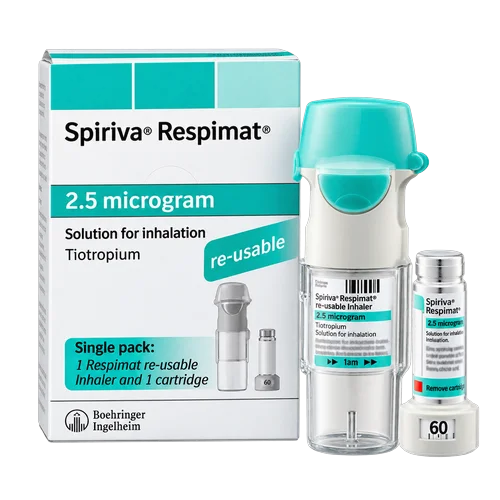
The regimen for the chosen strength should be confirmed with a healthcare professional before starting. For the 2.5 microgram Respimat presentation, the usual adult maintenance schedule is two inhalations once daily when prescribed for COPD or asthma. The prescribed schedule takes priority if it differs because of the patient’s diagnosis, age, or treatment plan.
Use Spiriva Respimat as follows:
- Prepare and prime a new Respimat device according to its operating instructions before the first therapeutic dose.
- Hold the inhaler upright with the cap closed.
- Turn the clear base in the direction indicated until it clicks.
- Open the cap fully.
- Breathe out away from the mouthpiece.
- Seal the lips around the mouthpiece without covering the air vents.
- Begin a slow, deep breath through the mouth while pressing the dose-release button.
- Continue breathing in slowly for as long as comfortable.
- Hold the breath briefly, then breathe out normally.
- Repeat the second inhalation when the prescribed regimen requires two inhalations.
- Close the cap after use.
The mouthpiece should remain clean and dry. Wipe it with a damp cloth when needed, then allow it to dry before the next use. Do not immerse the inhaler in water, use household cleaners, or block the air vents.
Do not swallow a Spiriva capsule. This warning applies to the HandiHaler system and is one of the most consequential handling mistakes with capsule-based tiotropium.
A missed dose should be taken when remembered unless it is nearly time for the next scheduled dose. Do not take two daily doses together. Extra tiotropium increases the risk of anticholinergic adverse effects without providing reliable additional relief.
Spiriva is intended for regular maintenance therapy. It does not work as a substitute for emergency treatment during a severe breathing episode.
For Spiriva Respimat, the standard maintenance approach is:
- Two inhalations once daily when prescribed for the relevant respiratory condition.
- Use at approximately the same time each day.
- Do not exceed the prescribed daily amount.
- Continue treatment for as long as the prescriber considers it beneficial and appropriate.
- Keep a separate fast-acting reliever available if one has been prescribed.
Long-term use can be appropriate for COPD because the disease is persistent and symptoms may return when maintenance therapy is stopped. The purpose is to support daily lung function and reduce symptoms, not to provide a short course that is stopped as soon as breathing improves.
Reasons not to use it
The product should not be used by a person with a known serious allergy to tiotropium, atropine, ipratropium, or related anticholinergic substances.
Other inhaled anticholinergic medicines may increase side effects when used with tiotropium. Examples include ipratropium-containing inhalers and combination products with an anticholinergic component. Tell the prescriber about glaucoma, prostate enlargement, urinary difficulty, kidney disease, and all respiratory medicines before the regimen is finalised.
Tiotropium has limited systemic absorption compared with many oral anticholinergic medicines, but clinically relevant effects can still occur. The EMA product information warns about paradoxical bronchospasm, glaucoma symptoms, and urinary retention [3].
Pregnancy and breastfeeding require an individual treatment decision. The available human evidence is limited, and the prescriber weighs respiratory control against potential fetal or infant exposure.
Possible side effects
Tiotropium’s anticholinergic action explains both its respiratory benefit and its main tolerability concerns. Dry mouth is among the most frequently reported effects. Throat irritation, cough, constipation, headache, and blurred vision can also occur.
Practical measures include:
- Sip water regularly for dry mouth.
- Use sugar-free gum or lozenges if suitable.
- Avoid directing the mist into the eyes.
- Report persistent blurred vision or eye pain promptly.
- Monitor urinary symptoms if there is a history of prostate enlargement or bladder outflow obstruction.
- Seek urgent care for facial swelling, severe rash, or sudden worsening of breathing after inhalation.
A small amount of dry mouth can be manageable. Painful urination, inability to pass urine, eye pain with blurred vision, or marked palpitations require medical attention because they may signal a more serious anticholinergic reaction.
One practical detail is easy to miss: the soft mist can deposit on the face if the patient does not seal the lips around the mouthpiece. Wiping the face does not correct the missed lung dose; the next dose should not be repeated without specific instructions.
Another detail matters for people with glaucoma. Tiotropium mist entering the eyes may worsen narrow-angle glaucoma symptoms, including eye pain, halos around lights, redness, and blurred vision.
Comparison
Spiriva occupies a maintenance position among respiratory medicines. It is not a replacement for albuterol, also called salbutamol in many settings, when a fast-acting reliever has been prescribed for sudden wheezing.
| Treatment approach |
Main pharmacological role |
Typical clinical use |
| Tiotropium |
Long-acting muscarinic blockade |
Daily COPD maintenance and selected asthma regimens |
| Albuterol or salbutamol |
Short-acting beta-2 stimulation |
Rapid relief of intermittent bronchospasm |
| Long-acting combination inhaler |
Two complementary bronchodilator mechanisms |
Maintenance when one bronchodilator is insufficient |
Other respiratory treatments may combine tiotropium with a long-acting beta agonist, as in Stiolto Respimat, or use different long-acting bronchodilators, as in Anoro Ellipta and Incruse Ellipta. Combivent Respimat combines short-acting bronchodilator mechanisms. Atrovent HFA contains ipratropium, while Ventolin Inhaler is a familiar albuterol product. Advair Inhaler and Flovent Inhaler contain inhaled corticosteroid therapy, and Trelegy combines multiple maintenance mechanisms.
These medicines are not automatically interchangeable. The choice depends on COPD severity, asthma features, exacerbation history, inhaler technique, cardiovascular status, and the patient’s response. Spiriva may be chosen when sustained muscarinic blockade is appropriate, while a combination inhaler may be preferred when additional bronchodilation or inhaled corticosteroid treatment is clinically indicated.
Common mistakes
Several preventable errors reduce the amount of tiotropium reaching the lungs:
- Treating Spiriva as an emergency inhaler.
- Taking extra inhalations for sudden breathlessness.
- Using the device without completing priming.
- Inhaling too quickly from Respimat.
- Exhaling into the mouthpiece, which can affect the device and leave moisture inside.
- Spraying the mist toward the eyes.
- Swallowing a capsule intended for HandiHaler use.
- Stopping daily treatment after a few symptom-free days.
- Using another anticholinergic inhaler without accounting for combined exposure.
- Failing to mention urinary retention, prostate symptoms, glaucoma, or kidney disease.
A patient may believe the medicine is ineffective because the mist is not strongly felt in the throat. That sensation is not a reliable measure of lung delivery. Respimat is designed to deliver a soft mist. Lung deposition depends on a slow inhalation. Technique review can clarify whether the device is being used correctly. Slow inhalation and correct mouthpiece positioning matter more than feeling a large cloud.
If breathlessness is getting worse despite correct daily use, do not keep adding inhalations. Review the rescue plan and seek clinical assessment for an exacerbation, infection, poor technique, or a need for treatment adjustment.
What doctors say
In clinical practice, respiratory prescribers usually assess Spiriva by looking at day-to-day breathing, exercise tolerance, night symptoms, rescue-inhaler use, and exacerbations rather than expecting an instant sensation after each inhalation.
A physician would also check technique before assuming the medicine has failed. A patient who presses Respimat before inhaling may receive little medication in the lungs even when the device appears to work normally. The same principle applies to capsule devices: a HandiHaler capsule must be pierced and inhaled through the device, not swallowed.
The Global Initiative for Chronic Obstructive Lung Disease places long-acting bronchodilators within the maintenance treatment framework for COPD and stresses inhaler education as part of ongoing care [4]. Treatment may need adjustment when breathlessness persists, flare-ups increase, or rescue medication is needed more often.
A useful clinical expectation is gradual control. Spiriva can improve airflow and symptoms, yet it cannot reverse emphysema or cure an acute infection. A new increase in sputum volume, sputum purulence, fever, chest pain, or rapidly worsening breathlessness needs prompt assessment rather than extra Spiriva.