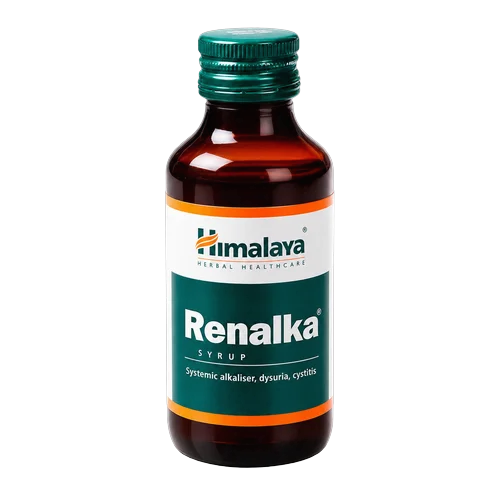
I used the recommended dose of Renalka for several days when I had mild burning and was also drinking more water. The discomfort eased gradually, though I had some stomach unsettledness at first. I stopped using it when the burning returned and arranged an appointment to rule out an infection.
Sherbrooke Several days Oct 11, 2026
Renalka
Adults experiencing urinary discomfort, including burning or painful urination, may use Renalka as herbal supportive care. It may ease mild discomfort, but it does not replace treatment for a…
Adults experiencing urinary discomfort, including burning or painful urination, may use Renalka as herbal supportive care. It may ease mild discomfort, but it does not replace treatment for a confirmed urinary infection.
Overview
Renalka is an Ayurvedic syrup intended to support urinary comfort and fluid balance while symptoms are assessed.
How it affects the body
Renalka is intended to provide supportive urinary care rather than act as a confirmed antibacterial treatment. Traditional herbal use focuses on soothing urinary discomfort and supporting normal urine flow.
Improvement is individual. Some people notice that hydration and regular urination reduce irritation at the same time as they use supportive products.
Formulation
The European Medicines Agency explains that herbal preparations require careful quality and safety assessment because botanical constituents can vary with processing, extraction, and formulation. [2]
Dosage and administration
Take Renalka orally as a syrup. The regimen for the chosen strength is confirmed with a healthcare professional before starting.
- Measure each dose with an oral syringe or calibrated dosing cup.
- Take the syrup at consistent times each day.
- Follow any food-related directions provided with the prescribed regimen.
- Drink water regularly unless a clinician has restricted your fluid intake.
- Do not double a missed dose. Resume the usual schedule unless advised otherwise.
Kitchen teaspoons are unreliable. Their volume varies more than most people expect.
Measuring and Administration
An oral syringe gives the most consistent measurement. Wipe the measuring device after use and keep it clean between doses.
People with heart failure, advanced kidney disease, or a medical fluid restriction should not increase water intake automatically. Their daily fluid target should match their existing care plan.
Duration and Clinical Review
Duration depends on the reason for use and the response of symptoms. Persistent burning, repeated episodes, or symptoms returning shortly after stopping need clinical review.
When this is not for you
Renalka is not for you if you have severe urinary symptoms and are delaying necessary assessment.
Possible side effects
Herbal syrups are often tolerated, yet natural ingredients can still cause unwanted effects. Possible reactions include stomach upset, nausea, loose stools, rash, itching, or headache.
Stop Renalka and seek urgent care for facial swelling, throat tightness, wheezing, or breathing difficulty. These can be signs of a serious allergic reaction.
| Situation | Appropriate action |
|---|---|
| Mild stomach upset or nausea | Pause and seek advice if symptoms continue |
| New rash, hives, or itching | Stop use and obtain clinical advice |
| Swelling of lips, face, or throat | Seek emergency care |
| Fever, flank pain, vomiting, blood in urine | Seek prompt medical assessment |
Do not use a product that triggers a new rash. Skin allergies are sometimes mentioned in relation to herbal support, but Renalka is not a treatment for allergic skin disease.
Higher-Risk Use
Extra caution is appropriate for people who are pregnant, breastfeeding, managing kidney disease, or taking regular medicines. Herbal products may affect the way medicines are tolerated, even when a specific interaction has not been documented.
Bring a current medicines list to a clinician if you use diuretics, blood-pressure medicines, diabetes medicines, anticoagulants, or medicines that affect kidney function.
Therapeutic indications
Renalka is a botanical urinary-support syrup for adults with mild urinary discomfort. Dysuria means pain, stinging, or burning when passing urine. This symptom can result from irritation, dehydration, infection, stones, sexually transmitted infections, or other urinary conditions.
Renalka may support comfort during mild urinary irritation. Its role is supportive rather than curative: symptom relief does not prove that an underlying infection has resolved.
- Burning or stinging while urinating
- Mild lower urinary discomfort
- A feeling of urinary irritation without severe symptoms
- Supportive care alongside adequate fluid intake
Urinary Symptom Support
Painful urination may improve when irritation settles, yet bacterial urinary tract infections can still require targeted treatment. Health Canada advises that natural health products should be used according to their intended purpose and with attention to safety information, especially when symptoms persist or recur. [1]
A urinary tract infection can involve the bladder, urethra, or kidneys. Burning is common, but it is not specific to infection. Recurrent symptoms deserve investigation rather than repeated self-treatment.
Clinical Red Flags
Untreated urinary infections can sometimes spread upward to the kidneys. Pregnant people, older adults, people with diabetes, and those with kidney disease should treat new urinary symptoms more cautiously.

Comparison
Urinary symptoms have more than one possible cause. The best approach depends on severity, duration, test results, medical history, and whether infection is suspected.
| Approach | Intended role | When escalation is needed |
|---|---|---|
| Renalka supportive herbal care | May support comfort with mild urinary irritation | Symptoms persist, recur, or become severe |
| Hydration and observation | May help when mild irritation follows low fluid intake | Fever, pain, blood in urine, or no improvement |
| Clinician-directed treatment | Treats a diagnosed cause, including bacterial infection | Urgent assessment for systemic symptoms |
Antibiotics are used for confirmed or strongly suspected bacterial infections, not for every episode of burning urination. The WHO promotes responsible antimicrobial use because unnecessary or inappropriate antibiotic exposure drives resistance. [3]
Supportive Care and Medical Treatment
Renalka can fit into a supportive routine for mild symptoms. It is not a replacement for clinician-directed treatment when infection is confirmed.
A limitation of symptom-focused care is that it cannot identify the cause of dysuria. Urine testing, examination, and medical history may be needed.
Symptom-Based Decision Points
Mild discomfort without fever may be monitored briefly. Symptoms that worsen, return often, or occur with pregnancy, kidney disease, or immune suppression need earlier assessment.
Common mistakes
Several avoidable habits can delay appropriate care or make urinary symptoms harder to interpret.
- Waiting through red flags: Fever, flank pain, vomiting, and blood in urine should not be managed as minor irritation.
- Doubling after a missed dose: Taking extra syrup does not make it work faster and may increase stomach upset.
- Using old antibiotics: Leftover treatment may be unsuitable for the present cause.
- Assuming less burning means no infection: Symptoms may fade while a condition still needs assessment.
- Ignoring recurrence: Repeated urinary symptoms can point to an underlying trigger that needs investigation.
- Measuring with a kitchen spoon: Inconsistent volume leads to inconsistent intake.
The Canadian Urological Association advises structured evaluation for recurrent urinary tract infection because repeated symptoms can require prevention planning and assessment of contributing factors. [4]
What doctors say
Clinicians usually focus first on the pattern of symptoms: when burning began, whether there is urgency or frequency, whether fever is present, and whether there is back pain or blood in the urine. They also ask about previous urinary tract infections, kidney stones, sexual health, diabetes, and current medicines.
Renalka may be considered supportive care for mild urinary discomfort when there are no red flags. Doctors do not treat symptom improvement as proof that an infection has cleared.
A key clinical distinction is simple: comfort measures may reduce irritation, while diagnosis identifies the cause. Both can matter, but they do different jobs.
Common questions
Is Renalka suitable if I have kidney disease?
Renalka is not a routine choice for self-directed use when you have kidney disease. Kidney disease can change fluid recommendations, alter how the body handles herbal constituents, and increase the significance of urinary symptoms. The Canadian Urological Association’s 2022 guidance supports careful assessment where urinary symptoms occur alongside medical risk factors. Discuss the regimen with the clinician managing your kidney health before starting.
What should I do after a missed dose of Renalka?
Take the next planned dose at the usual time rather than doubling the amount. Doubling can increase the chance of nausea or stomach discomfort without providing faster urinary relief. This approach follows standard medication-safety principles described by Health Canada in its 2022 consumer guidance. [5] If missed doses happen often, link the routine to a regular daily activity such as a meal.
What happens if I stop Renalka, and do I need to taper it?
Renalka does not require tapering in the way some prescription medicines do. Stopping may mean that any supportive effect on urinary comfort is no longer present, so symptoms can become noticeable again if the underlying trigger remains. The EMA’s 2018 herbal-product guidance emphasizes that herbal preparations should be used with attention to tolerability and the reason for use. Recurrent burning after stopping calls for assessment rather than repeated cycles of self-treatment. Clinical review can help identify a persistent cause.
How soon can urinary comfort improve with Renalka?
There is no fixed onset time that applies to every person. Mild irritation may settle as hydration improves and triggers such as concentrated urine, caffeine, or delayed urination are addressed. Health Canada’s 2023 natural health product information advises using products within their intended use while monitoring symptoms and safety. Do not wait for a syrup to work if pain is severe or new warning signs appear.
Can Renalka be used during pregnancy or breastfeeding?
Pregnancy and breastfeeding require individual clinical advice before using Renalka. Urinary symptoms during pregnancy can need prompt assessment because infections may carry greater risks for both parent and baby. The WHO’s 2023 antimicrobial stewardship guidance supports timely evaluation where an infection is suspected and treatment decisions are needed. A healthcare professional can weigh symptoms, other medicines, and the planned regimen.
What should I discuss with a doctor before starting Renalka?
Discuss any history of kidney disease, recurrent urinary tract infections, kidney stones, diabetes, allergies, pregnancy, breastfeeding, and regular medicines. Mention diuretics, blood-pressure medicines, diabetes medicines, anticoagulants, and medicines that affect kidney function. Health Canada’s 2022 guidance encourages consumers to share all health products being used, including natural health products. Also describe the urinary symptoms clearly, including their start date, severity, fever, back pain, and any blood in urine.
Do you offer anonymous delivery?
Your order will be securely packed and shipped within 24 hours. This is exactly what your package will look like (images of an actual item sent). It has the size and look of a regular private letter (24x11x0.7 cm) and its contents cannot be seen.
Sources
- Health Canada (2023). Natural health products.
- European Medicines Agency (2018). Guideline on quality of herbal medicinal products/traditional herbal medicinal products.
- World Health Organization (2023). WHO AWaRe antibiotic book.
- Canadian Urological Association (2022). Recurrent urinary tract infection guideline.
- Health Canada (2022). Good Label and Package Practices Guide for Non-prescription Drugs and Natural Health Products.
How Buyers Rate Renalka
Based on 3 reviews
I used the recommended dose of Renalka for several days during a period of mild urinary irritation after long workdays with too little water. Within a few days, the stinging was much less noticeable and I felt more comfortable. Keeping a water bottle at my desk made a clear difference as well.
Kelowna Several days Oct 28, 2026I took the recommended dose of Renalka consistently for several days as part of a short urinary-comfort routine. The burning sensation settled over the following days, and I was satisfied with how manageable the symptoms became. I also avoided coffee for that period because it seemed to aggravate the irritation.
Guelph Several days Nov 8, 2026