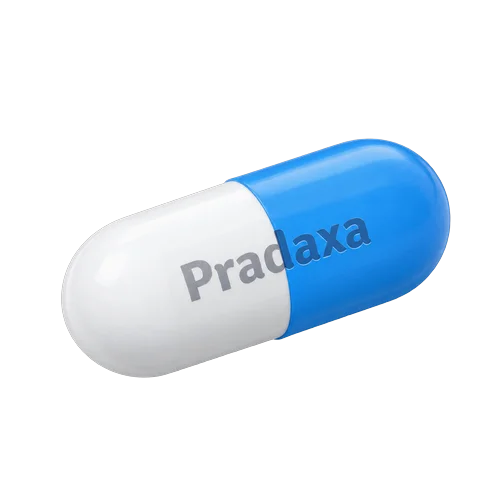
How it affects the body
Pradaxa belongs to the direct oral anticoagulant group. Its active ingredient, dabigatran etexilate, is converted in the body to dabigatran, the compound that produces the anticoagulant effect. Dabigatran directly inhibits thrombin, an enzyme needed to convert fibrinogen into fibrin, the protein framework that stabilizes a blood clot.
Direct thrombin inhibitors act later in the clotting cascade than medicines that block clotting factor Xa. Dabigatran inhibits both free thrombin and thrombin involved within a developing clot. This limits fibrin formation and reduces the ability of platelets to become incorporated into a stable clot.
Pradaxa does not dissolve an established clot. Its role is prevention of new clot formation and reduction of clot extension.
Dosage and administration
Pradaxa dosing is decided individually, taking age, other medicines, kidney function, and health conditions into account. Capsules are taken by mouth, and the prescribed schedule should be followed consistently. The appropriate strength and frequency depend on whether treatment is for atrial fibrillation, treatment of venous thromboembolism, prevention after orthopaedic surgery, or another approved indication.
Clinical decisions usually consider:
- kidney function and estimated creatinine clearance;
- age and body weight;
- previous gastrointestinal bleeding;
- current or recent surgery;
- medicines that increase bleeding;
- whether the patient is changing from warfarin or another anticoagulant;
- the reason for anticoagulation and the duration planned by the prescriber.
The correct option is not selected by symptom severity alone. Renal clearance is a major factor because dabigatran leaves the body mainly through the kidneys.
Swallow each capsule whole with water. Do not chew, crush, open, or sprinkle the contents over food. If a dose is missed, the action depends on how close it is to the next scheduled dose; taking two doses together to compensate can raise bleeding risk. The safest practical rule is to follow the missed-dose instructions supplied with the prescription rather than improvising.
Capsules should not be stopped abruptly without a treatment plan. Interruption can leave a person without adequate anticoagulation and may increase the risk of stroke or recurrent venous thromboembolism.
Reasons not to use it
Pradaxa is not suitable for everyone. This medication is not for you if you have active pathological bleeding, a serious allergy to dabigatran or a capsule ingredient, or severe kidney impairment that makes exposure unsafe. It is also unsuitable in some patients with mechanical heart valves or specific bleeding disorders.
Important situations requiring individual assessment include:
- previous gastrointestinal bleeding;
- active stomach or intestinal ulceration;
- recent major surgery;
- uncontrolled high blood pressure;
- liver disease associated with abnormal clotting;
- low platelet count;
- pregnancy or breastfeeding;
- planned spinal or epidural anaesthesia;
- a history of falls or recurrent trauma;
- concurrent treatment with another anticoagulant.
Medicines and supplements that may increase bleeding include aspirin, clopidogrel, non-steroidal anti-inflammatory drugs such as ibuprofen or naproxen, heparins, other anticoagulants, and some antidepressants. P-glycoprotein inhibitors, including certain antifungal medicines, antiarrhythmics, and antibiotics, can increase dabigatran exposure. P-glycoprotein inducers such as rifampin may reduce exposure and weaken anticoagulant protection.
The Canadian product monograph describes renal impairment, interacting medicines, bleeding, and treatment interruption as central precautions [3].
When this is not for you
Pradaxa may not be right for you if you have serious or ongoing bleeding, a severe allergy to dabigatran, severe kidney problems, a mechanical heart valve, or a bleeding disorder. Tell your clinician if you have had stomach bleeding, are pregnant or breastfeeding, have recently had surgery, or take medicines that can increase bleeding. Heavy alcohol use and repeated falls can also make treatment less safe.
Possible side effects
The main safety concern with Pradaxa is bleeding. Dabigatran reduces clotting, so nosebleeds, gum bleeding, bruising, heavier menstrual bleeding, or prolonged bleeding from a small cut may occur. Dyspepsia, stomach discomfort, reflux-like symptoms, nausea, and abdominal pain are also reported.
Seek urgent medical attention for:
- vomiting blood or material resembling coffee grounds;
- black, tarry stools;
- red urine;
- sudden severe headache;
- weakness, confusion, fainting, or trouble speaking;
- heavy bleeding that does not stop;
- a fall or head injury while taking Pradaxa;
- sudden shortness of breath or chest pain.
A fall deserves attention even without visible bleeding. Internal bleeding can develop without an obvious external wound, especially after head trauma. Patients should also tell dentists, surgeons, and emergency clinicians that they take dabigatran before an invasive procedure.
Kidney function deserves repeated review. Reduced renal clearance can increase dabigatran levels, which may raise bleeding risk. Routine INR testing used for warfarin does not measure Pradaxa’s anticoagulant effect reliably, although specialized coagulation tests may assist clinicians in urgent situations. The FDA prescribing information describes bleeding, dyspepsia, and thromboembolic risk after interruption among key clinical considerations [2].
Tell the emergency department about the last Pradaxa dose and its approximate time. This information can influence blood tests, procedure timing, and decisions about reversal treatment.
Therapeutic indications
Clinicians use Pradaxa in appropriate patients with non-valvular atrial fibrillation to lower the risk of embolic stroke, and for selected patients with deep-vein thrombosis or pulmonary embolism. The exact indication depends on the person’s diagnosis, kidney function, bleeding risk, age, and previous treatment history. Health Canada, the European Medicines Agency, and the FDA recognize dabigatran as a direct thrombin inhibitor used in anticoagulation care [1].
The appropriate strength and frequency depend on whether treatment is for atrial fibrillation, treatment of venous thromboembolism, prevention after orthopaedic surgery, or another approved indication.
Comparison
Comparative Analysis with Direct Oral Anticoagulants
Pradaxa differs from factor Xa inhibitors because it blocks thrombin directly. Eliquis contains apixaban, while Xarelto contains rivaroxaban; both inhibit factor Xa earlier in the clotting pathway.
| Medicine |
Main target |
Reversal approach |
| Pradaxa |
Direct thrombin inhibition through dabigatran |
Idarucizumab may rapidly neutralize dabigatran |
| Eliquis |
Factor Xa inhibition through apixaban |
Andexanet alfa or supportive specialist management, depending on circumstances |
| Xarelto |
Factor Xa inhibition through rivaroxaban |
Andexanet alfa or supportive specialist management, depending on circumstances |
Choice depends on the indication, kidney function, age, gastrointestinal history, adherence pattern, interacting medicines, and local clinical protocols. Pradaxa has the advantage of a targeted reversal agent, while some patients may find the capsule schedule or gastrointestinal effects less convenient. Factor Xa inhibitors also have distinct dosing restrictions and bleeding profiles.
Patients should not switch between Pradaxa, Eliquis, and Xarelto on their own. Each change requires a planned transition so anticoagulant coverage is maintained without overlapping exposure that could increase bleeding.
Comparative Analysis with Vitamin K Antagonists
Warfarin, also known as Coumadin, works by reducing the production of several vitamin K-dependent clotting factors. Pradaxa acts directly on thrombin and has a more predictable pharmacological effect in suitable patients.
Warfarin requires regular INR monitoring because its response changes with diet, illness, liver function, and many drug interactions. Pradaxa does not require routine INR dose adjustment, although kidney function and clinical status still need review. Warfarin may remain preferred for some patients, including those with mechanical heart valves or selected cases requiring a long-established monitoring system.
Common mistakes
Several avoidable errors can reduce the benefit of Pradaxa or increase harm:
- opening or chewing a capsule instead of swallowing it whole;
- taking an extra capsule after forgetting whether a dose was taken;
- stopping treatment before a planned procedure without a documented schedule;
- restarting it after surgery without confirmation that bleeding is controlled;
- using ibuprofen or naproxen repeatedly for pain;
- failing to report a fall or head impact;
- assuming routine INR results prove that Pradaxa is working correctly;
- keeping capsules in a damp bathroom or transferring them without moisture protection;
- omitting the medicine from a list given to a dentist, surgeon, or emergency team.
A medication record should include the product name, the last dose time, the prescribing indication, and relevant kidney information. That record can be useful during urgent care.
Before dental work or surgery, ask for a written interruption and restart plan. The timing depends on kidney function, bleeding risk, and the procedure, so a generic schedule is not appropriate for everyone.
What doctors say
In clinical practice, doctors often focus first on why anticoagulation is needed and whether the patient can take Pradaxa consistently. A missed dose can reduce protection, while an extra dose can increase bleeding risk. The treatment plan must account for both problems. They also confirm that the patient understands the dosing schedule. Follow-up helps identify adherence difficulties before they result in interrupted anticoagulation.
Physicians also review kidney function before treatment and at intervals suited to age and health status. Older adults, people with dehydration, and patients taking interacting medicines may need closer assessment because dabigatran exposure can rise when renal clearance falls.
One practical point is frequently overlooked: bruising alone does not always require permanent treatment cessation, but sudden extensive bruising, blood in urine, black stools, or neurological symptoms needs prompt evaluation. Doctors also want to know about over-the-counter painkillers, herbal products, and alcohol intake because these details can alter bleeding risk.
The WHO describes anticoagulants as medicines that require an individual balance between thrombosis prevention and bleeding risk. That balance can change after surgery, infection, a fall, kidney illness, or the addition of another medicine [4].