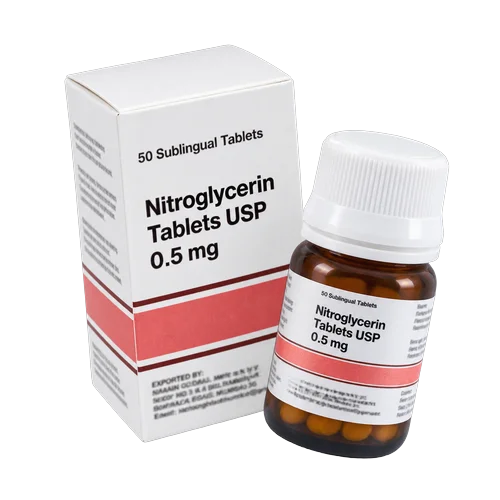
I used the 0.5 mg tablet for the chest tightness my cardiologist had described. The pressure eased within a few minutes, and having a clear plan made walking outside less stressful. I was satisfied with how quickly it helped.
Toronto Nov 5, 2026
Nitroglycerin
Adults with diagnosed angina or coronary artery disease may use Nitroglycerin for rapid relief of ischemic chest pain. This sublingual tablet contains glyceryl trinitrate, a nitrate vasodilator that…
Adults with diagnosed angina or coronary artery disease may use Nitroglycerin for rapid relief of ischemic chest pain. This sublingual tablet contains glyceryl trinitrate, a nitrate vasodilator that reduces the heart’s workload and improves blood flow.
Overview
Nitroglycerin contains glyceryl trinitrate, also called nitroglycerin. It belongs to the nitrate drug class and acts as a vasodilating agent. Dosing differs between strengths and between users, so there is no single amount that suits everyone.
How it affects the body
After absorption through the tissues beneath the tongue, glyceryl trinitrate releases nitric oxide. Nitric oxide activates guanylyl cyclase inside vascular smooth muscle cells. This raises cyclic guanosine monophosphate, relaxes the muscle surrounding blood vessels, and widens the vessels.
The principal early effect is venodilation. More blood remains in the veins, so less blood returns to the heart. This reduces ventricular filling, wall tension, and myocardial oxygen demand. Nitroglycerin also relaxes arterial vessels and can improve blood flow through coronary arteries affected by spasm or narrowed by atherosclerotic disease. [1]
Vascular Smooth Muscle Relaxation
Angina pectoris occurs when the heart muscle needs more oxygen than the coronary circulation can provide. Physical exertion, emotional stress, cold weather, and heavy meals can increase cardiac workload. Nitroglycerin lowers that workload quickly, which can relieve pressure, tightness, or squeezing discomfort linked to myocardial ischemia.
The response is vascular rather than analgesic. Nitroglycerin does not numb pain in the way an ordinary pain reliever does. It addresses one of the physiological causes of angina: an imbalance between oxygen supply and oxygen demand.
Formulation
Dosing differs between strengths and between users, so there is no single amount that suits everyone.
Glyceryl trinitrate has the chemical formula C3H5N3O9. The formula describes the molecule’s chemical structure; it does not indicate the tablet strength or the amount prescribed for an individual dose.
Dosage and administration
Dosing differs between strengths and between users, so there is no single amount that suits everyone. The prescribed number of tablets and dosing schedule depend on the patient’s medical plan.
For sublingual administration:
- Sit or lie down before taking the tablet.
- Place the tablet beneath the tongue.
- Allow it to dissolve without chewing or swallowing it.
- Avoid eating, drinking, or rinsing the mouth while it dissolves.
- Use it at the onset of prescribed angina symptoms or before predictable exertion if directed.
- Follow the emergency plan provided with the prescription.
If chest pain continues approximately five minutes after the first dose, call emergency services immediately. Further doses may be used only according to the prescribed emergency plan while waiting for help. Many clinical protocols allow repeat dosing at five-minute intervals, but the emergency call should not be delayed.
A missed dose is not usually relevant when Nitroglycerin is prescribed for attacks. If it is prescribed before exertion and the timing is missed, do not take extra tablets to compensate. Use the next dose only as directed.
Do not drive after taking Nitroglycerin if you feel dizzy, faint, weak, or visually impaired. These symptoms can reflect a rapid fall in blood pressure. Alcohol can intensify dizziness and hypotension, so avoiding alcohol around a dose is prudent.
Reasons not to use it
Nitroglycerin is not suitable for everyone. This medication is not for you if you have used a phosphodiesterase-5 inhibitor within the relevant interaction window, have severe hypotension, or have been instructed to avoid nitrates because of a specific cardiovascular condition.
Critical Drug Interactions
Never combine nitrates with PDE5 inhibitors used for erectile dysfunction or pulmonary hypertension. Examples include sildenafil and tadalafil; the same concern applies to other drugs in this class. The combination can produce profound, prolonged, and difficult-to-treat hypotension. [3]
Nitroglycerin also requires caution in people with severe anaemia, increased pressure inside the skull, recent head injury, hypertrophic obstructive cardiomyopathy, severe aortic or mitral valve narrowing, or a history of nitrate-related fainting.
When this is not for you
Tell the emergency team about any nitrate use and any recent PDE5 inhibitor use. Do not assume that spacing the medicines by a short interval makes the combination safe. Tadalafil can remain pharmacologically active longer than some other PDE5 inhibitors.
Other medicines that can intensify blood-pressure lowering include:
- Alcohol
- Blood-pressure medicines
- Other nitrates
- Alpha-blockers
- Certain medicines for pulmonary hypertension
- Drugs that contribute to dehydration or low circulating volume
Pregnancy and breastfeeding require an individual risk assessment. Nitroglycerin should be used only when the prescribing clinician has considered the cardiovascular need and the available safety information. The same applies to older adults, people with kidney or liver disease, and patients taking several blood-pressure medicines.
Possible side effects
Nitroglycerin commonly causes effects related to blood-vessel dilation. Headache is one of the most familiar reactions because cerebral blood vessels can widen along with vessels elsewhere in the body. Dizziness, flushing, weakness, and a faster heartbeat may occur when blood pressure falls.
Common reactions include:
- Throbbing or pressure-like headache
- Light-headedness
- Facial warmth or flushing
- Weakness or fatigue
- Nausea
- Palpitations or reflex tachycardia
- Fainting from excessive hypotension
Headache is common. It often appears soon after dosing and may become less troublesome as the body adapts to repeated prescribed use. A severe or unusual headache should not automatically be attributed to Nitroglycerin, especially when accompanied by neurological symptoms.
The most important serious reaction is severe hypotension. Warning signs include collapse, confusion, cold sweating, marked weakness, blurred vision, or an unusually rapid heartbeat. Severe hypotension is more likely with dehydration, alcohol, blood-pressure medicines, diuretics, or recent use of another vasodilator.
A person who faints, develops severe breathlessness, or has persistent chest pain needs emergency care. Nitroglycerin can relieve angina, but it cannot treat a heart attack by itself.
Therapeutic indications
Nitroglycerin is used for the acute relief of angina associated with coronary artery disease. It may also be prescribed before an activity known to trigger chest pain, such as walking uphill or climbing stairs. Health Canada information for sublingual nitroglycerin describes its role in treating and preventing episodes of angina. [2]
A typical angina episode may feel like:
- Pressure, heaviness, squeezing, or tightness in the chest
- Discomfort spreading to the arm, shoulder, neck, jaw, or back
- Shortness of breath during exertion
- Symptoms that improve with rest or prescribed nitroglycerin
Nitroglycerin must not be used to dismiss potentially life-threatening chest pain. New, severe, prolonged, or rapidly worsening chest discomfort can indicate acute coronary syndrome. If pain is not relieved promptly after the first prescribed dose, emergency medical help is required.
Clinical practice separates two roles:
- Acute treatment: a sublingual tablet is used when angina begins.
- Prevention: a dose may be taken before predictable exertion when specifically prescribed.
Nitroglycerin does not prevent every type of chest pain. Pain from reflux, muscle strain, lung disease, or other causes may not respond. Chest pain that feels different from a person’s usual angina needs urgent assessment.
Comparison
Nitroglycerin products use different routes to control the speed and duration of nitrate exposure. This product is a sublingual tablet, intended to dissolve beneath the tongue rather than pass through the stomach first.
| Form | Main clinical role | Duration pattern |
|---|---|---|
| Sublingual tablet | Rapid relief or prevention of predictable angina | Short acting |
| Oral or sublingual spray | Rapid relief or prevention of predictable angina | Short acting |
| Transdermal patch | Prevention of recurrent stable angina | Longer acting |
Sublingual tablets and sprays enter the circulation through oral tissues and are used when a rapid response is needed. Transdermal patches release nitroglycerin gradually and are used for prevention rather than immediate relief. A patch is not a substitute for a sublingual rescue dose during sudden chest pain.
The product described here is Nitroglycerin 0.5 mg sublingual tablets. It should not be treated as a long-acting formulation simply because the same active ingredient is available in other delivery systems. Route and release characteristics change the clinical effect.
One practical detail matters: saliva, swallowing, and dry mouth can affect how quickly a sublingual tablet dissolves. The tablet should remain beneath the tongue until it has dissolved. Do not chew or swallow it whole.
Common mistakes
Several practical errors reduce the usefulness of Nitroglycerin or increase the risk of harm:
- Swallowing the tablet instead of allowing sublingual absorption
- Taking a dose while standing
- Waiting too long before calling emergency services
- Repeating doses without following the prescribed maximum
- Using Nitroglycerin after sildenafil, tadalafil, or another PDE5 inhibitor
- Treating every episode of chest pain as ordinary angina
- Drinking alcohol around the time of a dose
- Moving tablets into a container that does not protect them from moisture
- Taking extra tablets because the first dose did not work quickly
- Driving after a dose despite dizziness or visual disturbance
One commonly missed detail is the interaction history. Patients may remember the name of a daily heart medicine but forget to mention a PDE5 inhibitor taken several days earlier. That information can change emergency treatment decisions.
Another mistake is using a sublingual tablet as a routine painkiller. Nitroglycerin is intended for a specific cardiovascular indication. Recurrent chest discomfort deserves assessment, even when a tablet provides relief.
What doctors say
Physicians generally view sublingual Nitroglycerin as a rescue treatment for diagnosed angina, not as a way to test whether unexplained chest pain is cardiac. The clinical goal is rapid relief of a known symptom pattern while emergency care is activated when the response is inadequate.
Doctors also pay attention to frequency of use. Increasing reliance on rescue tablets can signal worsening coronary disease, poor control of triggers, medication tolerance, or a change in the nature of the chest pain. A person needing Nitroglycerin more often than usual requires prompt medical review.
A further point concerns nitrate tolerance. Long-acting nitrate therapy may require a daily nitrate-free interval, while acute sublingual use follows a different pattern. Patients should not create their own nitrate-free schedule or increase doses without a prescriber’s plan. The European Medicines Agency identifies hypotension, interactions, and appropriate nitrate use as key considerations in product information for glyceryl trinitrate. [4]
Doctors also distinguish symptom relief from disease modification. Nitroglycerin can relieve an angina episode, yet it does not remove plaque from coronary arteries or replace treatment for cholesterol, blood pressure, diabetes, or smoking-related cardiovascular risk.
Common questions
Which diet, exercise, or habits help or hinder Nitroglycerin’s effect?
Nitroglycerin works through vascular smooth-muscle relaxation, so diet does not replace its pharmacological action. Heavy meals, cold exposure, sudden exertion, dehydration, and emotional stress can trigger angina in susceptible people. Health Canada’s 2023 patient guidance supports using prescribed sublingual nitroglycerin for angina while following the person’s broader cardiac rehabilitation and activity plan. [5] Alcohol can intensify dizziness and low blood pressure, so it can make the experience less tolerable.
How soon does Nitroglycerin usually become noticeable?
Sublingual nitroglycerin is designed for rapid absorption through tissues under the tongue. Relief may begin within several minutes, though the response varies with the cause of pain, circulation, timing, and individual sensitivity. Clinical information reviewed by Health Canada in 2023 describes sublingual nitroglycerin as a rapid-acting treatment for angina. If symptoms do not improve promptly after the first dose, emergency services should be contacted rather than waiting for a delayed effect.
Does Nitroglycerin cause headaches?
Yes. Headache is a well-known effect of nitrate-induced blood-vessel dilation and may occur after a therapeutic dose. The World Health Organization’s 2020 guidance identifies nitrates as medicines whose vasodilating action can produce headache, dizziness, and low blood pressure. A severe headache with weakness, confusion, fainting, or neurological symptoms requires urgent assessment rather than simple self-treatment.
How long does one Nitroglycerin dose keep working?
A sublingual dose is short acting. Its main purpose is rapid relief of an angina episode or prevention of symptoms before a predictable trigger, not continuous protection throughout the day. Product information reviewed by the European Medicines Agency in 2022 distinguishes rapid-release nitrate use from longer-acting formulations. Persistent or recurrent pain after a dose requires medical assessment, because repeating tablets does not correct every cause of chest discomfort.
What should I do if the expected result does not come?
Stop the activity and sit or lie down. If the chest pain is not relieved about five minutes after the first prescribed dose, call emergency services immediately and describe the symptoms and the time of dosing. The American Heart Association’s 2021 acute coronary syndrome guidance treats persistent or worsening chest pain as an emergency requiring prompt evaluation. Do not drive yourself and do not keep taking extra tablets beyond the prescribed emergency plan.
Can older adults use Nitroglycerin?
Older adults may use Nitroglycerin when it has been prescribed for their angina, but they can be more sensitive to postural hypotension and falls. Reduced kidney function, dehydration, multiple blood-pressure medicines, and slower recovery after a blood-pressure drop may increase risk. Health Canada’s 2023 guidance and geriatric prescribing practice support starting with an individualized plan and reviewing dizziness, fainting, and medicine interactions. Standing slowly after a dose is a useful practical precaution.
Can Nitroglycerin be taken with food or on an empty stomach?
Sublingual Nitroglycerin is placed under the tongue, so it does not depend on stomach absorption in the same way as an ordinary swallowed tablet. Food is not needed for the sublingual route, and the tablet should not be swallowed with a drink. The FDA’s 2023 prescribing information for sublingual nitroglycerin emphasizes correct placement and rapid mucosal absorption. Avoid eating or drinking while the tablet is dissolving, and follow the prescribed instructions for timing before exertion.
Do you offer anonymous delivery?
Your order will be securely packed and shipped within 24 hours. This is exactly what your package will look like (images of an actual item sent). It has the size and look of a regular private letter (24x11x0.7 cm) and its contents cannot be seen.
Sources
- World Health Organization (2008). WHO Model Formulary — Glyceryl trinitrate.
- Health Canada (2023). Product Monograph — Nitroglycerin Sublingual Tablets.
- American Heart Association (2021). 2021 AHA/ACC Guideline for the Evaluation and Diagnosis of Chest Pain.
- European Medicines Agency (2022). Summary of Product Characteristics (SmPC) — Glyceryl trinitrate.
- U.S. Food and Drug Administration (2023). Nitroglycerin sublingual tablets: Prescribing information.
How Buyers Rate Nitroglycerin
Based on 4 reviews
The tablet helped during the episode, although I developed a noticeable headache and felt light-headed for a short time. I had to sit down and wait before moving around again. The relief was useful, but the side effect was inconvenient.
Ottawa Nov 9, 2026I took the sublingual tablet before an activity that had triggered angina previously. It reduced the chest pressure and let me complete the activity without the same interruption. The effect was clear enough that I felt more confident following the plan.
Vancouver Oct 12, 2026Nitroglycerin eased my usual angina when I used it under my tongue. I kept the bottle where I could reach it and remembered to sit before taking a tablet. That small change helped me avoid the dizzy feeling I had experienced once before.
Montreal Oct 25, 2026